




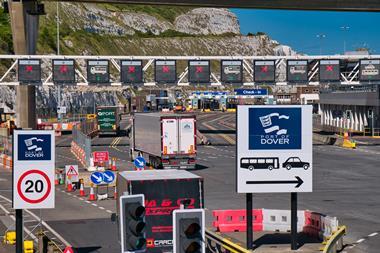
More than 100 export consignments of British meat, worth more than £10m, have been held at the French border over the past four months due to “long-standing weaknesses” in the FSA’s delivery of official controls, producers have warned.
Exporters were currently facing increasingly “officious” controls at Calais, according to one industry insider, who suggested they were politically driven and linked to the ongoing talks with the EU on a new sanitary and phytosanitary deal.
However, the issue was being further exacerbated by the “failure” of the Food Standards Agency to “deliver a competent meat inspection service”, claimed Dr Jason Aldiss, executive director of the Association of Independent Meat Suppliers. He slammed the running of the agency and called on chief vet Dr Christine Middlemiss to either “resign or apologise” to the meat sector for its “months and months of basic meat inspection failures”.
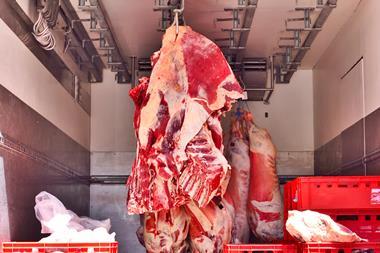
The situation – which Aldiss said he had been flagging to Defra and the FSA for many months – came to a head last week when several refrigerated lorries carrying high-value lamb shipments to the EU were impounded at the French border by the Calais Veterinary & Phytosanitary Border Inspection Office (SIVEP).
Read more: FSA admits no new cash for work on EU reset’s new SPS deal
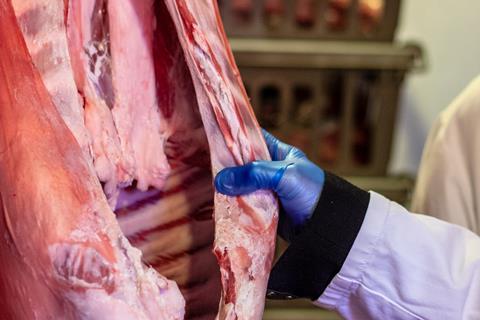
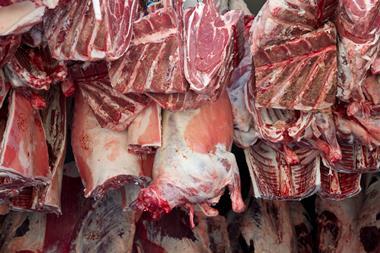
The National Sheep Association said French inspectors had reported traces of wool found on individual lamb carcasses which had been stamped as fit for human consumption by FSA meat inspectors in the UK. It is understood at one point last Wednesday more than £1m worth of meat was being held.
Consignments were only released back to the UK after Middlemiss intervened, and with the express understanding that affected loads would not be re-exported to the EU – leading large amounts of meat ultimately being destroyed or used in lower-value supply chains such as the petfood sector.
The rejection of consignments follow reports to the NSA from other exporters experiencing recent rejected loads, with issues being identified such as parasitic damage to lungs and livers, and misalignment between the UK and EU on lead levels in offal.
British meat was “among the safest, finest, and most rigorously produced in the world”, with producers, processors, and veterinarians operating “to standards that consistently exceed international norms”, AIMS’ Aldiss stressed.
FSA ‘failing’ on abattoir meat inspections
But such incidents, given how meat exports had been approved by FSA meat inspectors – paid for by the meat sector – meant the regulator was “cheating” processors, he added, with the UK’s official meat controls decried as “the laughing stock of Europe”.
Processors, exporters, hauliers, and producers had expressed “deep frustration” that French authorities were “justifying their actions by citing alleged meat inspection failures attributable to the UK’s FSA”, he pointed out.
AIMS members were paying hundreds of thousands of pounds a month for the official FSA checks, only for processors to have to “implement secondary and more robust quality checks on carcases to safeguard export operations”, he said.
“This duplication of effort, cost, and responsibility is being borne solely because the regulatory service is not meeting the standards required.”
At the root of these “failures” was a “systemic over-reliance on poorly trained inspection staff, mainly recruited from overseas through profit-driven contractors whose commercial priorities do not align with the delivery of a high-quality public service”, Aldiss claimed.
“Many of these individuals are unfamiliar with UK meat hygiene legislation, species-specific pathology, or the detailed inspection competencies required,” he added. “The result is an inconsistent and unreliable inspection framework that leaves exporters exposed and undermines confidence at EU border inspection posts.”
Supermarkets begin talks on taking over national food safety data
Impacted shipments were “high-spec, high-quality loads”, Aldiss said, with border disruption “damaging markets”.
“The FSA needs to be open, honest and transparent and say yes, we recognise there is a problem, and work with us to fix it,” he insisted, while stating the regulator was “blithely ignoring” the issues with official veterinary checks.
France is the UK’s biggest lamb export market, with AHDB data published last month showing volumes for January to September were up 20% year on year to 37,400 tonnes.
Responding to last week’s delays, the NSA’s CEO Phil Stocker said it was “important that all exporters take note of this incident and be aware that inspections at border control posts over the channel are very thorough and appear to have become even tighter than normal, and we should present no opportunity, or reasons, for rejections”.
British Meat Processors Association CEO Nick Allen said the trade body was “having conversations with members and the authorities about what seems to be a change in the approach” at borders.
“We encourage our members to check, double check and check again,” he added.
The FSA declined to comment on the issue, directing The Grocer to Defra, which said it was “continuing to engage with industry” alongside the FSA and Animal & Plant Health Agency to “support those businesses affected”.
France’s Customs Authority was approached for comment.




No comments yet