





Aldi and Asda have become the first major retailers to openly attack the government’s controversial plans to bring in a new model for healthy food.
The retailers told MPs the moves, revealed by The Grocer last week, would suck investment out of lowering everyday prices and also risked confusing customers by demonising products that could play a part in a healthy, balanced diet.
Giving evidence to the Health and Social Care Committee inquiry into food and weight management, Aldi’s national sustainability director Liz Fox said it was urging the government not to go ahead with the proposed changes, which, among other elements, would slash the levels of sugar allowed for products to qualify as healthy.
Fox said Aldi was concerned the proposals would “take time and investment away” from areas such as price simplicity and placement in stores.
She added: “The primary concern, more importantly, is the potential confusion for customers.
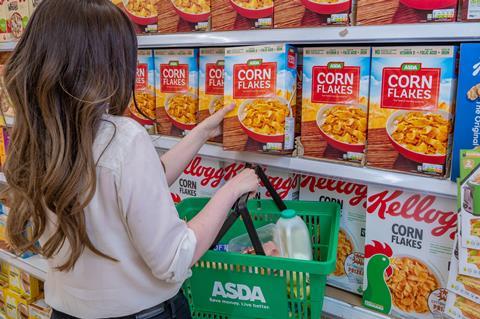
“The new model, as it stands, would class products that can absolutely be included in a balanced, healthy diet, such as yoghurts and cereals, as unhealthy.
“We do not want to bring that confusion to our customers.”
”However,” she continued,” we are absolutely open to working with the government to understand how best to build on existing data, from a cost-efficiency perspective, to ensure that we are able to have a single reporting mechanism that gives choice to the customer but does not narrow the ranging that we can do in stores.”
‘Major concerns’
The DHSC said it hoped the new nutrient profiling model (NPM) will rope in more desserts and foods that parents mistakenly think of as healthier options, including sweetened breakfast cereals and fruit-flavoured yoghurts.
However, Beth Fowler, senior manager for healthy and sustainable choice at Asda, said it had major concerns about plans to reclassify many products containing naturally occurring free sugars, including fruit and vegetable juices, smoothies, purées and pastes.
Industry bodies have warned the government the industry currently had no official measure for free sugar, with companies left to use estimates and subjective interpretations, and many not capturing the data.
“[Our concern] is we cannot analyse for it,” said Fowler. “Our supplier base does not hold it. How do we build up to that data when it is effectively a theory? We think there is a lack of accuracy with the free sugars determination.
“Investment is a secondary concern. On the point about revenue, yes, we are a large business, and our revenues are big numbers, but that does not necessarily reflect profitability.”
The Grocer revealed last week the FDF and BRC were both calling for emergency talks with ministers to discuss the plans, which are set to be used to underpin landmark health legislation, including the HFSS promotions ban and the junk food ad clampdown which came in last month.
However, they have met with strong backlash from health groups and other NGOs, who say moves to update the NPM, which dates back to 2004, are long overdue.








No comments yet