



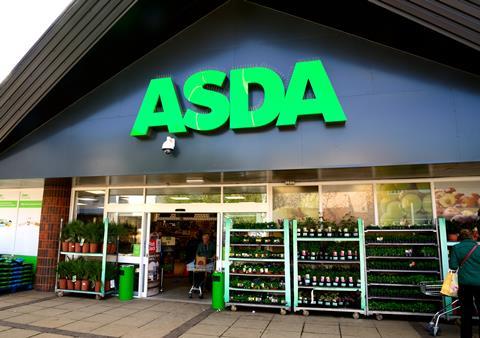
Asda has returned to growth over 12 weeks for the first time since March 2024, according to the latest Worldpanel by Numerator data.
Sales at the supermarket were up by 0.1% year on year in the 12 weeks to 6 September, giving it 11.5% of the market – the same share it held in Worldpanel’s August data but still down 0.3 percentage points on a year ago.
Meanwhile Lidl is now one month shy of a three-year run as the UK’s fastest-growing bricks & mortar supermarket, based on Worldpanel’s definition of a grocer, which excludes Marks & Spencer. Lidl’s sales were up by 8% year on year, giving it 8.7% of the market, up from 8.3%.
M&S grew faster still, with its grocery sales soaring by 14.8% since a year ago. Worldpanel does not count M&S as a grocer because of its mix of clothing & home sales – despite the percentage growth being purely in fmcg sales – and so does not allocate it a market share.
Asda’s numbers appear to lend credence to executive chairman Allan Leighton’s recent comments that the supermarket had “turned a milestone” by growing like-for-like sales excluding fuel by 0.2% in the seven weeks to 18 August. However, it is not clear how much of the growth in Worldpanel’s latest numbers is down to price inflation at Asda.
In the wake of Leighton’s comments, made as the supermarket announced its quarterly results, The Grocer revealed unpublished Worldpanel data showed Asda’s volume sales were down by 2.5% year on year in the 12 weeks to 9 August 2026.
Worldpanel does not include volume sales figures for individual retailers in its four-weekly market updates.
Across all the retailers, sales are growing more slowly than inflation, according to the latest update. Total take-home grocery sales rose by 2.0% in the four weeks to 6 September, as like-for-like grocery price inflation increased to 2.3%, up from 2.1% in August.
The September return to work and school brought the downturn typical of the season, with 18 million fewer trips to the grocers recorded in the month compared to a peak of 497 million in July, Worldpanel said.
“The end of the summer holidays typically brings a cooling in trip frequency and a pivot towards priority purchases, and this year is no exception,” said Fraser McKevitt, Worldpanel head of retail and consumer insight.
“While grocery inflation ticked up modestly last month, it remains significantly lower than the levels we saw earlier in the year, giving households some welcome breathing room.”
Average spend per shopper on school uniform was £54.53, down 12.4% compared with a year earlier, in a sign of households carefully managing budgets.
“Value is the watchword for parents this back-to-school season,” said McKevitt.
“More than four in 10 households (44%) are now prioritising keeping costs low above all else when it comes to buying uniform, even if that means compromising slightly on quality, while a third (33%) are still looking to strike a balance between the two.
“It’s a clear sign that, for many families, the return to school is landing at a difficult time financially, and retailers who can offer reassurance on price without compromising on quality will stand in good stead.”
Branded goods outpaced own label for only the second time in the past year, with sales up 3.7% compared to 2.9%. Despite the shift, shoppers retained a strong appetite for promotions, according to Worldpanel. Spending on grocery deals rose by £243m, or 7.0% year on year, significantly outstripping full-price sales growth of just 1.4%.
In the seven days to 6 September, households with children buying loaves of bread rose by more than half a million compared to the previous week, and sandwiches featured in more than half of all kids’ lunchboxes as they returned to school.



No comments yet