



UK households spent less money on alcohol over the Christmas period, according to Worldpanel by Numerator data.
Shoppers forked out some £1.9bn on beer, wine and spirits in the four weeks to 28 December, EPoS data from Worldpanel showed. However, this was down from 4.1% on the same period in the year prior.
It marks the sharpest drop in Christmas booze spend since 2021, when the end of Covid restrictions saw revellers flock to pubs and therefore spend less on alcohol to drink at home.
The dip in alcohol purchases was driven by cost of living pressures on younger families, Worldpanel suggested.
While most major alcohol categories saw a decline in spend versus last year, shoppers spent £9m (4.6%) more this year on sparkling wine, with champagne a particular driver.
Other categories to see an increase in spend included single-serve RTDs (4.5%) and stouts and porters (24.3%).
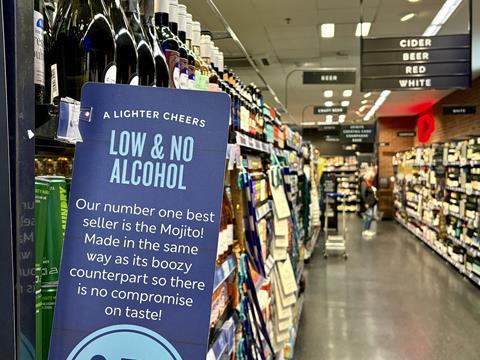
Low & no alcohol, meanwhile, saw a 14% rise in spend, with shoppers splashing £35m over the four weeks to 28 December.
“Slightly fewer people are buying alcohol and those that do are buying slightly less overall,” said Richard Lee, business unit director for drinks in the UK at Worldpanel. “Shoppers are being more considered about when, how much and what they drink, which is reflected in the continued growth of no & low-alcohol options.”
Despite this, the proportion of households choosing low & no alcohol drinks edged down slightly, from 9.6% to 9.5%.
The figures could be a sign of the low & no alcohol category’s “growing maturity”, said Fraser McKevitt, head of retail and consumer insight at Worldpanel.
“Over the last five years, the number of households cutting alcohol out of their shopping basket altogether has steadily increased,” he said. “Alongside this, we’ve seen a rapid rise in sales of low & no-alcohol alternatives.
“However, the slight dip in the numbers of buyers in December may signal that the category is beginning to mature, while the rise in sales shows that converted households are doubling down on their favourite low & no alcohol tipples.”
Overall, it was a Christmas of “smart savings and considered choices”, as “price remained front of mind” for most families, McKevitt added.
No comments yet