




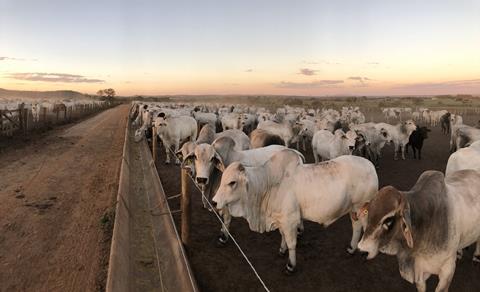
The government has been urged to speed up its assessment of Brazilian beef safety, amid meat sector fears that failing to follow the EU’s lead on an import ban will “severely impact the UK market and damage consumer confidence in British beef”.
The EU’s proposed ban on all Brazilian products of animal origin, including beef and chicken, is due to come into force on 3 September.
It follows concerns, first outlined by the bloc in May, that Brazil had failed to sufficiently demonstrate compliance with EU rules on antibiotic use in livestock supply chains.
The ban is also due to be implemented in Northern Ireland due to its special status under the post-Brexit Windsor Framework.
However, the UK government confirmed in July it would not initially impose its own ban across Great Britain, instead opting to “undertake our own independent evidenced-based assessment of Brazil’s use of antimicrobials assurance arrangements”.
Industry sources suggest this review could last well into 2027, prompting the British Meat Processors Association to warn an EU ban risked larger volumes of Brazilian meat from animals treated with high levels of antibiotics being diverted into the UK market.
This risk was particularly heightened via the foodservice route, “where origin is not specified”, said BMPA CEO John Powell – echoing concerns by the NFU in early August.
Powell added the meat sector was “disappointed” at the length of the UK government’s review.
“We have urged Defra to urgently complete and publish this assessment.”
Brazilian meat sector officials have insisted producers already follow EU antimicrobial rules, with Ricardo Santin, president of the Brazilian Association of Animal protein (ABPA), telling The Grocer earlier this month that its sector “already doesn’t use antimicrobials as growth promoters in our production exported to UK and EU”.
However, the Irish Farmers Association, following its own analysis of Brazilian supply chains last October, claimed “there was no evidence of any infrastructure or willingness to apply even the most basic [antimicrobial] controls on usage in food-producing animals”.
Tony Goodger, head of communications at the Association of Independent Meat suppliers, suggested the UK’s delay in banning Brazilian imports could also be driven by the desire to “keep prices down” for consumers, in a meat category that had been plagued by inflation in recent years.
“I would then expect a government volte-face come February 2027 in order to try to get the SPS agreement [with the EU] over the line for the summer. This appears to be a game of food politics in its crudest form,” he added.
In response, a Defra spokesperson said it would “continue to engage with industry partners and the Brazilian authorities” where Great Britain was concerned.
“Whilst this assessment is taking place, Brazilian imports are still permitted. Any changes to GB import requirements will be risk-based and informed by evidence.”





No comments yet