




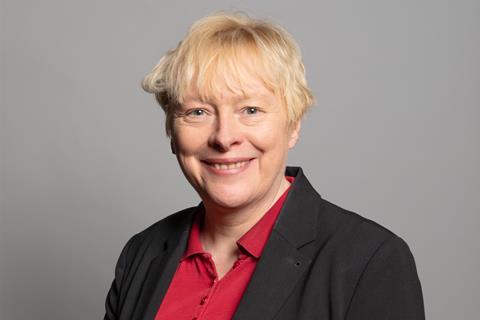
Environment secretary Angela Eagle has told the industry not to expert a major food strategy intervention from central government.
Delivering the keynote address to the IGD’s Future of the UK Food System conference in London yesterday, Eagle said the government believed in handing more power and resources to local authorities, which would drive policies to tackle key challenges in areas such as food inequality and obesity.
With prime minister Andy Burnham driving a localism agenda, in a bid to “bring growth to every postcode”, the Defra boss gave the biggest indication yet that the future of the food strategy would lie with giving greater powers to cash-strapped local authorities.
“It certainly won’t be solved centrally by government,” said Eagle, who returned to Defra in the top job in July, and has been facing industry calls from the government and campaigners to provide better leadership on food resilience and health inequalities, following a lack of progress on the food strategy announced at the end of 2024.
Eagle told the conference: “But with continued cross-government action with partners like the Food Foundation and Felix, strong local partnerships and commitment that we can get there and make this transformation. We now need to maintain momentum and turn ambition into action at a very local level.”
Eagle said she was “working closely” with health secretary Yvette Cooper to deliver the health plans set out in Wes Streeting’s 10-year NHS plan last year, which included restricting junk food advertising and a major revamp of the school food standards and resourcing of interventions such as breakfast clubs.
The Grocer revealed in May that then farming minister Eagle has been driving calls for a series of “hyper-local” interventions, backed by supermarkets and other industry sectors, to tackle UK poverty hotspots as part of discussion on the Food Strategy Advisory Board (FSAB).
At the time she told food bosses she wanted to “seize opportunities” to provide support for the poorest families.
However, the “hyper-local” strategy has attracted criticism.
In May, senior sources told The Grocer they were “alarmed” at the lack of evidence behind the Defra strategy, after it emerged local councils would be given autonomy on how they spend the money being allocated to support the plan.
One leading health expert, who has been briefed on the plans, told The Grocer: “My worry is that there is no guidance to local authorities as to what they spend the money on.
“There’s no consistent evaluation framework to assess how effective this spending is. Instead they are going to leave it up to local areas to work in the way they want with the food industry.”
Meanwhile, industry hopes of a climbdown on the plans to update the government’s nutrient profiling model (NPM) were dealt a blow, with Eagle saying it was pressing ahead with the changes along with plans to bring in mandatory health reporting and a new system of targets.



No comments yet