




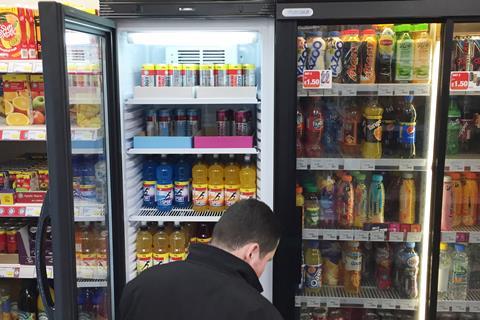
Long-delayed plans to ban the sale of energy drinks to under-16s will come into force in April next year, the government has announced.
Public health minister Sharon Hodgson announced the schedule today, two years after the plans were first announced by Labour. Previous plans under the Tory government were never introduced.
It will become illegal to sell energy drinks containing more than 150mg of caffeine per litre to anyone under 16 across all retailers, including online, in shops, restaurants and cafés.
Energy drinks will also be banned from all vending machines, to prevent under-16s gaining access.
The majority of UK supermarkets already voluntarily do not sell energy drinks to customers under 16. A ‘Think 25’ policy for high-caffeine energy drinks – those containing over 150mg of caffeine per litre – has been introduced by a raft of retailers.
Health campaigners welcomed the moves but criticised the delays in introduction and said the government should go further by banning the sale of the drinks to all under-18s.
Children’s Food Campaign manager Barbara Crowther said: “The decision to ban sales of high-caffeine energy drinks to children is absolutely right, given strong evidence of their harmful effects on their physical, mental and dental health, and overwhelming public support including parents, young people, health professionals, teachers and food retailers.
“We look forward to seeing legislation laid before Parliament at the earliest opportunity, to meet the April 2027 deadline. It’s now two years since the Labour government pledged this action – almost 300 million more high-caffeine energy drinks have been sold to children in that time. The decision is made, no more kicking the can down the road – let’s make this law now.”
She added: “Whilst any ban on sales to children is welcome, we hoped the government would be more ambitious and set the age limit at under-18, in line with legal definitions of a child.
“We urge the government to implement a powerful public communications campaign to accompany the introduction of the new laws on sales of high-caffeine energy drinks to children.”
A spokesperson for the BSDA called on the government to ensure that the introduction of the ban was “proportionate and based on firm evidence.”
“BSDA members have led the way in responsible retailing through the association’s long-standing voluntary code of practice,” a spokesman said.
“Since 2010, our members have committed not to market or promote the sale of energy drinks to under-16s, and all high-caffeine beverages carry a ‘not recommended for children’ label. The available evidence shows that the vast majority of caffeine consumed by children and adolescents comes from sources other than energy drinks.
“The UK government’s decision to introduce legislation restricting the sale of energy drinks to under-16s in England is unnecessary – and not supported by robust evidence of overconsumption or harm, as the consultation response itself acknowledges.
“We continue to believe that regulation should be proportionate and based on firm evidence, and will continue to make that case as government develops the detail of implementation.”
Sharon Hodgson said: “We know about the damage to young people: affecting their sleep, their concentration in class, their behaviour.
“We’re empowering parents and teachers and shopkeepers to say ’no, you don’t have to sell these to children under 16 any more, they’re banned’.”






No comments yet