



Both the European Council and Parliament have agreed to go beyond proposals laid out by the European Commission during the autumn for a “targeted revision” and further delay to its Deforestation Regulation.
The flagship anti-deforestation law had already been delayed by a year when the EC announced proposals for a “simplified” policy in October – which followed earlier plans for a further one-year delay amid a slew of problems with the technology behind EUDR, coupled with mounting political pressure and calls for a delay from businesses.
The EC’s proposals would have seen the regulation come into force on 30 December this year, with larger businesses given a “grace period” until June 2026 to meet its requirements, while small and micro businesses would have until 30 December 2026 to comply.
But following a meeting last week, the European Council and Parliament have now gone a step further, with all companies now given until 30 December 2026 to comply with the regulation, “with an extra six-month cushion for micro and small operators” to June 2027.
Under the agreement, the obligation and responsibility to submit the required due diligence statement will also fall exclusively on the operators who first place the product on the market, the EU bodies said. And only the first downstream operator in the supply chain will be responsible for collecting and retaining the reference number of the initial due diligence statement, rather than passing it on further down the chain.
Micro and small primary operators, meanwhile, will only submit a one-time simplified declaration and will receive a declaration identifier, “which will be sufficient for traceability purposes”, the European legislator said.
A “simplification review” has additionally been introduced, taking place by 30 April 2026, which will “evaluate the impact and administrative burden of the EUDR, particularly for smaller operators, and indicate ways to address the identified issues, including through guidelines and improvements to the information system”.
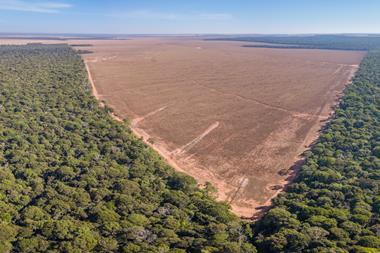
The regulation requires companies selling products to the bloc derived from seven commodities notoriously linked to deforestation, such as cocoa, coffee, soy and palm oil, to provide extensive documentary evidence they were sourced from deforestation-free lands.
The changes to the regulation “respond to continuing implementation challenges, in particular the need to ensure the effective functioning of the EU information system and alleviate administrative burdens for smaller operators”, the EU said.
NGOs rage at ‘failure of leadership’
However, the announcement was met with anger by environmental groups.
“Years of hard-won negotiations have been thrown under the bus in a matter of hours, and in whose interest?” asked Anke Schulmeister-Oldenhove, policy manager for forests at the World Wide Fund for Nature.
“Instead of standing firm behind its own proposal and the will of citizens, the Commission gives in and supports a deal that paves the way for the EUDR to be chipped away bit by bit.”
Policy-makers “have the nerve to claim they want to fight deforestation, yet they delay and dilute the action needed to protect our forests”, she added.
The postponement of EUDR marked a “profound failure of leadership”, said Mighty Earth’s senior advisor Isabel Fernandez, with the approved changes representing a “massive blow and an alarming betrayal of the EU’s own promise to stop deforestation”.
From September: What’s behind the latest delay to the EU’s flagship Deforestation Regulation?
The potential for the regulation to be further open to review next April could also “further weaken the legislation”, she added.
“Instead of standing firm for environmental integrity and true climate leadership and rejecting the proposal by the European Commission, decision-makers have sided with political saboteurs and corporate lobbyists over most Europeans, who want to protect nature,” she said.
“They have chosen to weaken a cornerstone regulation at the very moment when courage, consistency, and bold action should be prioritised to address the climate and nature crisis.”
Only a “robust, ambitious and legally sound EUDR – free of loopholes, exclusions and political expedience – can honour Europe’s environmental and climate responsibilities and safeguard the future of our planet’s forests, which we all depend on”, Fernandez urged.
The latest changes to the EUDR follow a disappointing COP30 climate summit in Brazil, where deforestation and the food sector’s impact on the environment were overshadowed by claims of greenwashing.
It comes as the WWF warned last week that UK supermarkets were not doing enough on climate action, with progress on reducing environmental risks “stagnating” and threatening future commercial viability.
And in a comment piece published in the Financial Times, also last week, ex-Tesco and incoming Diageo CEO Dave Lewis warned the “risks we might once have thought far off in the distance are now knocking on our door”.
The kind of change needed to make the food system more reliable and resilient was “just not there, either from companies or the government, at a time when we need it the most”, he added.
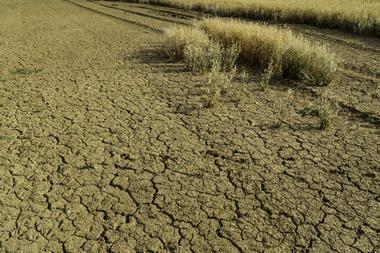
“Environmental shocks, from flooding to soil degradation to heat stress, pose direct threats to commercial viability and business resilience, and they are already translating into stock prices.”






No comments yet