





Europe’s food systems rank among the world’s most resilient, but the continent’s stability is threatened by “productivity strains” linked to climate change that threaten future food security, new research suggests.
With Europe accounting for more than a fifth of global food exports, the region continued to serve “as a strong global food anchor”, found Economist Enterprise’s Resilient Food System Index.
However, the study warned that productivity growth had “stalled”, with just three out of 14 European countries analysed growing agricultural productivity faster in 2018-22 than in the prior five years.
The index, produced with the support of Cargill, analysed 60 countries across six regions across four pillars – affordability, availability, quality and safety, and climate risk responsiveness.
The European countries analysed (including major producers the UK, France, Germany, Italy, Spain and the Netherlands) scored a combined 81.3/100 on sufficiency of supply in the index.
Europe was also the world’s strongest region on open, diverse agricultural trade (73.8/100). Meanwhile, its import diversification (83.6/100) beat every other top-10 global importer, the index showed.
The region additionally scored highly on affordability, with food inflation of 6.5% since 2020, versus 13.9% globally. Moreover, its dietary diversity score of 77.5/100 was 18 points above the global average.
But non-tariff measures, such as divergent certification, inspection and product standards, were “adding costs and delays that could erode that advantage”.
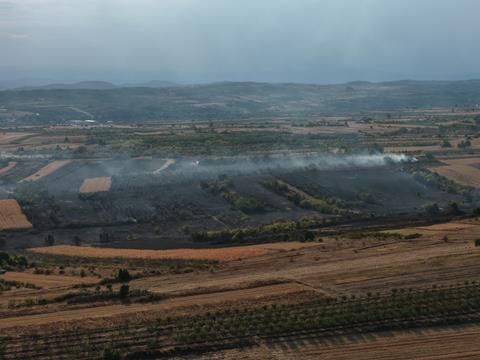
And with yield volatility rising amid myriad climate challenges – as seen with El Niño and this year’s floods, heatwaves and wildfires – today’s resilience “cannot be taken for granted”, the report warned.
Europe had seen higher year-on-year volatility in agricultural production than any region bar North America, the report revealed, driven in part by water scarcity, with a score of just 41.5/100 on irrigation infrastructure.
“Europe’s strong score reflects solid foundations, but those foundations are under strain,” said the index’s lead researcher Pratima Singh.
“Productivity is being squeezed by rising input costs, climate risks and geopolitical instability. Beyond the farmgate, distribution and logistics infrastructure, particularly cold chain capacity, is also under pressure,” Singh added.
“The challenge is to build a system that can anticipate, absorb and adapt to future shocks,” she urged. “Fit-for-purpose investment and innovation can close these gaps, but no single actor can do it alone. Strengthening resilience will take action across the whole value chain, from producers and processors to retailers, financiers, technology providers and policymakers.”
UK increasing food imports from climate risk countries
The Economist Enterprise report comes as research published today by UK-based sustainability consultancy Aethr Associates warned the UK was not only dependent on fresh fruit and vegetables from regions facing worsening climate conditions, but was “actively shifting its sourcing to regions at greater risk of water stress and flooding”.
Aethr’s analysis revealed that – between 2019 and 2025 – UK imports from Mediterranean north Africa rose by 117%, from north Africa and the Sahel by 45%, and from southern Africa by 35%.
All three regions faced significant water stress (where demand for fresh water exceeds available supply), with Mediterranean north Africa and north Africa and the Sahel also rated high for flood risk, as seen earlier this year.
Over the same period, imports from western and central Europe fell by 35%.
Regions gaining market share “carry greater current and long-term climate risk, not less”, the report warned.
And without a more deliberate strategy, the UK risked “concentrating its food supply in the places more likely to face disrupted growing seasons, water shortages, and extreme weather in the coming decades”.
Food security “does not require total self-sufficiency”, the report stressed, with produce such as bananas, citrus fruit, mangoes, avocados, and other tropicals unable to be grown commercially in the UK. But “moving volume from one at-risk region to another does not reduce exposure: it relocates it”.
For other fresh produce categories, the case for domestic investment was “strong”, the consultancy said.
Of the 9.5 million tonnes of fresh produce consumed in the UK in 2025, some 60% came from categories where UK production met less than half of demand or did not exist at all, it noted.
The report identified cucumbers (currently 20% UK-produced), tomatoes (17%), apples and pears (52%), and onions and alliums (51%) as among the areas where investment in technology, protected production, and extended growing seasons could reduce import dependency and climate exposure.
The immediate commercial pressures driving the increase in sourcing from climate-threatened regions was “understandable”, said Aethr co-founder Richard Bonn.
“But it is being weighed against the wrong timescale. We are solving next season’s problem by increasing the risk to the next decade’s supply,” he added.
Aethr is calling on retailers, importers, growers, and government to treat climate resilience as “a fourth criterion” alongside price, quality, and availability in every strategic sourcing decision.
“Climate risk is already reshaping the UK’s food system and current sourcing patterns are intensifying our exposure,” Bonn added. “Leaving food security to short-term market forces and chance is no longer a credible strategy.”






No comments yet