




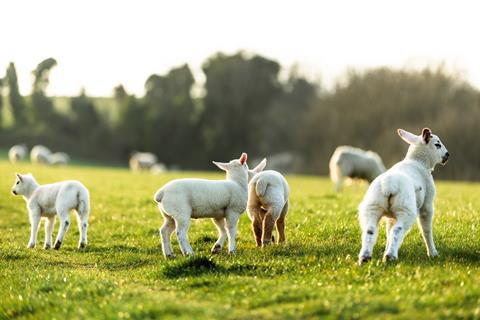
Lamb supply will be impacted, meat industry bosses have warned, as bluetongue continues to spread.
Latest data shows there have been 942 cases of bluetongue in the current season with the majority of cases in sheep.
Additionally, figures from the National Fallen Stock Company have shown that the number of fallen stock, in this case sheep, have increased by 136% in August in some parts of the country compared to last year.
“Tight domestic supplies are almost a certainty,” said Michael Priestley, policy manager at the National Sheep Association, which would likely to drive up prices further.
While he said that the case numbers, with flock mortality at about 1%, would probably not alarm farmers, case fatality was 18%, according to early interim reports from APHA.
“Losing sheep is not even half the story,” said Priestley, who noted the time, effort and vet and med costs of nursing sick sheep through the virus. “One South west vet firm’s usual vet and med spend is £70,000 in July, and this year it was close to £250,000.”
The fertility impact will also have to be considered as rams are likely to be subfertile for up to 100 days after BTV infection.
“This means farmers may have to buy an extra ram or two and have a later breeding season to allow rams recovery time,” he added. ”Late lambs are better than no lambs,” but this does mean there may be a delay to supply.
Other costs are also likely to be up as “there are quite a lot of sheep that have had a lot of TLC”, which may mean increased costs including hydration drinks, vetting, extra feed, sugar beet and more.
At the same time, it comes after an already “challenging” year for farmers due to drought limiting grass growth, meaning some farms spent three months taking forage and water to sheep.
“People have had winter costs all summer,” said Priestley. “If you’ve lost sheep as well, you’ve now got a situation where you’ve got fallen stock bills, so you’ve got to pay to have that sheep collected.”
“Vaccination is the only sound method to beat the virus but vaccine manufacturers are not making enough. It’s not an easy time,” he added.
It comes as NFU acting livestock board chair Clare Wise called for urgent support for the collection and disposal of fallen animals “to ensure farmers are not left to shoulder these additional costs alone”.
“At a time when many livestock businesses are already under significant pressure, targeted support would provide much-needed assistance and help farmers focus on protecting their animals and maintaining high standards of welfare,” she added.
This is part of a wider picture of issues in the global sheep market, with parts of the European supply chain also contracting and an ongoing market investigation in the US which is looking into whether the import of Australian lamb is damaging domestic sheep production.
Should the investigation find that “injury is being done”, more lamb will possibly come to Europe, Priestley added. This is despite supply from Australia and New Zealand “coming in incrementally”, until liberalised trade is reached in 2033 for Australia and 2038 for New Zealand.





No comments yet