





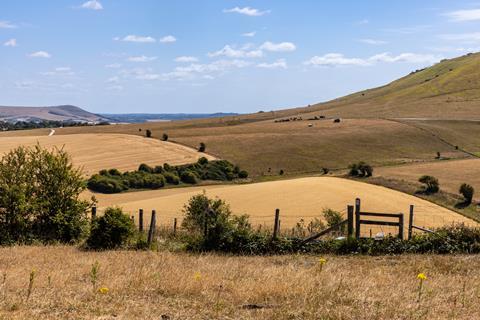
Almost three-quarters of England is now in drought as conditions worsen following a dry start to August.
The National Drought Group has warned all regions of the country are experiencing pressure on their water resources – with increasing impacts across agriculture, public supplies, navigation and the environment.
The East Midlands, Lincolnshire & Northamptonshire, Kent & East Sussex, and Solent & the South Downs became the latest to move into drought status yesterday.
“Drought conditions are worsening and will continue to do so until we see significant and sustained rainfall,” said Tony Grayling, strategic drought lead at the Environment Agency and chair of the NDG. “We know the hot and dry weather is taking a real toll on farming and there will be long-lasting impacts on our environment.”
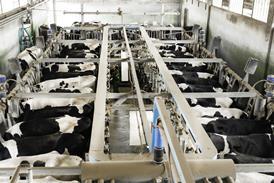
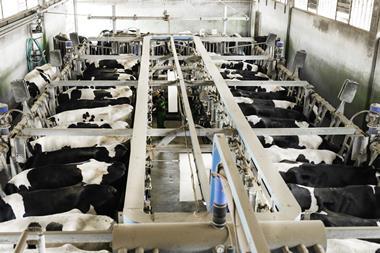
There have been several warnings about food stability with concerns over key crop growth and feed supply for livestock as farmers begin feeding winter forage stocks earlier than normal.
According to NDG, farmers have reported their earliest harvests in 20 years, with reduced yields. At the same time, irrigation restrictions on farmers are now increasing, with 1,534 now in place in East Anglia.
NFU deputy president Paul Tompkins said the situation was “increasingly concerning”.
“Many farmers have completed the earliest harvest on record, with poor yields in key crops reported in some areas of the country,” he added. “Livestock and dairy farmers are already using winter feed because grass has stopped growing, while growers are working hard to keep fruit & vegetables watered, but many are struggling to access the water they need.”
He has called for a risk register for vulnerable businesses and a more responsive abstraction licensing system.
In the long term, Tompkins repeated calls that there was a need for a “consistent and positive planning approach to reservoirs”, further rounds of the Water Management grant and targeted investment in climate adaption.
“Water plays a crucial role in food security and the resilience of our nation,” he said. “By treating water for food as a strategic priority, government can work with farmers to protect crops, livestock businesses, and the UK’s long-term food security.”
In response to the worsening crisis facing food producers, NatWest has announced it will be increasing support for its agricultural customers to help with both immediate pressures and longer-term resilience.
It said that while it was not currently seeing a significant increase in demand for support, the bank anticipated enquiries increasing later in the season as farming businesses evaluated the financial and operational effects of prolonged dry weather.
“British farmers are increasingly being forced to manage the consequences of weather extremes, from flooding one season to drought the next,” said Ian Burrow, head of agriculture at NatWest Group. “The challenge for many businesses is no longer simply recovering from a single event but building resilience for a future where these conditions are becoming more frequent.”
Meanwhile, research from HSBC UK has found that prolonged dry conditions and periods of heat stress are changing the way farmers across the UK are running their businesses.
HSBC UK’s agriculture team reported that the current weather pattern was likely to cause working capital pressure later in the year and is already affecting decisions around production, inputs and forward planning.
At the same time, several farmers are increasing investment in infrastructure and/or alternative crop types, including more heat and drought-tolerant varieties, to build resilience.
“Farming businesses are used to managing uncertainty, but the frequency and intensity of extreme weather are making resilience an everyday commercial priority,” said Martin Hanson, head of agriculture at HSBC UK. “We’re seeing real pressure.”






No comments yet