




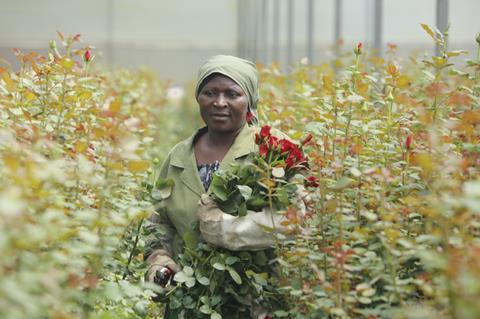
Brits are unaware their Mother’s Day flowers could be grown by workers earning poor pay and subjected to “harsh conditions”, new research by Fairtrade has revealed.
Based on a poll of 1,279 British over-16s in February, the NGO found 96% of respondents were unaware most of the flowers sold at this time of year came from countries where workers, mostly women, earned as little as £2 a day or even less, such as Kenya.
The figures come despite 90% of those polled saying they were concerned about the human rights and environmental challenges – including low pay and exposure to pesticides – faced by flower growers working overseas.
According to Fairtrade, the global cut flowers trade is worth over $30bn and, in the UK, florists saw sales increase by 500% on the Friday before Mother’s Day last year.
“Our research shows UK shoppers care deeply about how their flowers are produced, but they aren’t getting the transparency they deserve,” said Marie Rumsby, director of advocacy at the Fairtrade Foundation. “People want to make ethical choices, yet the reality of low pay, long hours and unsafe conditions is too often hidden from view.”
Read more: Waitrose Foundation expands to improve banana worker livelihoods
Rumsby said companies operating in regions such as East Africa, where more than 50% of imported flowers come from, could operate “without taking full responsibility for what happens in their supply chains”.
With the government expected to publish its updated National Baseline Assessment of progress against the UN Guiding Principles on Business and Human Rights this week, and release the outcome of its Responsible Business Conduct Review later this month, Fairtrade has called for the introduction of a “strong, mandatory human rights and environmental due diligence law”.
“One that ensures workers are safe, paid fairly and able to speak up without fear,” Rumsby added.
To amplify the call for legislation, a digital van toured Westminster displaying messages for minister for trade Chris Bryant on 10 March, while the minister was also sent around 1,000 postcards from Fairtrade supporters.
“This Mother’s Day, look for the Fairtrade mark on your flowers to support the people who grow them,” Rumsby added. “And as the government concludes its Responsible Business Conduct Review, we urge ministers to put fairness for farmers and workers at the heart of UK supply chains.”
Read more: M&S invests in fairer incomes for Ivory Coast cocoa farmers
Fairtrade flowers are stocked online at Arena Flowers and Bloom & Wild, or in supermarkets such as Aldi, Asda, Co-op and Lidl.
The organisation said its flowers are grown “with respect for people and for the planet” and its premiums have helped train workers to develop new skills and earn additional income to support their families.
“It’s clear from the research that flowers remain a firm Mother’s Day favourite,” said Emily Pearce, Co-op’s senior sustainable sourcing and international development manager. “We’re proud to be making it easier for our members and customers to choose Fairtrade as the UK’s largest retailer of Fairtrade flowers, sourcing 112.5 million stems last year alone.”
Pearce added: “We have been supporting Fairtrade for more than 30 years, championed by our passionate members.
“We see first-hand the difference it can make, and whilst there is still much to do to address unfairness in global food supply chains, we know that through our commitment, our members and customers are contributing to a fairer deal for the farmers and workers producing these beautiful blooms.”






No comments yet