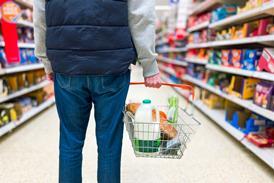
Shopper buying yoghurts

The government has published a new nutrient profiling model, which it plans to use to ramp up the junk food advertising ban and in-store supermarket promotion restrictions.

The move looks set to see thousands of products, including many yoghurts, fruit juices and desserts, reclassified as HFSS. The government predicted it would reduce childhood obesity by 170,000 cases a year.

The Department of Health & Social Care today released the updated model, adapted from the 2018 proposals by the now defunct Public Health England, which were put on ice by the last government because of the dramatic impact they would have on the food industry.

The DHSC said it was no longer tenable to continue with the existing NPM, which dates back to 2004. It said it hoped the switch would incentivise the food industry to improve the healthiness of food and drink.

However, as exclusively revealed by The Grocer earlier this month, the moves are set to spark a massive battle with the food industry. It has warned that large swathes of products, including many that have spent millions on reformulation to meet the NPM, will be reclassified as less healthy and face the prospect of being banned from advertising on TV before the new watershed or from promotions in store.

A government consultation on how it plans to apply the recommendations to the junk food ban and advertising promotions is to be released in the spring.

Free sugars focus

The new model shifts from an NPM based on total sugars to free sugars and introduces a lower threshold for free sugars intake, based on the pivotal ruling by SACN in 2015 that free sugars should make up no more than 5% of energy intake.

It will cover free sugars naturally present in syrups, honey, and unsweetened fruit and vegetable juices, smoothies, purées and pastes.

The DHSC said it hoped to rope in more desserts and foods that parents mistakenly think of as healthier options, including sweetened breakfast cereals and fruit-flavoured yoghurts, which were being marketed to children.

However, it stressed that the proposals meant that yoghurts with no added sugar would pass the new NPM, along with other products such as sausage rolls and fruit juice with no added sugar.

The government said it was still considering exactly how the new model would be applied to junk food advertising restrictions and volume price promotions on less healthy food and drink.

A full public consultation on the application of the new NPM to the advertising and promotion restrictions, including the timeline for implementation, will be launched in the spring.

As revealed by The Grocer, the casualties of the proposals would include several “poster children” of the food industry’s reformulation programme including PepsiCo’s entire Doritos portfolio,  Belvita’s soft bakes range, which in September 2024 was declared completely non-HFSS by its owner Mondelez, having reduced sodium by up to 56% and Innocent’s orange with bits pure juice.

 A DHSC spokesman said: “Most children are consuming more than twice the recommended amount of free sugars, and more than one in three 11-year-olds are growing up overweight or obese.

“We want to work with the food industry to make sure it is the healthy choices being advertised and not the ‘less healthy’ ones so families have the right information to be able to make the healthy choice.

“We promised to publish the updated model in our 10 Year Health Plan and now we have done so. We want to work with parents and the food and drinks industry to help create the healthiest generation of children ever.”

Katharine Jenner, executive director, Obesity Health Alliance and co-chair of the NPM working group said: “Updating the Nutrient Profiling Model isn’t moving the goalposts - it’s making the game fairer. This measured, long-overdue update better reflects modern dietary guidance and ensures genuinely healthier foods are recognised, and that more highly processed, high-sugar products can no longer hide behind outdated definitions.

“This updated model has been sitting on the shelf since 2018. Publishing it now, with a view to bringing it into use, will finally allow policy to shine a light on the foods that genuinely support people’s health.”