






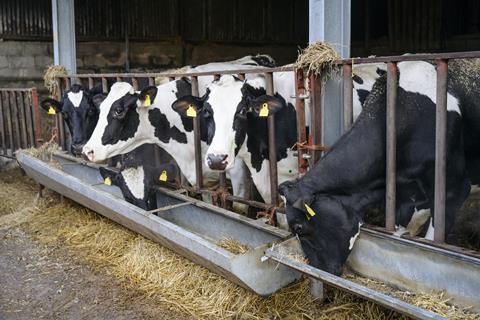
Red Tractor has launched a six-week consultation for farmers and industry stakeholders to have their say on proposed changes to Red Tractor’s Beef & Lamb and Dairy standards.
The proposed changes include reducing the number of prescriptive audit points and a more farm-specific approach to livestock health planning.
By consolidating and reordering requirements and removing prescriptive detail, the proposals will reduce requirements for Beef & Lamb by one third and for Dairy by one quarter, the assurance scheme said.
Red Tractor said the consultation period, running from 22 September to 3 November, was an important opportunity for farmers to consider what the proposed changes would mean in practice on their farm, and for vets, advisers and others across the industry to assess whether the proposals are clear and workable.
“We want to hear all points of view, but particularly those of farmers,” said John Dracup, chair of the Beef & Lamb Sector Board. “No two farms are the same, so it’s important we hear from a range of farm businesses. If something is unclear, or there’s a more practical way of demonstrating compliance, we want to know.”
The sector-specific Technical Advisory Committees, made up of farmers, vets, processors, retailers and other industry representatives, have reviewed every audit point line by line against set criteria.
Representatives of the Beef & Lamb and Dairy Sector Boards, and Red Tractor’s Standards Committee, have reached consensus on the proposals now being put out for consultation.
For Beef & Lamb, the proposals include a small number of additional requirements on practical welfare and resilience, covering extreme weather, feed safety, disease planning, nutrient management and housing.
For Dairy, alongside the changes shared with Beef & Lamb, proposals include a new code of conduct on animal care and handling, plus recommendations on cow comfort, environmental enrichment and foot-trimming competence.
The changes will align the Beef & Lamb and Dairy standards so that farmers in England assured for both dairy and beef will benefit from a reduction in duplication.
“The aim is to make the standards clearer and more practical,” said Tim Lock, chair of the Dairy Sector Board. “In most cases, what’s expected of farmers remains the same, but should make preparation for assessments and demonstrating compliance easier.
“Importantly, the proposed changes also ensure that standards continue to deliver confidence in the market.”
Feedback will be reviewed by the Beef & Lamb and Dairy Technical Advisory Committees and Sector Boards, which will consider the feedback before confirming which of the proposals move forward.
Red Tractor is also reviewing how assessments are carried out which will have changes expected to have the potential to deliver further efficiencies while maintaining rigour. These will be shared as the work develops.
The NFU acting livestock board chair Clare Wise and dairy board chair Ian Harvey both acknowledged “progress” made in making the standards and audit points easier to understand and navigate.
Harvey added that the NFU was continuing to work with Red Tractor to “streamline the audit process itself, recognising and rewarding compliance, to help place less pressure on dairy producers during inspections”.
Similar consultations for proposed changes to standards for Combinable Crops & Sugar Beet, Fresh Produce, Pigs and Poultry will follow later in the year.








No comments yet