





A “game-changing” collaboration between retailers and suppliers, which uses spare capacity in delivery trucks to redistribute surplus food, is being opened up to the industry for a nationwide rollout.
After Sainsbury’s became the first supermarket to pilot the scheme earlier this year, the project is now being projected to save food charity bosses more than £1m a year in logistics costs.
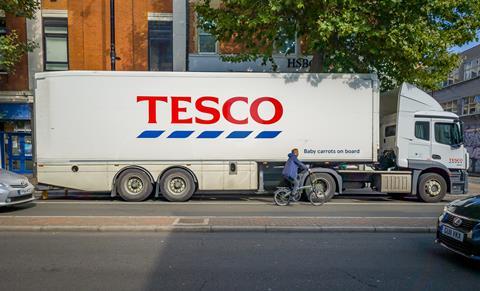
Sainsbury’s, Tesco and Marks & Spencer all announced today they were backing the rollout of the AI-powered HGV logistics network.
The project, led by the industry’s Alliance Food Sourcing (AFS) coalition, which brought together retailers to respond to the King’s call for a step-change in surplus redistribution, aims to be carrying surplus from all major retailers by next spring.
AFS director Nicky Robinson told The Grocer the collaboration was a “game-changer” for food redistribution and that it hoped to “take a big bite” out of the £5.6m that food redistribution charity Felix currently spent on logistics.
In April, The Grocer revealed Sainsbury’s, working alongside logistics expert GXO, had become the first retailer to take part in a trial of the new platform. It has been delivering fruit & veg that would otherwise be wasted, to food distribution charities FareShare and The Felix Project, which have subsequently merged under the Felix banner.
Today, AFS said the Sainsbury’s trial alone was on course to deliver 5,300 tonnes of food, saving 42,885 road miles and 62.9 tonnes of CO2, while delivering £170,000 in cost savings, in just six months.
Sainsbury’s, GXO, Greencore, Tesco, M&S and Gist have all now worked together using AI technology to set up a “mission control’. This matches surplus food that needs to be delivered to charities with spare space on lorries already travelling across the country, so surplus can be delivered without major disruption and extra supply chain costs.
Robinson said: “We have shown that this has the capacity to radically reduce the costs to charities. But the technology also allows retailers and manufacturers to have far greater visibility abut their food surplus.”
Part of the scheme features a scorecard that shows companies how much surplus they have delivered to the charity.
Robinson said it was truly ground-breaking for arch rivals in the food system to be working together on such a project.
The initiative comes with eight million people going hungry in the UK, 2.1 million of them children, according to figures from the Food Foundation. However, most frontline charities say they cannot meet demand for food.
Earlier this year, following a summit at Downing Street, the government revealed a national programme to triple charitable food redistribution over the next decade.
“Transportation costs Felix millions of pounds a year, and since the conflict in Iran these have risen substantially,” said Richard Smith, director of food innovation at Felix.
“To know this new tech could save so much money is phenomenal.”




No comments yet