






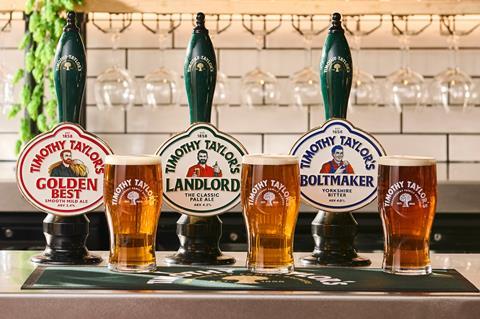
Timothy Taylor’s has unveiled its first branding overhaul in more than a decade as it looks to capitalise on Gen Z’s growing affinity for cask ale.
The West Yorkshire brewer said its new branding was designed to attract a new generation of drinkers while retaining the “distinctive elements that loyal Timothy Taylor’s drinkers know and value”.
It includes an updated logo, pump clips, glassware and bottles, with a “British racing green” colour palette and more informative beer descriptions to help it “feel more distinctive and relevant”.
“This refresh isn’t about changing what we brew,” said Timothy Taylor’s CEO Andrew Carter. “The recipes, ingredients and brewing philosophy that have served us for generations remain exactly the same.
“It’s about making sure the quality and care that go into every pint are reflected in how Timothy Taylor’s is presented today, so we’re just as relevant to the next generation of drinkers as we’ve been to the last.”
Timothy Taylor’s has bucked declines seen in cask ale in recent years, with sales climbing 2.1% in the year ended 30 September 2025. The brewer’s flagship ale brand Landlord also cemented its position as the largest-selling cask ale in the UK by both value and volume.
The refresh forms part of a long-term plan by Timothy Taylor’s to sustain momentum. This includes a £9m investment in its brewery site over five years and £3m each year in marketing.
Gen Z thirst for cask
Cask beer sales volumes fell by 7.1% in 2025, and 11.2% in 2024, according to NIQ.
However, young drinkers are offering shoots of hope for brewers. Around 25% of Gen Zs were now regularly ordering cask beer due to its lower price and a sense of local connection, a survey by the Society for Independent Brewers and Associates found last year.
Timothy Taylor’s isn’t the first brewer to respond to Gen Z’s apparent thirst for cask ales. Budweiser Brewing Group resurrected cask Boddingtons last year by agreeing a licence with Manchester brewer JW Lees.
“There is a genuine affection for things from the ’90s when things seemed to be more balanced, and I think cask is part of that,” said William Lees-Jones, MD of JW Lees Brewery.
“Oddly, the success of Guinness has had a positive effect on cask because not everyone wants to drink ‘global’ lagers, and they want beers more quaffable than over-hopped West Coast IPAs,” he told the FT.








No comments yet