







The UK’s prosperity and national security is at “high risk” from the threat of global biodiversity loss and ecosystem collapse, a government intelligence assessment has warned.
Ecosystem degradation was “occurring across all regions”, warned the report, published with little fanfare this week. Without a “major intervention to reverse the current trend”, the threats to the UK would only increase and intensify up to and beyond 2050, it said.
The government’s Global Biodiversity Loss, Ecosystem Collapse and National Security assessment had originally been due to be published last October, but had been shelved due to its political sensitivity, according to climate campaigners.
It revealed the world was “already experiencing the impacts of biodiversity loss: crop failures, intensified natural disasters and infectious disease outbreaks”.
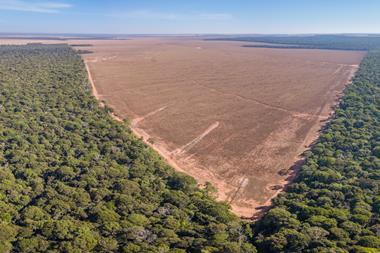
The rate of wildlife extinction was “tens to hundreds of times higher than the average over the past 10 million years”, the report added, suggesting a “sixth mass extinction” may already be underway – driven in part by widespread deforestation.
Food production was “the most significant cause of terrestrial biodiversity loss”, intelligence chiefs pointed out. As the global population continues to grow – reaching 9.7 billion by 2050 – the impact of food production on natural systems “will intensify” and make it “even more challenging to produce sufficient food sustainably”, it said.
The study warned the potential collapse of critical ecosystems would create national security risks. Those included migration to serious and organised crime, coupled with non-state actors such as terrorists, who would “look to exploit and gain control over scarce resources”.
Read more: NGOs attack industry ‘negative influence’ on food strategy
The risk of pandemics would also increase, the paper warned, as would economic insecurity, political polarisation, geopolitical competition, conflict and military escalation.
Given imported food represents 40% of UK demand, it warned “without significant increases in UK food system and supply chain resilience, it is unlikely the country would be able to maintain food security if ecosystem collapse drives geopolitical competition for food”.
Full self-sufficiency “would require very substantial price increases for consumers, as well as improvements in efficiency, waste reduction and resilience across the food system, including agricultural production, food processing, distribution and consumption”, the report found.
“The UK does not have enough land to feed its population and rear livestock: a wholesale change in consumer diets would be required. It would also require greater investment in the agri-food sector so that it is capable of innovating in sustainable food production.”
Responding to the report, Vanessa Richardson, a campaigner for NGO the Environmental Investigation Agency, said the UK government’s recognition of global ecosystem collapse as a threat to national security “brings responsibility”.
“The UK must act now, with strong legislation to end the consumption and financial practices that drive global deforestation and human rights abuses worldwide,” she urged.
“Our only scientific solution to halting climate change and avert ever more dangerous and costly harm is cutting our polluting emissions to net zero,” said Gareth Redmond-King, head of international programme at the energy and Climate Intelligence Unit.
“Without it, as the UK’s own national security assessment has just warned, our food security is under threat,” he added.
“The UK will continue to see harvests like last year’s – the second worst on record – and nations around the world from which we import two fifths of our food will see more and more crops failing; impacts that are already driving up food prices everywhere.”









No comments yet