






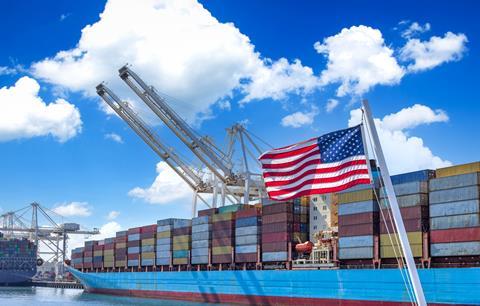
The UK’s food export volumes plunged by 8.9% in the first quarter of 2026, driven by the fallout of US import tariffs, new Food & Drink Federation data has revealed.
With quarterly volumes falling to their lowest levels in a decade [excluding the height of the Covid pandemic], the FDF described the slump as a “worrying sign of a downturn in food and drink exports”, and warned a “storm is brewing” for increasingly uncompetitive UK food businesses overseas.
Total export values across both food and drink were also significantly down, according to FDF analysis of HMRC data, falling by 4.8% to £5.7bn – the third lowest Q1 levels since 2000.
The expected disruption from Donald Trump’s package of tariffs meant year on year exports to the US fell by 27.9% to £529.6m. Whisky sales to America fell by 14.7% to £182.1m, while salmon sales dropped by 45.6% to £68m.
The decline came despite the UK’s “early gains” from the UK-US trade deal, which the FDF said had subsequently been eroded after Washington struck similar agreements with other countries.
‘Asymetric’ trade with US
At the same time, US exports to the UK increased, with salmon, spirits and chocolate all recording strong growth. “There is clear asymmetry between US producers growing their share at the same time UK exporters are losing ground in theirs,” the FDF said.
As a result, the UK’s food and drink trade surplus with the US shrank by 69.3%, from £359m to £110m in Q1 2026 – its lowest level since Brexit.
The US was “also set to benefit from proposed tariff suspensions announced by the UK government this year”, which would make it cheaper for US businesses to export products like chocolate, biscuits, jams and spreads to the UK, the FDF said.
Meanwhile, UK manufacturers faced higher costs sending products to the US, “meaning this trend is likely to persist”, it added, while reiterating criticism of the government’s cost of living tariff suspension packages – which FDF CEO Karen Betts warned “risks making a bad situation worse”.
“It is very undermining of UK businesses and of the people they employ, and it undermines the UK’s food security in the longer term,” Betts added. “Government should suspend tariffs on ingredients rather than manufactured products, to lower the cost of producing food here in the UK and to help businesses keep prices down for consumers.”
Elsewhere, the snapshot revealed EU export values held broadly flat at £3.4bn, while non-EU export values dropped by 11.0% to £2.6bn, driven by both the slowdown to the US and to countries including China (down 18.5%).
Export volumes to other countries and regional trading blocs with recent free trade agreements with the UK, such as India (down 16.6%) and the CPTPP (down 11.3%) also saw big drops. This demonstrated “the importance of manufacturers being supported to reap the benefits of these deals”, the FDF said.
In value terms, the UK’s total food and drink imports grew by 2.6% to £16.3bn, the data showed, suggesting British food and drink manufacturers were “struggling to keep pace with global competition at home and abroad”.
Non-EU imports grew by 4.2% in Q1 2026 in value terms compared to 2025, while EU imports grew 1.9%.
The report also showed that the cost of importing ingredients and raw materials, such as plastic packaging, was nearly two fifths (38.6%) higher than it was in January 2020.
‘Squeezed’ food sector
“Alongside rising energy prices, and an ongoing pipeline of regulatory pressure, this is adding persistent pressure to the cost of producing food in the UK, the FDF warned.
A sector “that is being squeezed at home cannot seize opportunities globally. This presents a growing threat to the long-term resilience of the sector”, it added.
“Food and drink businesses are part of the fabric of every community in the UK, and it’s concerning to see them struggling to compete overseas,” Betts said.
“The UK produces world-class food and drink, drawing on our heritage and our reputation for innovation, but we have to be able to remain competitive overseas against local products.”
The costs of producing food and drink in the UK were higher than in many competitor economies, from energy to employment, “and constantly changing regulation only adds to these”, she said.
“There is plenty government can do to improve the competitiveness of our food and drink exporters, many of which are SMEs, from helping companies to access the benefits of trade deals to lowering the cost of doing business in the UK.”








No comments yet