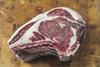
Raw prime rib of beef on a chopping board - stock photo

Source: Getty Images

Dovecote Park’s pre-tax profit declined 18.2% from £4.4m to £3.6m

Waitrose red meat supplier Dovecote Park has warned that the government’s agricultural policy is acting as a “deterrent” to UK beef production, as its profits dropped.

Although beef price inflation helped to drive turnover up 23.2% from £281.6m to £347.0m, along with “some underlying volume growth,” the business’s pre-tax profit declined 18.6% from £4.4m to £3.6m, according to its accounts for the year to 26 September 2025.

The group’s strategic report was blunt in its criticism of government policy, saying support mechanisms to secure environmental benefits, improve animal welfare and reduce carbon emissions were actively holding the industry back. In the report, the directors said government needed to recognise this “genuine threat to food security” and adopt “a more pragmatic and less target-based approach”. 

“Despite the economic headwinds, the long-term priority for the UK government and its policymakers must remain the viability of the livestock sector,” they added.

Explaining the profit drop, the North Yorkshire-based beef, veal and venison supplier’s strategic report pointed to an “unprecedented” rise in UK cattle prices, which increased by 34% during the year.

“This steep increase in raw material costs presented challenges to the business in terms of its ability to pass them on fully over our entire customer base,” the directors said. “Raw material price inflation also increased the demand for working capital.”

They continued: “Beef consumption did slow in volume terms in the face of these higher prices in both retail and foodservice sectors but still demonstrated some encouraging resilience. Sales growth was thus inflated by price inflation, but we still experienced some underlying volume growth.”

In May, The Grocer revealed beef price inflation had begun to slow, with Assosia data showing the average price at British retailers had declined 0.3% over the month due to falling consumer demand, although they were up 4.4% year on year.

However, the directors said beef was benefiting from consumer shifts in attitudes to protein consumption.

“Consumers are moving away from highly processed foodstuffs, in particular meat alternative products,” they said. “As a fresh, healthy and natural food, beef is well positioned in this marketplace.”

Economic headwinds

Another factor that impacted Dovecote’s bottom line was the government’s decision to increase both the national minimum wage and employer National Insurance rate.

The company also pointed to RPI inflation, which “proved more difficult to tame and rose slightly to 3.6% over the course of the financial year, remaining stubbornly above the government’s 2% target”.

“Despite a focus on continuing capital investment in enhanced productivity, trading margins and consequently, profitability suffered,” the directors added.

The company said the decline in the national suckler beef and dairy herd would continue to be the “dominant factor” in British beef, further tightening supply and increasing cattle prices.

However, the directors noted there was little indication “of any herd rebuilding taking place, either in the UK, Ireland or Europe”.

“The outlook remains one of tight margins and challenging trading conditions,” they admitted. “The group will maintain its emphasis on quality, investment and improvement in processing efficiencies.”

The directors added: “[Dovecote] believes that its broader customer spread puts it in a strong position to generate sales and volume growth in the current financial year.”