







Coffee is feeling the heat. Arabica and robusta futures hit new highs on the back of climate volatility and market speculation in 2024, and the past year has brought little relief.
“The category has been hit by inflation, with arabica bean prices soaring by over 50% in the past year,” confirms Jack Scott-Paul, Taylors of Harrogate senior brand manager.
“Cost pressures are coming from multiple directions – rising shipping and storage costs, increasing labour costs, broader macro-economic factors and, significantly, climate change, which is having a growing impact on farming communities and yields.”
Hence the price hikes per average kilo in ground and instant coffee over the past 12 months: 5.5% and 3% respectively. Still, they haven’t been enough to put people off caffeine altogether. Ground volumes have grown 2.7%, instant volumes by 1%.
Not that brands have enjoyed much of that growth. “This year we’ve seen higher-priced products perform worse, and the switch to own label was apparent,” notes Chris Littleton, NIQ analytics executive.
Indeed, own label accounts for 43.8% of ground coffee sold in the past year (up from 40.9%) and 29.1% of all instant (up from 28.5%). Only one top five ground brand, Taylors, and two top five instant brands, Kenco and Costa, have shifted more kilos.
“The past year has brought significant inflationary pressures across the coffee category,” says Maria Kabalyk, JDE Peet’s UK head of category. “With an increase in price comes an increase in consumer expectations. It is vital we continue to invest to elevate in-home coffee experiences.”
While JDE’s Douwe Egberts and L’Or instant coffees have both lost value and volume, its flagship Kenco brand is in better shape. It’s the biggest absolute winner in instant, having added £13.6m on volumes up 10%. Note that Kenco’s average price has dipped, making it the only top 10 brand to get cheaper.
Kabalyk attributes Kenco’s growth to the brand’s more upmarket Millicano tins and continued growth across its soluble sachets range, which can be mixed hot or cold.
“Consumers want to recreate their favourite coffee shop orders at home, and they want a bit of indulgence, but it needs to be convenient and at the right price point,” she says. “We see a growing opportunity for premium instant coffee products that deliver rich, indulgent taste with minimum fuss while also costing significantly less per drink than your typical coffee shop order.”
A similar trend is bolstering sales of Costa and Starbucks, whose instant lines have both achieved double-digit value and volume growth.

‘More value per cup’
Costa has also put in a good performance in ground coffee, having grown value 18.5% on volumes up 20%. As is the case with Kenco in instant, Costa is one of only a few ground coffee brands that have seen its average price per kilo fall in the past year.
That’s partly because it’s been relying more on larger packs. “We’ve focused on helping shoppers maintain quality while managing budgets,” says Catherine Mountford, Costa at-home commercial lead. By adding larger pack formats and 1kg bags of beans, the brand is giving shoppers “more choice and value per cup”, she adds.
Challenger Grind has also made major gains, thanks to distribution growth and by keeping a tighter lid on price. It’s now the UK’s 13th biggest ground coffee brand after value surged 136% to £4.4m on volumes up 158.6%. Now it’s eyeing instant for further growth with its two Craft Instant blends (see Top Launch, p119).
“No coffee format is more accessible than instant,” says David Abrahamovitch, Grind CEO. “It still dominates the shelves and it’s the most popular way to drink coffee at home in the UK. This launch is a huge opportunity for us to bring better coffee to more people, taking everything people love about Grind – the taste, the ethics, the design – and making it instant, without compromise.”
Faced with competition from new entrants like Grind, as well as cheaper own label alternatives, instant category leader Nescafé has seen its share decline. The brand’s £6.6m value growth is chiefly down to price. Volumes have shrunk 2.5%.
“As the market leader in pure soluble, we saw price growth on the portfolio earlier than the competitive set and subsequently saw volumes hit harder in the first half of the year,” explains Ingrid Hayes, Nescafé UK & Ireland marketing director. However, as the price of competitors has caught up, performance has stabilised and volume growth returned in the second half of the year, she insists.
To get ahead, Nescafé has jumped on the iced coffee trend. In March, it launched ambient RTD coffees, Iced Latte and Iced Caramel Latte. A month later, it debuted the three-strong Espresso Concentrated range, billed as “premium liquid coffee that can be used to create barista-style iced coffees”. It’s since hit £6m in retail sales, says Hayes.
Another trend building a head of steam is matcha – to such a degree that Japan could soon experience shortages of the tencha tea leaves from which the vivid green powder is made, according to reports.
Matcha leader PerfectTed has recorded the greatest percentage gains of any major brand in this report – albeit from a small base. Value sales of its powders, sachets and RTDs now stand at £5.4m.
Innovation has been crucial in winning PerfectTed more shelf space. “Two standout examples from this year include our RTD matcha lattes and our no-whisk Blueberry Matcha Powder,” says Gemma Krishnan, the brand’s senior marketing manager.
“These innovations, supported by impactful ATL campaigns, have removed barriers to entry for matcha and driven long-term community engagement and brand visibility.”
The trouble with tea
Tea of the non-matcha variety, on the other hand, could do with a pep-up. Value growth has slowed to 2.2% while volumes have slipped 1%. In last year’s report, value was up by 10.4% on volumes down 0.5%.
“There has been some slowing of the tea category in recent months, mainly driven by everyday black tea,” says Lucy Hoyle, senior brand manager at Yorkshire Tea, which has bucked the overall decline with a 5.4% value rise and 1.3% volume growth. “We are seeing shoppers buying less frequently and in lower volumes.”
Yorkshire Tea has been experimenting within black tea with increasing regularity in recent years. July saw an “indulgent” Cherry Bakewell Brew join its Proper Breaks lineup. The NPD offers “an almondy, jammy twist” on a traditional builders brew, Hoyle says.
The brand is also expanding in cold drinks, having rolled out Yorkshire Tea Kombucha in June to cafés, bars, restaurants and delis. Available in Lemon and Peach & Raspberry, the RTD, which has since launched on Amazon, is “aimed at meeting evolving consumer taste and needs”, explains Hoyle.

Shifting consumer tastes have also shaped decision-making at Lipton Teas & Infusions. With its PG Tips brand still in the doldrums – value sales have dived 10.1% on volumes down 6.6% – the supplier is eyeing a growing opportunity in fruit and herbal teas.
In October, it revived its namesake Lipton brand in Peach Paradise, Berry Bliss, Smooth Mint, Mango Passion and Lemon Ginger Refresh – after a more than 15 years’ absence.
The range was developed amid “growing consumer demand for affordable and flavourful, healthy hydration options”, says Lipton chief marketing officer Elle Barker.
Packs of the infusions hit Tesco at what Barker calls the “accessible price” of £2.50 per 20 bags. At the time of writing, packs were selling for the even more accessible Clubcard Price of £2 a pop.
Rivals are also focusing more on affordability. Take Clipper. “We’ve focused on delivering added value to consumers – maintaining our volume sold on promotion to encourage trial, and offering enticing on-pack promotions,” says Caroline Rose, Clipper brand controller at Ecotone UK. It seems to have worked. Clipper is up 8.3% in value and 2.7% in volumes.
Keeping a lid on prices has proven impossible for hot chocolate & malted beverage producers, however. That’s due to the soaring cost of cocoa. The sector’s £3.9m value gain has been driven almost entirely by higher prices. Volumes are down 7%, and seven of the top 10 brands have sold fewer kilos in the past year.
Despite these inflationary pressures, posher NPD – like Islands Chocolate’s retail range, Dualit Chocolate Chunks and Hotel Chocolat’s Velvetiser – is becoming more commonplace, as brands try to bridge the gap between out-of-home and at-home channels.
And further innovation is likely a must if the sector is to avoid going cold.
Top Launch 2025
Craft Instant Coffee| Grind
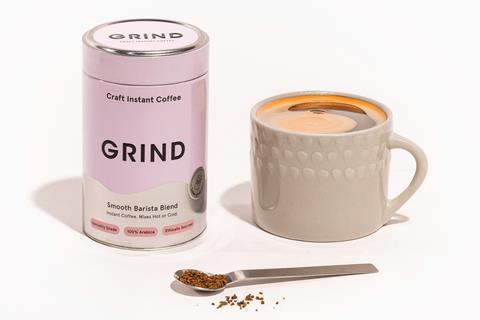
Having successfully launched ground coffee and pods, it was only a matter of time before Grind added premium instant. Regular and Decaf (rsp: £6.50/90g) debuted in September. The duo use the same ethically farmed arabica beans as Grind’s other lines. The beans are roasted, ground, brewed and slowly freeze-dried into soluble granules. Those are mixed with premium microground beans to give the instant coffee a “fuller body and richer flavour profile”.
How the psychology of price hikes has played out on shelves

The unwelcome return of inflation has prompted a wide range of tactics. How have shoppers responded and what should brands do next?
- 1
- 2
- 3
- 4
- 5
- 6
- 7
- 8
- 9
- 10
- 11
- 12
- 13
- 14
- 15
- 16
- 17
- 18
- 19
- 20
- 21
- 22
- 23
- 24
 Currently
reading
Currently
reading
Hot beverages 2025: Coffee brands feel the heat as prices soar
- 26
- 27
- 28
- 29
- 30
- 31
- 32
- 33
- 34
- 35
- 36
- 37
- 38
- 39
- 40
- 41
- 42
- 43
- 44
- 45
- 46










No comments yet