



Schools are being asked to undertake an ambitious revamp of standards – but providers say government support is needed to pay for it
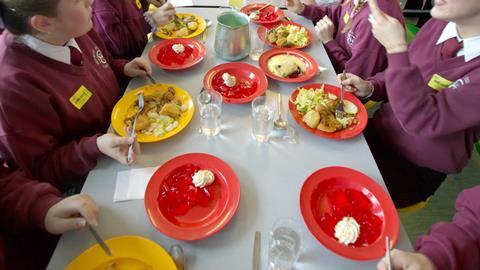
School food standards are set to undergo “the most ambitious overhaul in a generation” as the UK government looks to put health front and centre.
Announced this month, it is the most dramatic in a series of measures on school meals introduced by the government. A previously announced extension of free school meals is due to roll out from September, as are free breakfast clubs, which began an initial phase in 500 schools last month.
So what exactly do the plans involve? And how realistic are the Department for Education’s claims that these plans can be delivered “without increasing costs”?

While foodservice wholesalers and contract caterers appeared to welcome the prospect of healthier school food, concerns clearly weigh heavily over funding – and also the potentially negative financial implications of making meals less appealing.
Under the plans, set out in a nine-week consultation, schools will no longer be able to offer unhealthy grab-and-go options such as sausage rolls and pizza every day. Deep-fried food will be banned entirely, with an implementation deadline of September 2027 for primary schools and September 2028 for secondary schools.
In addition, fruit will need to be served instead of “sugar-laden treats” for most of the week, fruit juice will be taken off the menu and squash will be banned in primary schools.
The changes also pave the way for the first vegetarian state schools thanks to proposals that pulses can be served as an alternative to meat and poultry.
Certainly, change seems needed. The school food standards were last updated in 2015 and “the reality is that the system hasn’t been working,” says Bite Back CEO D’Arcy Williams.
“Standards are meant to protect children’s health, but they haven’t been consistently enforced. That’s allowed a grab-and-go culture to take hold in many schools – where speed and convenience often come at the expense of nutrition.”
But standing in the way is a funding system that is “broken” says School Food Matters CEO Stephanie Slater. While Jamie Oliver’s Good School Food Awards has shown that it is possible to provide healthy and delicious school meals within budget, the failure of Leicester County Council’s school meals service, and Plymouth City Council-backed award-winning caterer CaterEd shows how much harder it is becoming to make the sums add up, she points out. And the system
“particularly disadvantages small schools”, she adds. “In big primary schools you can make it work” but “if you’ve got fewer than 200 children, the fixed costs are too high,” she says.
The stats to back the government’s plan
- Over 10.5% of children aged four to five start school with obesity. By the end of primary school, this rises to 22.2% and to almost 30% in the most deprived areas
- Children currently consume twice the recommended amount of free sugars, with only 8% of primary and 5% of secondary pupils meeting guidelines
- Dental decay is now the leading cause of hospital admissions for five to nine-year-olds
- More than 90% of children are consuming insufficient fibre, which is critical for digestive and heart health in later life
- 96% of parents want their children’s meals to be made with fresh or nutritious ingredients and among those, 83% want the government to introduce stronger, enforceable standards across all schools
- 74% of parents have at least one concern about their child’s nutrition – from too much sugar (43%) and too many fatty foods (24%), to not enough fruit & veg (30%)
Sources: National Diet & Nutrition Survey, Chefs in Schools polling
Last year, the government increased the rates for free school meals by 3p (or 1.16%) to £2.61. Prior to this, free school meal funding had increased by just 12% since 2013.
A survey by industry body School Food People found 78.3% of caterers believed a figure between £3 and £3.20 was more realistic for a two-course lunch.
Sodexo UK and Ireland schools and universities CEO Tracey Smith says the current £2.61 “does not reflect the rising costs of food, labour, gas and electricity”. Caterers are now calling for additional funding to reflect ingredient changes such as switching to wholegrain rice and pasta.
John Want, CEO of specialist education contract caterer HCL, says that without this “a sector under immense pressure already will collapse”.
The other option, warns Food & Drink Wholesale UK, is that “expectations around healthier food won’t be matched by what can be delivered in practice” if additional funding is not forthcoming.
Education minister Olivia Bailey disagrees, telling Sky News she is “really confident schools will be able to deliver really great quality, healthy food with the meal rate they have”.
Bidfood business development controller Gavin Squires sees a possible compromise in combining the government’s focus on “nutritionally positive” fresh fruit & veg with high-quality frozen and canned options, in a more “balanced approach”. With the school food standards overhaul long overdue, many education caterers have been updating their menus with healthier options for some time.
HCL hasn’t fried food for over a decade, while fruit and salad is already available with every meal. “Menus are balanced nutritionally and already have a big focus on wholegrains, pulses, more plant-based proteins, together with reduced sugar, salts and fats,” Want says.
Meanwhile, Sodexo makes pasta sauces from scratch to reduce salt and sugar, while its pizzas are made on wholemeal bases with a “veg-rich sauce”. Its desserts now have less sugar and the amount of fruit included has increased.

Less appealing
But there are concerns that tipping the nutritional balance too far risks making meals unappealing to children.
Want notes the government has consulted primarily with nutritionists “who have their own agenda which may be at odds with what children actually want to eat”.
“We can fairly easily comply with whatever standards are set. However, we have to avoid the double whammy of unappealing menus putting children off and increased costs for ingredients with no additional funding,” he says.
Squires also warns that if school meals become less appealing “there is a real risk some children may eat less at lunchtime, or switch to often less nutritious packed lunches”, which in turn would reduce revenue for caterers.
Hence Myles Bremner, CEO and founder of food policy consultancy firm Bremner & Co and former director of the government’s School Food Plan, thinks children and families need to be engaged with improvements. He says raising standards is “meaningless” without “support, guidance and training for schools, caterers, parents and children to understand”.
Bremner argues the overhaul should come with clear conditions of grant so schools understand what is required in terms of delivery. He also believes schools need further support, including additional aid for smaller schools, and clear communication to schools so that they, and their caterers, know what their school budget is.

How will the plans be enforced
To hold schools to the new standards, the government proposes a national enforcement mechanism in which every school will appoint a lead governor for food and publish its food policy and menus online.
Leon co-founder Henry Dimbleby author of the Independent National Food Strategy, believes that done right, the overhaul “will boost children’s health, their academic outcomes and their chances of success in later life”.
“But it will only work if the government sticks to the timetable set out and if schools and caterers are backed to deliver it, and held to it,” he says.
Chefs in Schools, a charity co-founded by Dimbleby, has joined forces with four other UK food and education charities – Bite Back, Jamie Oliver Group, School Food Matters and The Food Foundation – to launch a philanthropy-funded initiative to provide practical support tailored to individual schools.
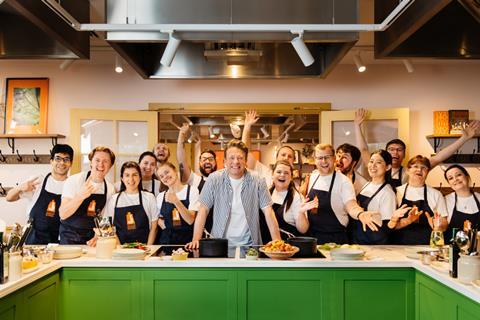
Called the School Food Project, from September it will provide 50 beacon schools with £45,000 of support for specialist food resources and training of staff and catering teams, plus engagement programmes for pupils and families.
The 50 schools will share learnings with 450 ‘cascade’ schools in their local areas. The School Food Project also promises help to all 23,000 schools in the UK with support on the updated framework.
All well and good, but for wholesalers and caterers, a boost in permanent government support is needed if the plans are to work at scale.If the final standards can be “both ambitious and deliverable in practice”, as Squires calls for, the potential for success could be mighty. But the consensus is, further work must be done for the government’s bold ambition to become a reality.






No comments yet