





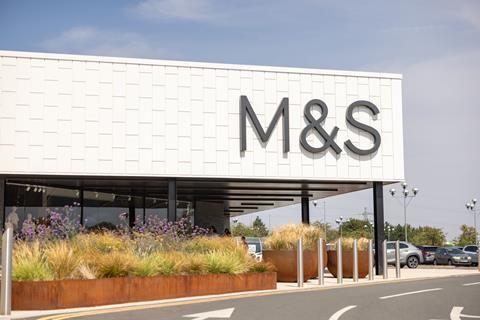
M&S investors have breathed a sigh of relief, as the high street giant revealed it had returned to profit growth.
A “year of two halves”, dominated by the devastating cyberattack in the first six months, ended on a high as strong growth in the group’s food business helped pull the business back to pre-tax profit growth of 4.1% in the second half.
Shares in the retailer had climbed 5.2% as The Grocer went to press, helping rebuild the stock price after months of fluctuation.
“That was an extraordinary year,” said CEO Stuart Machin. “We were laser-focused on our customers, worked incredibly hard to recover our business, and we came out stronger.”
Food sales beat expectations, growing 7% in the year to 28 March 2026, while fashion sales dropped by 7.7%.
“Food has come roaring back,” said Bernstein analyst Richard Trainor. But he noted the focus would be on fashion’s trailing margin.
M&S achieved an operating margin of 4.6% in its food division, ahead of expectations, but its clothing division disappointed with a 5.5% margin, about 0.7 percentage points below expectations.
M&S was nevertheless confident of a full recovery in profits in the coming financial year.
“The key point is not margins but execution,” said Bank of America analyst Xavier Le Mené.
In that, the food division would likely lead the way, said Berenberg analyst Anne Critchlow.
“At the heart of the explanation for M&S’s Food market share gains – despite cyber disruption – is management’s unwavering focus on improving customer appeal through a combination of price, quality, style, innovation and customer experience in stores and online,” she said.
“Provided this customer-pleasing approach continues, we expect sustainable recovery and growth in both the Food and Fashion divisions.”
M&S has recently overhauled its Sparks loyalty scheme and launched a TV ad campaign. It is targeting a 10% increase in store space over the next three years. The group’s ambitions require heavier investment into stores, systems and logistics than it had made under previous management teams, Critchlow noted, but she said the strategy “could ultimately reward investors”.









No comments yet