



It can feel like it takes the resources of a big company to shift the dial on the worsening modern slavery problem. But as these challenger brands show, startups and SMEs can make a real difference too
When Halimot Ogunnaike was taken from Nigeria and forced into prostitution on the streets of Italy, she says she “didn’t know what was happening to me was bad”. Partly, this was because she was just nine years old. But it was also because she’d “seen it happening to so many others, I thought it was normal. I didn’t realise it was trafficking or modern slavery.”
After a few years in Italy and then Spain, Ogunnaike was trafficked to the UK when she was nearly 16, but escaped on the day she arrived. She subsequently experienced periods of homelessness where she slept “in churches, on the bus, on the train, many times on the street”. Even today, she says, she is “still looking back [over my shoulder], but I’m done running, because they have already taken part of my life”.
With the help of various charities, Ogunnaike has turned her life around. Having been taught to bake at social enterprise Luminary Bakery in Stoke Newington, she now runs Haliberry Cakes, a DTC bakery business. She also leads Haliberry CIC, a women-led social enterprise dedicated to helping survivors of modern slavery, trafficking and exploitation rebuild their confidence, develop practical skills and create new opportunities for themselves.
The need for such help has arguably never been greater. A report by anti-slavery charity Unseen last month showed that food and drink businesses are the worst performers in terms of labour exploitation in the retail sector. While modern slavery has long been an acknowledged problem in global manufacturing supply chains, the report revealed it was also taking place on high streets up and down the country.
The number of modern slavery cases in the retail sector reported to Unseen’s Modern Slavery & Exploitation Helpline doubled from 33 in 2024 to 65 in 2025, while the number of potential victims rose from 100 to 201. By 2025, retail was the fifth most common industry for modern slavery cases reported to the helpline.

Once retail was broken down into sub-industries, between January 2025 and June 2026 by far the “highest prevalence of modern slavery was in supermarkets and convenience stores”, which accounted for 69% of cases and 76% of potential victims, according to the report (see data, p32). And the problems don’t all lie in less-regulated corner shops either – where specific details were provided, 69% of cases took place in independent shops or local chains, leaving 31% of cases relating to national or international chains or franchises.
“These findings should serve as a wake-up call for the sector,” says Elise Russell, senior principal adviser at Slave-Free Alliance. “Retailers have made progress on global supply chain risks, but must also recognise risks closer to home, including in stores, labour provision, cleaning, logistics, security and other contracted services.”
Ahead of Anti-Slavery Day on 18 October, Russell says it is clear the sector is not doing enough to tackle the issue. But help is at hand from a coterie of small food and drink challenger brands, many of which have built anti-slavery action into their operations from day one.
West Sussex-based Holos Kombucha is a case in point. Founded by Naomi Partridge and Megan Landreth-Smith following a transformative spell working with exploited women in Cambodia, Holos is listed in Waitrose, Ocado and more. Partridge says the brand has had “a model of providing supportive paid work placements for survivors of exploitation and trauma from the very beginning. It’s not just sat in HR or marketing, it’s sat in operations. We’ve deliberately structured our business around the idea of creating these safe, extremely flexible work opportunities.”
The brand is part owned by the Holos Foundation, which the pair established in 2024 to provide additional support. Holos donates 1% of its kombucha sales revenue to the foundation to fund bespoke grants for survivors to help them rebuild their lives. The grants have so far paid for trauma counselling, access to courses and even an iPad. Crucially, these requests come from the survivors themselves – unlike many charitable initiatives where at-risk people are told what they need.
“We partner with them and their key worker to have a conversation: what’s going to unlock a change for you? We’re not saying: ‘You should have this, you should do this,’” Partridge says. “We say: ‘You’re rebuilding. You’re doing the hard miles and the hard work here. What will help take that forward a bit?’”
She admits “it doesn’t always make financial sense. It’s a totally different way of operating. Challengers are known for their innovation and sparky marketing and stuff. But I’m interested in an altogether different structure of business – and what might be possible if bigger organisations took on a bit more of that thinking.”
Natural energy brand Tribe is another company with purpose at its heart. Initially inspired by a 1,000-mile run to raise money to fight modern slavery in 2013, it is now available in every UK supermarket and donates 1p to anti-slavery causes for every bar sold. So far it has raised £2.6m to help trafficking survivors and has also co-created a Banoffee Protein Flapjack with Haliberry’s Ogunnaike that’s listed in Tesco, Sainsbury’s and Co-op, with 25% of profits from the flapjack going to Ella’s survivor safe houses in London.
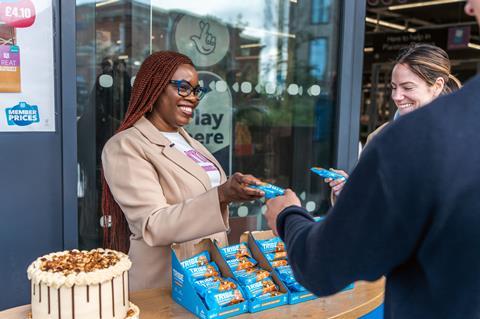
“It broke our hearts to learn that 50 million people are living in modern slavery worldwide – and that it happens here in the UK, too, often hidden in plain sight,” says Tribe co-founder Tom Stancliffe. “Fighting modern slavery has been part of our DNA from day one, not something we added later. We’ve actually just returned from a 205km Tribe Run for Love across the Dolomites that raised £75,000 for trafficking survivors.”
The roots of south Asian food brand Urban Rajah are slightly less strenuous but no less impressive. What began as a supper club called Cash n Curry that raised money to fight modern slavery has grown into a business with listings in Tesco and Co-op that gives at least 10% of its profits to anti-slavery charities. It also started Picnic With Purpose, which “brings food and drink brands, people from our industry, anti-slavery organisations and survivors together around the same table”, according to its founder, Ivor Peters.
“I’ve always wanted it to be more than simply handing over a cheque. We want the food we sell to actually help fuel the mission. That’s why every Urban Rajah ‘buroti’ sold through the Tesco meal deal contributes funds towards this work.
“I love the simplicity of that,” Peters adds. “Doing good shouldn’t be difficult. Sometimes it can be as simple as choosing what you have for lunch. It shows what can happen when retailers get behind purpose-led challenger brands.”
Other food and drink brands doing notable work include Just Ice, which makes artisan ice cream in Derbyshire in order to create paid employment for modern slavery survivors, and Sussex-based Bramber Bakehouse, a social enterprise bakery whose sales help fund its charitable work with female survivors of abuse, exploitation and displacement.
“All these businesses are doing fantastic work,” says Lucy Mann, head of business development at Unseen. “It’s hard to compare the two, but I think larger businesses could definitely learn from some of the work they’re doing. They could also be supporting them, maybe by showcasing them, shouting about them or collaborating and using their brand to raise awareness of these smaller businesses.”
The work being carried out by these challengers is offering hope and changing lives, with one recent participant of Holos’ placement programme saying it “has shown me I’m not lazy, that I’m capable of hard work, and it’s given me purpose and fulfilment. There’s been so much darkness and ugliness and now I’m finding beauty – and also realising that it’s OK to want that.”
Money and resource
It’s not easy for challengers to blend purpose with profit. Often working with small teams and limited budgets, not to mention limited leverage with suppliers and manufacturers, Tribe’s Stancliffe says many SMEs “want to act but feel powerless and lack the resources to understand what to do”.
This led Tribe to create the Foodies Fighting Slavery Toolkit, which launched in May 2023 after an 18-month consultation with more than 2,000 consumers and 100-plus SME employees, in collaboration with the Office of the Independent Anti-Slavery Commissioner, Stronger Together and Stop The Traffik. “It gives small food and drink brands practical tools to spot and tackle modern slavery in their supply chains and was downloaded over 100 times in its first week,” Stancliffe says.
Unsurprisingly, though, the biggest barrier cited by challengers was finances. “Money and resource. Simple as that. When you’re building a challenger brand, every pound has several jobs,” says Urban Rajah’s Peters. “We don’t have a CSR department or a big corporate foundation sitting behind us. So purpose has to work as part of the commercial model. That’s why retailer support is so important. If Tesco gives us the opportunity to put a buroti in front of millions of people and consumers respond, we sell more food, Tesco grows the category and more money flows towards the organisations we’re supporting.”
There’s also a delicate line to tread between communicating a brand’s mission and avoiding exposing employees to unnecessary attention, points out Sally Murray, co-founder of Just Ice. Finding like-minded businesses such as Holos has been “amazing” because “sometimes it feels a bit of a lonely fight”, she adds. “Often people don’t quite get why we make the decisions we do – ‘it’s just not good business,’ they say – so to meet other people who are on the same page has been brilliant.”
A complex picture
The reasons modern slavery is on the rise in fmcg are many and complex. Unseen’s report pointed out the link between increased modern slavery in retail and the introduction of the skilled worker visa. Plus, food and drink retail often requires huge workforces, many of whom are temporary, agency or migrant workers.
“These arrangements can create additional layers between businesses and workers, making exploitation harder to detect,” says Slave-Free Alliance’s Russell. “Exploitation can also be hidden in plain sight. Trained employees may spot warning signs such as shared bank accounts or addresses, unusual transport arrangements, or signs of fear or control. Awareness, training and clear reporting routes are therefore critical.”
No one is suggesting nothing is being done. Many sources cited the Bright Future Cooperative, which was started by the Co-op and evolved to include the likes of Greencore and Morrisons in its mission to provide paid work for survivors of modern slavery, as an example of what the sector can do when it puts its mind to it.
Mann also points out that Unseen even uses some of the supermarkets as good examples for other sectors when it comes to supporting potential victims that are identified, particularly within agriculture. “But there’s still a big gap,” she points out.
Unseen has also told The Grocer previously that while large businesses are required to produce a modern slavery statement, they’re often not worth the paper they’re written on, while all the policies and procedures in the world count for little if they’re not implemented well enough on the ground and largely confined to a PDF hidden away in shared drive obscurity.
As a survivor herself, Ogunnaike feels this is very likely the case. “I think sometimes the bosses are not paying enough attention to the people they’re working with. They need to learn the signs, because sometimes the signs are more than obvious,” she says. “Remember that survivors probably won’t talk. They will be scared to say ‘this is happening to me’, because of what they’ve been through.”
So, what can fmcg businesses big and small do better and do to help? The first step, according to Russell, is recognising that modern slavery “does not begin and end with overseas supply chains”. The hard-hitting Unseen report should help with that. And the strongest approaches, she adds, “go beyond compliance, focusing on worker engagement, manager training, safe reporting routes and stronger oversight of labour providers and contractors. Effective prevention requires vigilance throughout.”
Collaboration is also key, points out Mann, and there are examples of businesses that Unseen works with doing that “really well”. After all, “having one process instead of several businesses doing different things makes it a lot more manageable”. She also points out that there remains “a big gap within larger businesses in terms of long-term job opportunities”.
Smaller players can step up too, of course. Urban Rajah’s Peters says the best advice is: “Don’t wait until you’re big enough. We’re certainly not! You don’t need a CSR department or millions of pounds. Start with what you’ve got and ask what your business is genuinely good at. For one company that might be creating employment opportunities for survivors. For others it could be examining recruitment practices, pressuring suppliers or funding specialist support.
“For retailers, I’d say give purpose-led challengers a shot. Not because they’re charities. They still need to make brilliant products and earn their place on shelf. But when consumers respond, back them. Give them distribution. Help them scale. Because that commercial success can create a much bigger social return.”
Finding local charity partners is another relatively simple way to begin, argues Holos’ Partridge, especially when accompanied by the humility to ask: how can we be of service? “I think that’s the best question any business can ask. It might be jobs. It might be something entirely different. Let them tell you.”
While Holos is successfully supporting survivors, she is adamant the bigger opportunity comes with asking: “What if more businesses did this? What if it became so much easier for people, not even just survivors of modern slavery – people in any vulnerability – to take that first step back into work? What would that do to society? Because it’s really hard to jump from not working at all to a full-time, intense, normal workplace. But there are people that do want to work, and it’s just finding that route through. Let’s spark something more.”
Ogunnaike is already doing her bit to help fellow survivors through Haliberry’s training and community programmes. But she has bigger plans – ones that mean her work will have to rely less on grants in the future.
“I want to open a Haliberry coffee shop, because I’m a barista, too. I also want to do more products like the Tribe bar and take Haliberry into retail. That’s the plan. That’s my dream.”
The trouble with skilled worker visas
The skilled worker visa route is one of the most common ways people are entering exploitation in the UK retail sector, according to anti-slavery charity Unseen.
In fact, according to its report, Behind the Counter: Modern Slavery in the Retail Sector, hardly any cases of modern slavery were indicated in the retail sector prior to its introduction in 2022.
Between January 2025 and June 2026, where immigration status was known, 55% of potential victims were reportedly on skilled worker visas – usually for ‘managers and directors in retail and wholesale’. But once they arrive, they are exploited in entry-level roles.

If an individual is in the UK on a skilled worker visa, their immigration status is directly connected to their employer, which is also their sponsor.
Without sufficient safeguards in place, employers exert control over migrant workers by using their tied immigration status to wield power over them. In many situations, workers are threatened with visa revocation.
Many are charged illegal fees for their visa, ending up in debt bondage, paying back money ‘owed’ to their employer, who has often ‘loaned’ them the fees. Often, they are required to ‘repay’ this through salary deductions.
“Findings from a report about skilled worker visas by the Committee of Public Accounts in 2025 were that the Home Office had not fully assessed risks relating to sponsors exploiting migrant workers,” says Unseen deputy CEO Justine Carter.
Unseen says it is calling for urgent reform of the skilled worker visa route, including reducing workers’ dependency on a single sponsor, providing clearer information about visa costs and employment rights before workers travel to the UK, and giving workers better options to change sponsors. “There are signs of incremental reform, but nothing yet that amounts to a fundamental overhaul we wish to see,” adds Carter.





No comments yet