
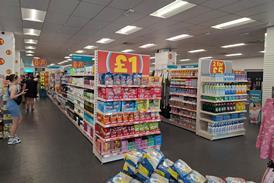


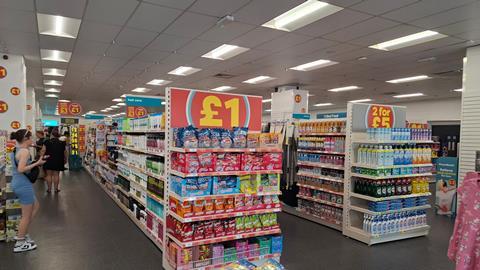
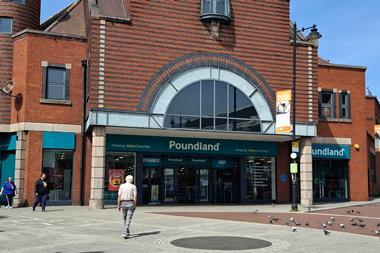
After weeks of clinging on for dear life, Poundland has collapsed into administration. Now, 10,500 jobs are at risk, suppliers are counting their losses, and everyone and his auntie has an opinion on what went wrong.
Some commentators on Linkedin are even saying it all stems back to a fateful management decision to stray from the £1 price point in 2017. That’s not true – inflation meant it needed to, and the long-term growth of the discount sector shows the enduring demand for bargains, not specific price points.
But Poundland did go too far. Around 2019 it was talking about its shops becoming more like department stores, with distinct clothing and even furniture sections. This was the distraction and influence of Pepco Group ownership beginning to affect the business. Most damaging of all, Poundland’s UK buying team, with its invaluable expertise, customer insight and contacts built over years, was let go as it moved toward group-wide sourcing of clothing and GM.
As retail emerged from the pandemic in 2021, it seemed like every month Poundland was announcing its “biggest-ever store” – 18,000 sq ft, then 19,000 sq ft, then bigger still – on some retail park or other. But they weren’t working.
The biggest misstep perhaps stems back to Wilko’s collapse into administration in 2023. Distracted Poundland management saw an opportunity to bag a bunch of too-big stores, and began opening them at pace.
It’s reasonable to now ask: what on Earth was going on in the minds of management at that time? It had even started selling swinging garden egg chairs.
In early 2024, those same ex-Wilko stores began closing again amid tumbling like-for-like sales. Poundland’s full-year results to 30 September 2024 later revealed “larger stores are not where Poundland delivers best”, and the brakes were put on opening anything over 7,500 sq ft.
By March 2025, Poundland itself was up for sale, with like-for-like sales still in decline.
Is private equity ever good news for retail?
It may have seemed like good news when Gordon Brothers swooped to buy it in June 2025. Free from the central European and clothing-centric thinking of Pepco Group, it could recruit back its old expert buying team and win back its alienated bargain-hunter shoppers.
But if anything, its story should now raise questions over whether the involvement of private equity is ever really good news for retail. At least, it raises questions about a certain type of PE player with an interest in distressed businesses.
PE wants only to make a financial return, and it will make that whether or not the retailer it buys survives. This has played out many times across the high street over the past year, with The Original Factory Shop, Claire’s, and now Poundland. TG Jones will be lucky not to go the same way.
Compare the fortunes of these retailers to those of = Boots, which was bought in October by the Canadian branch of the Westons, a family that wants to be in retail, not just profit from it. A family that already owns Loblaws, Canada’s biggest supermarket, and Shoppers Drug Mart, its largest pharmacy and health & beauty retailer. These are retailers.
Poundland’s collapse means 10,500 workers now head toward Christmas not knowing how long they will keep their jobs, while suppliers adjust to the reality that they will unlikely recover some very big debts, which may sink many of them.
Liam Byrne, chair of the Business & Trade Select Committee, has written to Gordon Brothers director Mark Newton-Jones asking him to appear for a second grilling over why a deal could not be reached with one of the would-be saviours of Poundland. These included Martin Property Group, which had proposed retaining all stores and jobs, albeit with full repayment of Gordon Brothers’ £30m shareholder loan deferred.
Laurence Weeks, partner and head of restructuring & insolvency at Birketts, says: “It will be interesting to see what conclusions are reached as scrutiny continues at parliamentary and government level. The collapse may also prompt a wider debate about the responsibilities of owners of major high-street businesses when jobs, creditors and local communities are at stake.”
Byrne’s letter to Newton-Jones seeks “confirmation that Gordon Brothers or any related party will not act as liquidator or in any other insolvency capacity in relation to Poundland”.
For the sake of the high street, he might also ask that Gordon Brothers et al stay away from retail and find other ways to make their return. The high street needs fewer Gordon Brothers and more Westons.




No comments yet