






Protein claims have escaped the gym. With everything from porridge to puddings promising to help shoppers stave off hunger and build muscle, is the trend stopping Brits getting the nutrients they actually need?
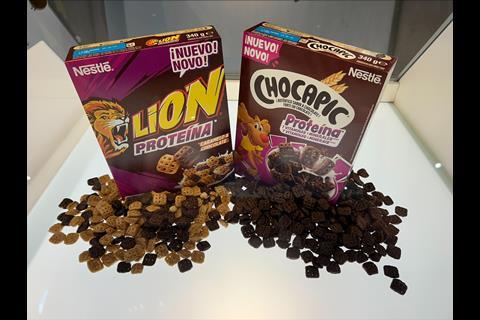
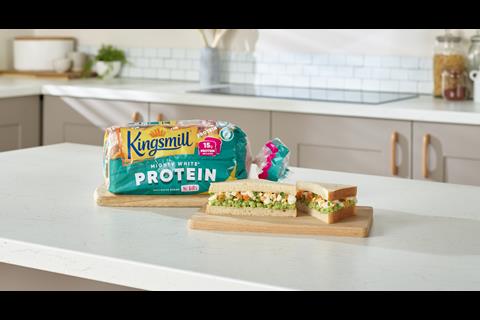
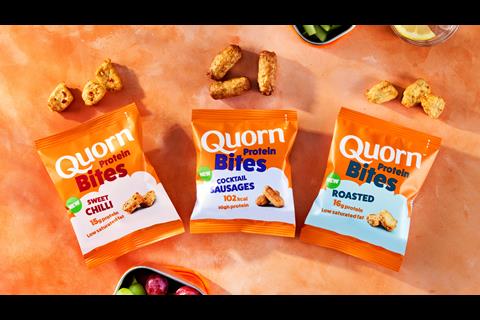
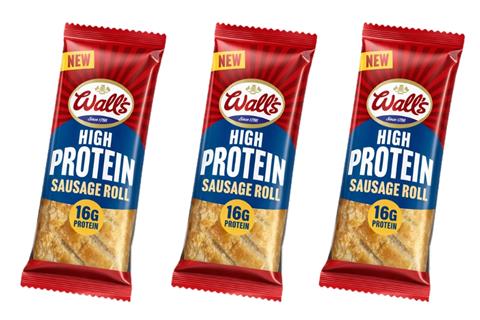
Babybels and bagels. Doritos and doughnuts. Even water. No product is too outlandish to have a dose of protein engineered into it these days. And consumers can’t get enough.
According to NIQ, 57% of UK shoppers are following a high-protein diet to some extent, and protein-based foods saw considerable growth in the second half of 2025 (+9.6%) – well ahead of total fmcg growth.
And with Sainsbury’s searches for “high-protein meals” and “high-protein cereal” up by 1,200% and 153% respectively year on year, data from market researcher Technavio suggests the global high-protein product market could experience up to $57bn of growth between 2025 and 2030.
But there’s a catch. According to data from the British Nutrition Foundation, average adults in the UK already consume more than enough protein, with most individuals comfortably exceeding the government’s official Reference Nutrient Intake (RNI) of 0.75g of protein per kilogram of body weight daily.
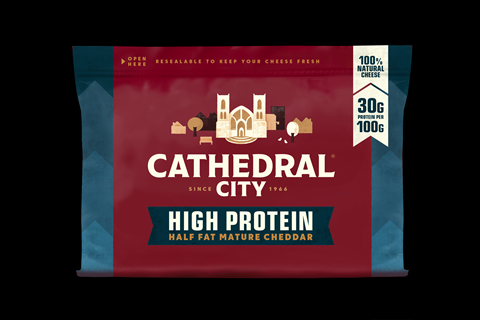
And shoppers might be starting to catch on. Recent research from Oxford Online Pharmacy found that Google searches for the term ‘protein washing’ have risen by 488% in the past year. It also studied 88 high-protein snacks sold across the UK’s six biggest supermarkets – including yoghurts, milkshakes, porridge pots, bars and coffee drinks – and found that many supermarket high-protein snacks may not be as healthy or cost-effective as consumers believe (see box, p30).
So, if consumers don’t need it, how has the protein trend got so big? Is it all just marketing hype? What impact are GLP-1 drugs having? And is the trend here to stay or might there be a backlash?
Protein has been deified for much longer than most people think. Federica Amati, head nutritionist at Zoe and a research fellow at the School of Public Health at Imperial College London, says there’s been “a glorification of protein for decades”, but in “the past 10 years or so we’ve started to add protein to all sorts of foods”.
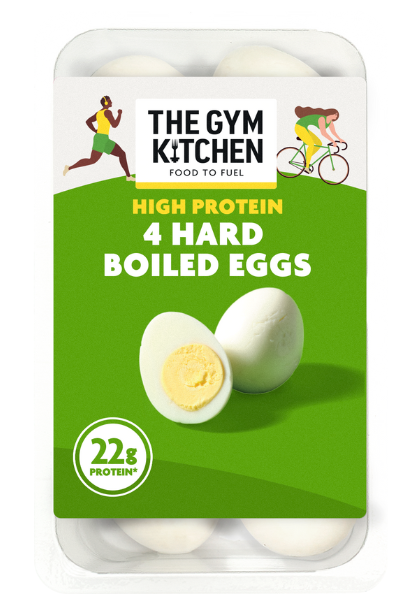
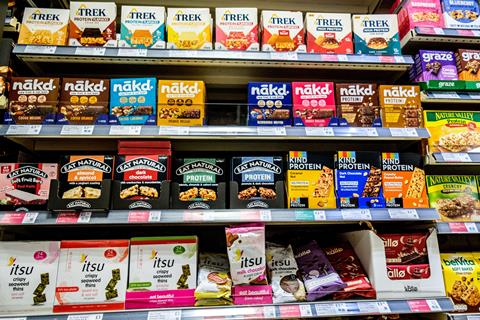
And the industry has added those proteins – mainly whey and soy protein isolates – with gusto. Protein bars, shakes and yoghurts are the category stalwarts, but in April, Tesco took its first step into own-label high-protein ready meals with the launch of six SKUs, and last month Dolmio duly followed with its own high-protein ready meals. Meanwhile Costa Coffee has just launched a high-protein latte range and Vimto owner Nichols partnered with THG to launch Myprotein Clear Whey Protein Water.
-
75% of UK consumers say getting enough protein is important or very important
-
41% of UK consumers either say they don’t get enough (21%) or aren’t sure (19%)
-
25% of consumers across the UK, US, Australia and New Zealand think protein “improves digestion” - a benefit more accurately linked to fibre
Source: Stickybeak consumer survey, April 2026
“Consumers are more health-conscious than ever and are taking a much more proactive approach to nutrition,” says Brendan Dixon, director of Purepower Nutrition, an Irish brand that recently secured a UK listing for six ready meals in Tesco. “Protein’s become widely recognised as an important nutrient, not just for athletes but for anyone looking to support an active lifestyle, maintain muscle, stay fuller for longer or simply make more balanced food choices.”
The UK protein bar category alone is now worth more than £167m, points out Rachel Austerberry, UK retail sales director at protein bar maker Grenade, who has seen protein “evolve from a niche sports nutrition ingredient into something much more mainstream. Today’s consumers are looking for convenient products that fit busy lifestyles while helping them feel fuller for longer and supporting health and wellness goals.”
Protein breakfast brand Fuel10k has been innovating too, says Daniel Jalalpour, global marketing director for desserts, breakfast and new categories at brand owner Premier Foods. Its move into the chilled category with yoghurt & granola pots has been an “exciting milestone”, with shoppers “actively seeking products that help them meet their health and wellbeing goals”.

‘The health halo does the talking’
The problem is, consumers appear to be confused about how much protein they need and what loosely defined ‘health and wellness goals’ it can actually help with. Oonagh Turnbull, head of health and sustainable diets campaigns at Tesco, says “increasing protein can be really helpful for weight management, healthier ageing, post-exercise recovery, helping to manage symptoms of the menopause or general wellbeing”.
But Stuart Phillips, a professor of kinesiology at Canada’s McMaster University who has been studying protein metabolism for 30 years, says “that line is a masterclass in saying a great deal while committing to almost nothing. It gathers up every good thing protein is loosely associated with, and some – like menopause – it has no business with. But notice that such advice never says who, how much or instead of what. It’s the health halo doing the talking, not the science. Strung together like that, it stops being nutrition advice and becomes mood music. The honest version is duller and shorter: protein matters for some people in some situations, and most shoppers are already getting plenty.”
Some groups do indeed require more protein in their diet, but Dr Emma Derbyshire, founder of Nutritional Insight, points out that even though “most UK adults already meet or exceed” their protein requirements, “clever marketing” has encouraged consumers “to see more protein as automatically better”.
Robert Bradshaw, superintendent pharmacist at Oxford Online Pharmacy, which carried out the aforementioned research on ‘protein washing’, defines it as “the idea that products branded as high-protein don’t necessarily contain as much protein as people would expect… It’s the flash on the front rather than what’s in the small print behind.”
As such, the seemingly insatiable appetite for more protein is an impressive feat of marketing. And even marketers who are sceptical of the hype agree. “It’s a clever innovation, 100%,” says Rory McEntee, chief marketing officer at Gym Nation. “Protein for these brands has become the new low-fat, low-carb. Now protein is this thing we feel we need. Brands are spending three times more on marketing protein products, and consumers lap it up. But it’s innovation that’s solving a problem that doesn’t even exist.”
Protein’s long-standing association with muscles and/or leanness makes it easy for marketers to “overpromise” to populations “all looking for the next big thing to make us thinner”, according to Dr Yanaina Chavez-Ugalde, who researches food systems at the University of Cambridge.
While many nutritionists and scientists agreed that the protein trend is based in consumers’ desire for aesthetic beauty, as is so often the case with questionable health claims, there are kernels of truth.
“My honest read is that it’s not pure fabrication, there’s a real signal in there, but it’s been amplified well past what the evidence supports for most people,” says Phillips. “Marketing doesn’t deal in nuance, and a finding that applies to specific groups got generalised to everyone standing in a supermarket aisle. Add a health halo and Social media’s appetite for simple, confident nutrition claims, and you get a category that can slap ‘high protein’ on almost anything and watch it sell.”
Who really needs extra protein?
There’s pretty much no argument over the fact that most people in the UK eat more than enough protein. However, Federica Amati, head nutritionist at Zoe, identifies a couple of patient groups “where you really run the risk of protein malnutrition”.
These are cancer patients, who are prone to cachexia, a wasting syndrome that leads to loss of skeletal muscle and fat. And people who have very severe burns, because “the body requires so much additional protein for the inflammatory response, the immune response and to rebuild the tissues”.
More general groups who require more additional protein are “older adults, people in an energy-deficient diet (those who are losing weight), people doing serious resistance training and, increasingly, people on GLP-1 drugs”, says Stuart Phillips, a professor of kinesiology at Canada’s McMaster University.
“Older adults are somewhat resistant to the muscle-building effect of protein, so they need more per meal to get the same response as a younger adult,” he says. “Are they well served? Partially. Most ‘high-protein’ products are aimed at the gym-going, already-healthy-eating segment, not older adults with smaller appetites who’d benefit most.
“That’s a legitimate gap, and arguably where a protein supplement earns its place: not as a lifestyle product, but as a practical tool for someone who genuinely can’t get there through food.”
And people sure can be easy to market to. Especially when it comes to their health. McEntee tells The Grocer how Gym Nation announced the launch of a ‘protein shisha’ on Instagram for April Fool’s Day this year. It generated almost 15 million social views, 836 mentions in the press and 32 franchise enquiries, he says.
“I mean, protein shisha – it’s obviously ludicrous. You clearly can’t ingest protein through your lungs, but we fooled everybody,” he exclaims. “It was a pure parody on everything becoming protein and shows where we’ve landed: that you can protein anything, package it up, put a high price point on it and people will buy it.”
Of course, it’s that high price point that cuts to the core of why the protein craze is so attractive to retailers and suppliers alike, according to Zoe’s Amati. “It’s very profitable. Protein isolates are a very cheap additive, so you can see it from the food manufacturers’ point of view: they have the opportunity to take already cheap products with a big profit margin – cereal, candy bars, ice cream – and produce extra profit margin by adding a very cheap ingredient with high value perception.”
Indeed protein products can be considerably more expensive than their non-protein counterparts – Snickers’ protein variant (57g) sells for £2.80 in Sainsbury’s, while a regular Snickers (40g) is £1.20. Just as attractive for retailers and suppliers is the clear, targeted message protein products provide.
“If you can make claims on a single nutrient – protein will help you feel fuller or your metabolism be better, for example – it’s easy for consumers to understand and buy into,” says Amati. “So protein is simple, profitable and speaks to our collective desire for physical beauty and thinness.”
It’s also true that protein products are not actively harmful to consumers. But most nutritionists and scientists who spoke to The Grocer felt retailers and brands have a “responsibility” around accuracy and honesty.
“The issue isn’t that protein is being sold; it’s the implication, often unstated but clearly intended, that more is unambiguously better for everyone – and that a product’s protein count is a reasonable stand-in for it being healthy. Neither is well supported,” says Phillips. “Less inflated claims and less protein washing of otherwise unremarkable products would go a long way.”
Even if protein products in isolation aren’t technically harmful, however, the trend could be contributing to different dietary issues. Oxford Online Pharmacy’s research, for example, found 90% of the 88 high-protein snacks it studied contain more sugar than NHS guidelines recommend.
A ‘disruptive’ category?
“Plenty of products marketed on their protein content are still ultra-processed, high in added sugar or otherwise not what you’d call a health food. The label does a lot of work that the actual nutritional profile doesn’t back up,” says Phillips.
High-protein products such as bars and popcorn can also encourage consumers to eschew whole foods that are an equally good source of protein such as Greek yoghurt, reckons Amati.
“Whenever someone buys something, you have to think about what they could have eaten instead,” she explains. “So, for me, the high-protein food industry is so disruptive to what we’re trying to achieve in terms of helping people increase intake of whole plant foods.”
Furthermore, an excessive focus on protein “can distract people from other important nutrients such as fibre, vitamins and healthy fats”, says Derbyshire at Nutritional Insight. Indeed, Amati states that 96% of the UK population is fibre deficient, 60%-70% is omega-3 deficient, and up to 80%-90% of women of reproductive age are thought to be folate deficient. “There are plenty of other deficiencies we know of that need to be corrected with better diet,” she points out.
At Premier Foods, while protein continues to be “an important driver of innovation”, a “growing interest in nutrients like fibre” led the business to invest across its portfolio, including its recent purchase of Merchant Gourmet, according to Jalalpour.
At Sainsbury’s, head of healthy and sustainable diets Nilani Sritharan says while it’s “helping” customers who “want or need to add more protein to their diet”, it recognises “some nutrients are under-consumed across the population and deserve greater attention”. As such, it “recently announced a new health ambition focused on helping customers eat more fibre, fruit and vegetables”, including initiatives such as new ‘Full on Fibre’ labelling across more than 500 own-label products.
New products are also dropping across grocery in response to the inexorable rise of GLP-1s, which will have a huge impact on the protein trend. The effects of semaglutide and similar drugs can lead to loss of fat and muscle, meaning adequate protein intake is crucial to help preserve muscle mass, according to Derbyshire.
GLP-1 users are the newest inductees into the relatively small group of people in the UK who genuinely need more protein. Phillips argues they are in fact “the most clinically important” group and thinks higher protein intake alongside resistance training “should be standard advice alongside these prescriptions”.
“I think GLP-1s extend the protein trend’s commercial life, and for a better reason than the general hype cycle,” he adds. “The lean mass loss issue with these drugs is a real clinical problem, not a marketing invention, so the demand for protein-adequate diets and products among that population is going to keep growing as prescriptions do.
“The risk is that this genuine, specific need gets blurred together in marketing with the broader ‘everyone needs more protein’ message, when actually it’s a distinct and much better justified case.”
Here to stay
More broadly, opinions are split over whether we’ve already hit peak protein. GLP-1 users, along with an ageing population, will ensure protein is needed in the long term, reckons Phillips, but he expects “the broader cultural mania” to fade “in the way past nutrient obsessions (fat-free in the 1990s, low-carb after that) eventually normalised”.
“Protein won’t disappear the way those did, because unlike them it maps on to genuine physiological need for identifiable groups. But the current ‘put it on/in everything’ phase is probably closer to its peak than its beginning,” he adds.
Indeed Amati recently read a report stating that fibre is becoming a more popular search term than protein, and she’s hopeful that fibre “is finally catching up”. She puts this down to messaging from healthcare professionals, nutritionists and dieticians starting to cut through, alongside “the worrying rise in early colorectal cancer rates”. That being said, she agrees that the protein trend is “here to stay”.
As does Austerberry at Grenade, who says the brand believes “protein has moved beyond passing trend and has become an established part of the grocery landscape. Consumers are increasingly purchasing these products in impulse settings, demonstrating protein has become an everyday choice. Growth will be driven by innovation, great-tasting products and formats that fit into consumers’ everyday routines, rather than protein alone as a nutritional claim.”
Even though “most people do not need additional protein”, it’s likely to endure thanks to “a combination of marketing, product innovation and interest in weight management”, adds Derbyshire, as well as the fact it’s now “firmly linked with wellness, fitness and healthy ageing in consumers’ minds”.
McEntee of Gym Nation is highly sceptical of the health halo applied to protein in recent years, but nonetheless thinks it’s set to get “much bigger”.
“You’re going to see more innovation in other industries,” he predicts. “You can see it now starting to creep out of retail. I think it’s going to grow in convenience and QSRs: KFC, McDonald’s, Starbucks – people are going to find opportunities to put protein into products you’d never expect. I don’t know where it stops.”









No comments yet