



It’s a watershed moment for HFSS food and drink advertising, with new rules now in place to restrict the marketing of key foodstuffs. But what do they mean in practice? And how will retailers and manufacturers approach the restrictions? Here’s everything you ever needed to know but didn’t dare to ask.
It’s finally here. After nearly five years of backtracks, delays and U-turns, the government’s junk food advertising ban – or, to give it its more official moniker, the “advertising restrictions on less healthy food and drink” – came into force today (5 January). It’s a flagship piece of legislation spearheaded by the Department of Health that aims to halve childhood obesity by 2030 and significantly reduce the gap in obesity between children from the most and least deprived areas by 2030.
Sounds like a watershed moment then.
Quite literally. It means that between 5:30am and the so-called 9:00pm TV advertising watershed, Ofcom-licensed TV services (ie most of the ones that anyone actually watches in the UK) are now officially barred from including any advertising for products identifiable as “less healthy food” (LHF). Plus, paid-for advertising for such products intended for access principally in the UK is banned on the internet at any time.

What’s the difference between HFSS and LHF?
Less Healthy Food is a subset of 13 HFSS food product categories that aims to target those categories considered most likely to cause obesity. So for example chocolate, biscuits and pizza are in scope, but avocados, fruit juice, olive oil and milk are exempt.
Sounds like a piece of cake
Ha ha. It’s a lot more complicated than that. Incredibly, the guidance that came out from the advertising watchdog at the start of December was the third different set of advice released – so much for clarity. And it’s meant the industry has had just four weeks to get their heads around the new guidelines.
Sounds less than ideal. Why was that?
The main reason the ban was delayed until now was the result of a huge row between the industry, campaign groups and politicians over how so-called ‘brand advertising’ should be treated. In May the Labour government backtracked and made the extraordinary step of laying new regulations before parliament in September to ensure there were not “unintended consequences”, arguing that the legislation was never intended to stop brands with HFSS products from advertising altogether.
With all this upheaval is there any leeway for companies to get used to the new regulations coming in?
Afraid not. But the direction of travel has been clear since the government rowed back ’brand advertising’ – so no one can really claim the nature of the ban has taken them by surprise. What’s more retailers and manufacturers have had since 1 October to get used to what life under the ban will be like, after ministers agreed to delay the introduction of the ban from October to January in return for trade bodies and media owners setting up a voluntary ban across all the major TV channel and online sites while the legislation and guidance was fine tuned.
How did the voluntary ban work out? Did it give us any idea of how things might look going forward?
Hard to say. The supermarket Christmas ads have been seen as a dress rehearsal but some stuck more closely to the letter of the law than others. But they are not an ideal test case as the legislation allows ’fleeting references’ to HFSS products in composite situations (see below).
A more noticeable success was the 2025 update to Cadbury’s long-running Secret Santa postal campaign. Instead of bars of chocolate, the postman promised to deliver purple-liveried and branded padded envelopes. The interactive multi-media campaign was deemed 2025’s most effective Christmas ad overall by Kantar (see boxout).
Still, it’s been a bit of a ’phoney war’, because campaign groups are saving their ammo for when the real ban is in force. Campaigners are expected to be watching like hawks for ads that are in breach of the ban, so they can report them to the advertising authorities. Sources also predict that the advertising watchdog is likely to wait for a period of weeks, or months, before launching a spate of “test cases” against companies it thinks have breached the rules.
That sounds reasonable enough. But this feels like it’s going to be tricky to enforce. So, who’s in charge of doing that?
The Advertising Standards Authority (ASA) is the body that will oversee the rules, applying the guidance from its sister body the Committee of Advertising Practice (CAP) and the Broadcast Committee of Advertising Practice (BCAP).
The watchdog is set to employ artificial intelligence on top of manual resources to scan ads, allowing it to cover the huge range of potential HFSS ads broadcast on the internet intended for a UK audience. This is a bit of a sore point for trade bodies, who claim it could mean a huge red tape exercise for companies to monitor each and every ad to provide proof it is compliant. However, the ASA can’t take legal action itself or impose fines on companies – that’s down to the government’s official body, Ofcom.
Read more:
-
Ad ban guidance published as row over HFSS brands continues
-
UK to launch ‘world-first’ mandatory health reporting consultation
-
Wot, no OOH? Why the HFSS ad ban doesn’t go far enough
-
HFSS ad ban: has last-hour guidance provided clarity at last?
-
Brands should see HFSS policy as a golden opportunity
What kinds of penalties might companies be looking at if they’re found to have flouted the rules?
Well, interestingly, the ban makes history as it’s the first time Ofcom has been handed the powers to impose huge fines on companies that breach advertising rules. Under the ban, companies could be fined a maximum of 5% of annual turnover for their combined HFSS brands, or up to £250,000, whichever is the highest. However, most onlookers expect the ASA will be more likely to issue orders for companies to remove offending ads before fines are issued.
Are all food companies set to fall under the new rules?
No. Size matters when it comes to the HFSS restrictions – the rules don’t apply to any food or drinks SMEs. These are deemed by the new rules to be companies who, on the first day of the UK financial year in question, employ less than 250 people, including international and franchise staff.

Are there any occasions where HFSS products from mainstream retailers and brands can feature?
It’s still a bit tricky to say with absolute certainty, but the key mechanism introduced under the CAP’s interpretation of the new law is the so-called “identifiability test”. This is what the ASA will deploy in deciding whether ads feature “less healthy foods” (LHFs) and whether they feature prominently enough in the ad to merit action and be referred to Ofcom.
The guidance says that in assessing prominence, the ASA will consider factors such as whether a product is in the foreground or background, the duration of its appearance and how people’s attention is drawn to it.
So you’re saying that just because a HFSS product can be spotted on the screen, it doesn’t necessarily mean the ad is illegal?
That’s right. “Imagery of less healthy products that people are unlikely to be able to recognise when viewing an advertisement in real time are unlikely to meet the identifiability test,” says the guidance. “This could be because the product is shown very briefly in the advertisement, or because it is in the background of an advertisement, resulting in it not being discernible.”
That looks like being good news for composite Christmas ads. As the guidance states: “For example, advertisements that include fleeting references to less healthy products in the context of general imagery of supermarket shelves, or food or drink products on tables in a restaurant or as part of a retailer promoting their Christmas offerings.”
Does this mean we’ve finally seen the back of the ‘brand ads’ row, then?
It’s unlikely we’ve quite seen the end of it. While the introduction of the identifiability test is widely interpreted as a major win for the food industry, brands would be foolish to think they can take liberties, especially with campaign groups still pressing for the advertising authorities to get tougher on this. A chocolate bar in Cadbury Dairy Milk’s purple livery could still be deemed an identifiable product even without the logo.
How are the campaign groups reacting?
They’re not thrilled. The guidance says brands should proceed with caution, but that hasn’t stopped campaign groups from fuming at what they regard as a watering down of the rules.
“This is a questionable interpretation of regulations for restricting unhealthy food advertising,” says Fran Bernhardt, coordinator at Sustain, the alliance for better food and farming. “It’s important to remember that nothing in adverts is there by mistake, so the ASA is weakening the rules instead of disincentivising businesses from gratuitously promoting unhealthy foods and drinks – which would have been more in keeping with the aims of the policy.”
Meanwhile, the Obesity Health Alliance, a coalition of dozens of health groups, says the original intention of the ban was to allow companies to switch their advertising spend to healthier products. The government’s impact assessment claimed the policy would “remove up to 7.2 billion calories from UK children’s diets each year”. But the Obesity Health Alliance says the exemption for brands has instead encouraged firms to look at how they far they can push their ads.
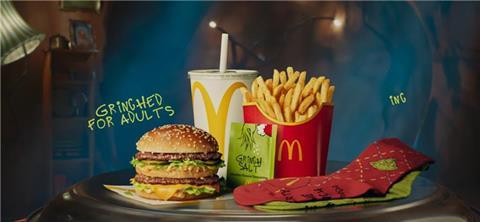
How Christmas ads are outwitting the ‘Grinch’

Despite M&S chairman Archie Norman fuming last year that new rules “probably means we can’t run a Christmas ad”, especially not one featuring mince pies, the retailer and all its rivals managed to navigate the restrictions – under the industry’s voluntary agreement – and produce some of the most effective seasonal ads of all time.
M&S showcased non-HFSS – but nevertheless indulgent – items from its Christmas range, while others focused on the spirit of the season rather than specific items. The rules have necessitated a change of approach, given eight of the 10 “most effective” Christmas ads of 2024, according to Kantar, would not be permitted under the rules. But System1 has reported 2025’s (compliant) Christmas ads achieved “record-breaking” scores versus previous years on its measure of audience emotional response as a predictor for commercial impact.
Cadbury, for example, swapped out the Dairy Milk bars of chocolate in its Secret Santa Postal Service campaign for text-based signs in the hands of the ads’ postman with indeterminate brand-purple objects in the background. Kantar named it 2025’s most effective Christmas ad overall.
Having been stopped from showing unhealthy treats, 2025’s festive campaigns were 24% less likely to make festive shoppers’ mouths water than those aired in 2024, according to analysis by ad creative scoring company Daivid.
“Unsurprisingly, with fewer lingering shots of fatty festive foods and seasonal spreads, replaced by less enticing views of brussels sprouts and olives, this year’s Xmas ads were less likely to make viewers’ mouths water,” says Daivid CEO and founder Ian Forrester.
But the ads were more likely to evoke romance (+10%), adoration (+6%) and joy (+4%), generate warmth (+2%) and make people laugh (+2%), according to the analysis.
“While many were quick to portray the new HFSS rules as the Grinch that would steal the magic of Christmas ads, our data doesn’t back that up. In fact, the first HFSS Christmas shows brands are finding new emotional routes to win hearts and minds,” Forrester adds.
Might it also encourage brands to use other types of media, too? Are they covered by the ban?
While the new rules apply to TV and online, outdoor advertising, radio and press advertising (newspapers and magazines) have escaped the clutches of the government’s ban – again, much to the anger of campaign groups, who claim we’re already seeing outdoor advertising providing a refuge for unhealthy brands.
Last month, the Food Foundation produced research claiming out-of-home advertising increased by 28% in the wake of the HFSS ad ban announcement, as companies prepared for the shift. McDonald’s was found to be the “worst offender”, having increased outdoor advertising spend by 71% from 2021 to 2024, but other brands such as Unilever, KFC, Pepsico, Mars, Mondelez and Coca-Cola also featured among the biggest spenders on outdoor advertising last year.
The Food Foundation said the exclusion of billboards, buses, bus shelters and other outdoor sites was a “major blind spot” of the legislation.
Is anything likely to be done about that?
Well, there are already clear calls for it to become the “next frontier” of the clampdown. And these were heightened when research commissioned by the Scottish government, reported by The Grocer in November, showed restrictions on outdoor ads introduced by local councils had proved effective in reducing obesity.
The review also showed that the clampdowns, which can be traced back to restrictions brought in by mayor of London Sadiq Khan and Transport for London (TfL), had caused a “snowball effect”, with up to 150 local authorities across England now looking at joining in.
It also pointed to academic research estimating that after 12 months, the restrictions brought in by TfL had reduced the number of people with obesity by 4.8% and led to 94,867 fewer cases of obesity than expected, according to analysis by the University of Sheffield and the London School of Hygiene & Tropical Medicine.
OK, so what about social media? Can a brand share content depicting LHFs on its own social media channels?
Post away! There are no restrictions applying to content posted to owned-media environments, and brands are free to repost organic content from users about how delicious their product is. The key is that you can’t pay the platform to boost or promote this content. That counts as ‘paid for’ content, which is restricted.
What about TikTok Shop?
TikTok says TikTok Shop counts as a retail environment under the control of a brand, so LHF products can be listed – like Lidl’s own-label viral smash hit Dubai Style chocolate. And they can be linked to from a brand’s own channel. As with other social media, however, paying to boost a listing, however, is a no go.

What about working with influencers? Everyone loves influencers…
Sorry but creator-made content is covered by the restrictions – if they’ve been paid to make it. That includes paying them to promote a LHF product in a ‘live’ stream. A creator can be paid to make content that only runs on the brand’s own channels, however, because placement of the advertisement has not been paid for.
They’ll just send them some freebies then?
Nice try, but no. ‘Gifting’ a creator counts as paying, as it “includes providing any consideration, monetary or non-monetary”. According to the latest CAP guidance, this is likely to include “reciprocal and affiliate relationships and arrangements”.
What about gamers? Do they count as influencers?
They count. And the same rules apply.
Pfft. Well, is there anywhere else in that kind of realm where brands can still advertise?
Podcasts and other audio-only content are completely unrestricted, as long as they don’t include any ads with visual elements. Whether that includes podcasters appearing on, say, YouTube, where they’re shown reading out a paid-for message is as yet unclear.
What about paying to boost the brand on supermarket website or aggregator apps? That’s not really advertising, is it?
Here’s where things get nuanced. It’s all about the commercial relationship between the manufacturer or supplier and the website owner or platform. And the ASA says it will “consider the terms”.
If payment “or a reciprocal arrangement” means a product listing has been placed in “a manner different to ordinary, organic product listings” and “afforded enhanced prominence on the site, app or in search results”, it’s likely to fall foul of the rules.
So online retail media will work a bit like it does in a supermarket, with the home page taking the place of the gondola end on the naughty step (see boxout below).
Still, at least everything is sorted now, and everyone knows what to do…
Hold your horses, sonny. That’s certainly not the case. The Grocer has been told by several sources that this “final guidance” is essentially just another step – and that it’s inevitable issues will start arising when the ban begins for real this week.
And the government could even be set to move the goalposts again in the new year. Last month The Grocer revealed the government had set out plans to push ahead with a consultation over a proposed overhaul of the Nutrient Profiling Model (NPM), used to underpin both the advertising ban and the in-store HFSS promotions legislation. That could cause utter carnage, with hundreds of products already having been reformulated to meet advertising restrictions, not to mention many products being cast into a revised HFSS category. In short, no one can rest on their laurels right now, even after the long-awaited ad ban has finally come into force.
Will the ban be a boon for retail media?
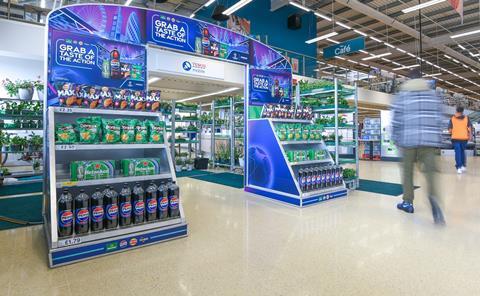
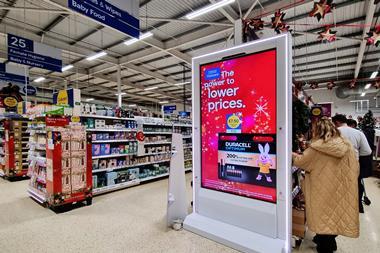
It’s been predicted by some that the new restrictions will accelerate the shift of advertising spend towards retail media, the supermarket-run networks of in-store digital screens, radio, magazines, experiential activations and proximity OOH.
“Retail media is one of the few remaining environments where brands can continue to showcase products while also delivering brand-building scale,” says Charlotte Malbasa, client director ay Capture, part of SMG, which operates the retail media networks of Asda, Morrisons, Co-op, Boots and Deliveroo.
“As traditional advertising options shrink, retail media offers a compliant and highly targeted alternative,” she adds. “The in-store environment, in particular, is proving highly effective, reaching shoppers when and where it matters most: at the point of purchase.”
With campaigns on pre-watershed TV now limited by the new rules, retail media offers a more open outlet for brand creative. And its audience is huge, with approximately 4,000 Tesco stores, 2,500 Co-op locations, 2,000 Sainsbury’s and Asda stores, and 500 Morrisons stores offering retail media opportunities, it reaches millions of shoppers every week, SMG says.
Committee of Advertising Practice (CAP) guidance specifically states that “outdoor or instore display boards or screens” including those playing digital content do not fall under the restrictions. Store radio is exempt too.
Malbasa argues that combining the exempt channels can lead to incredibly powerful brand product campaigns. “Together, these channels allow brands to drive frequency, reinforce messaging and maximise impact across the funnel,” she says. “Overall, the strongest strategies will layer these channels together, using retail media to maintain product presence at the point of purchase, while mass channels sustain and amplify the broader brand narrative.”







No comments yet