





Cheesemongers are encouraging consumers to look beyond cheddar by fostering close relationships and offering unique experiences
Cornish kern isn’t your typical West Country cheese. As a gouda-style recipe, it’s more congruous with the flat landscapes of the Netherlands than the rugged Cornwall coastline. Plus, the addition of Alpine starter cultures creates a flavour similar to a comté or gruyère.
It’s symbolic of the more unusual UK lines making waves at Paxton & Whitfield, which sells more than 200 cheeses – 70% of which are British.
“Over the past couple of years, interest has grown around a certain flavour profile: so, comté or gruyère and Alpine-style, sweet, nutty, full-flavoured cheeses,” says Dan Bliss, e-commerce & marketing manager at Paxton & Whitfield. “There are cheesemakers in the UK excited about making these lines.”
Interest is also growing in the stories behind artisanal cheeses. George & Joseph, a cheesemonger in Leeds, sees foodie culture fuelling an increased curiosity around origins. “When people are shopping for food, they’re now more interested in provenance and sustainability. They have the questions about where it’s come from and how it’s made,” says founder Stephen Fleming.
As a cheesemonger, he’s only too happy to provide that information. “We’ve got a lovely relationship with our cheesemakers, so we have deep knowledge of how their products are produced,” he adds.
In theory, it’s the perfect breeding ground for the artisanal UK cheese scene to thrive. Yet at a time of price sensitivity and a focus on convenience, artisanal producers and their stockists need to offer a compelling point of difference to compete against the standard supermarket lines.
So, which artisanal UK cheeses are thriving? How are their stockists tempting in customers? And how are they competing against supermarkets?
Mouse & Grape
📍 Pinner, north-west London
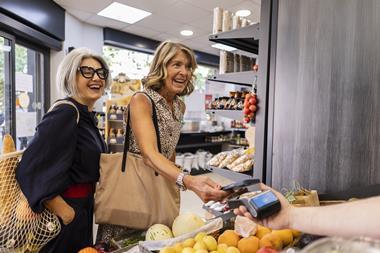
Jessica Summer (pictured) has long been passionate about cheese and wine. But she couldn’t find many places that catered for both equally. “When I was looking at hampers, I saw quite often the wine was really nice, but the cheese might be waxed and not a good quality, and vice versa,” she says.
So she started to sell hampers online – promoted via social media – that offered quality on both fronts. From those origins, Mouse & Grape was born. The store in Pinner, north-west London, offers “the finest quality” cheese and wine, alongside advice on “how you can then pair and enhance those things together”.
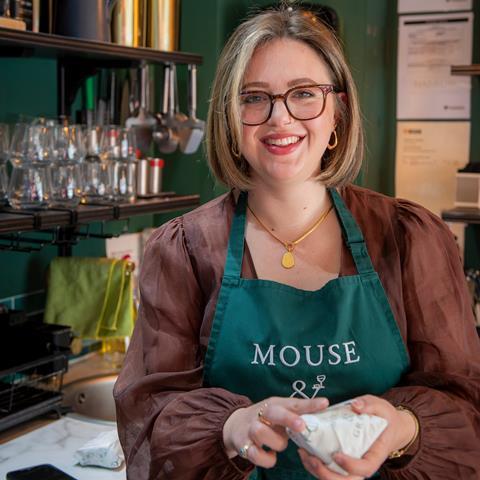
Mouse & Grape stocks cheeses and wines picked by Summer herself. On the cheese side, it boasts everything from smoked Westcombe cheddar to wild garlic yarg. When it comes to wine, high-end riojas sit side by side with a light vinho verde.
A crucial part of the experience is the expertise offered by Summer and her team. Customers can ask for information on provenance, taste and pairings to aid their choices. Tasting events are held in the chic store premises, or at homes and offices.
Mouse & Grape has also retained its online side. Although Summer prefers “the in-person approach”, online accounts for 25% of its business. Hampers are sold with tasting notes from Summer herself.
And Summer remains active on social media. Mouse & Grape attracts a substantial amount of sales via Instagram, she says, aided by her active and sometimes tongue-in-cheek approach. For example, an April Fool’s stunt in 2024 – which involved Summer mocking up cheese and wine in a can – caused a stir on social platforms and made The Grocer’s list of top pranks.
Customers don’t always visit their local cheesemonger for wild and wacky cheeses. In fact, quality cheddar tends to be most effective at pulling in crowds. As Bliss at Paxton & Whitfield puts it: “There would be riots if we didn’t have three or four cheddars on our counter.”
Across its four stores – in London, Bath and Canterbury – cheddar is “by far the most popular” style, Bliss says. “Each of our shops has its own local cheddar, so that’s really important to us.”
The popularity of cheddar extends to all locations and customer bases. Take Mouse & Grape, a shop selling cheese and wine in north-west London. Its clients are typically on the affluent side and passionate about quality cheese and wine. “Our bestselling wine last year was sancerre – so that tells you something about the clientele!” says founder Jessica Summer.
But even here, cheddar is of prime importance. Summer describes the lines in her store – Keen’s extra mature cheddar and Smoked Westcombe cheddar – as a “gateway” to more adventurous options. The familiarity of the cheese also aids Summer’s mission to make cheese tasting “approachable”.
Alpine gaining ground
From that starting point, enthusiasts will often then seek out more unusual options. As illustrated by the aforementioned Cornish kern, UK cheeses that mimic Alpine flavours are starting to gain ground.
George & Joseph is capitalising on the trend by stocking Summer Field, made near Whitby, North Yorkshire, to a Swiss Alpine recipe. “It’s not the kind of thing you expect to find in Yorkshire but it’s incredible,” Fleming says.
For Curd & Cure, a cheese wholesaler in Kent, the trend for Alpine flavours forms part of a wider movement. Patrick Spinazza, head of cheese, sales & strategy, has witnessed a “big shift” towards UK cheeses made to a continental recipe.
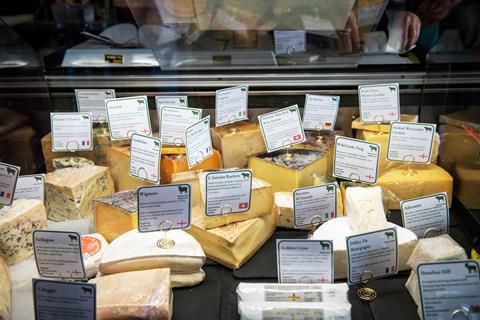
That’s partly been driven by the outbreak of lumpy skin disease in French cattle, he says. The resulting restrictions on French cheeses have led customers to seek British alternatives. Typically, they’re looking for a simple swap for their usual choice. “The average person will gravitate towards continental flavours that are familiar to them,” Spinazza says.
At the same time, more unusual varieties are coming to the fore. Penelope Nagle, co-founder of Feltham’s Farm Organic Cheese, points to lines such as Queso Fresco. Feltham’s sells 60 units of the cheese – the only organic take on the Mexican staple in the UK – to Fonda, an eatery in Mayfair run by Santiago Lastra, the chef behind the Michelin-starred restaurant KOL.
Feltham’s Lucky Marcel, the only organic saint-marcellin-style cheese in the UK, is another prime example. It won a Super Gold at the World Cheese Awards in 2024 – “one of only six British cheeses to do so”, Nagle says.
Lancashire Farm Dairies, meanwhile, makes its own paneer. It sees the Indian-style cheese as a prime opportunity. “Over the course of the next 10 years, the market is set to grow by close to 70%, representing an incremental £200m opportunity for retailers,” says MD Azhar Zouq. “For Lancashire Farm, paneer was a natural extension of our dairy expertise. It allows us to take a specialist cheese with strong cultural roots and make it accessible to a wider UK audience.”
George & Joseph
📍 Leeds
When Stephen Fleming opened George & Joseph, he was met with some scepticism. “We had a few customers who said, ‘What do we need a cheesemonger for?’,” he recalls.
That was 13 years ago. Since then, George & Joseph has built a loyal customer base – and at Christmas, regularly has customers queueing to enter its Leeds premises.
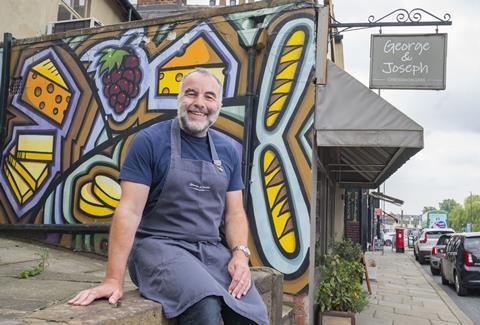
The cheesemonger has also built a solid supplier base. At the start, George & Joseph featured only Yorkshire producers. Fleming continues to champion these cheeses – stocking lines such as Yorkshire Pecorino and Yorkshire Blue – but now offers a wider selection. He’s discovered gems like Baron Bigod, a Suffolk brie that is “one of the best” on the market.
George & Joseph has also established a reputation among its suppliers. “There’s a really nice collaborative spirit among cheesemakers,” says Fleming. “Initially I had to go looking for suppliers. Now we’re in our 13th year, things have changed and suppliers come to us.”
Fleming will take time to understand each producer. “There’s a real duty of care for us to represent the cheesemakers whose cheeses we sell,” he stresses.
That dedication also provides a crucial benefit to customers. “Walking into any specialist shop, you can be faced with lots of names and things you don’t recognise, and it’s important to make people feel relaxed and comfortable with your choices,” Fleming says.
For him, taking the time to offer advice is not just about customer service – it’s also about making the world of artisan cheese more accessible. “I’m a great believer that really good cheese is for everybody,” he sums up.
All this innovation comes with a word of caution, though. These lines aren’t simply about borrowing popular styles from other countries. British cheesemakers are putting their own stamp and identity on everything they produce. In an increasingly crowded market, the story behind the cheese is becoming an ever more powerful selling point.
Bliss at Paxton & Whitfield has seen that shift at play. “I’ve been a cheesemonger for 20-odd years and the interest in cheese has got deeper,” she says. “There have always been cheese lovers, but the questions consumers are asking has changed. People may still want the strongest cheddar, but there’s much more interest in provenance.”
The same trend has been noticed at Whole Foods Market. “Customers are increasingly curious about where their food comes from and want to know who made it,” says Jade Hoai, executive leader of purchasing at the retailer’s UK operation.
For Summer at Mouse & Grape, it boils down to an increasing pride in homegrown British produce. “All of these European cheeses that are so steeped in history, people have such a pride in them,” she points out. Classic British cheeses are now starting to catch up. “I feel like British people have had pride in them for a while, but it’s just starting to become a bit more prevalent,” Summer argues.
The increased focus on provenance plays into the hands of specialist stores and local cheesemongers, who can reel off stories about all the lines they sell. “It puts you into a role of championing those artisan producers,” Bliss says.
That point of difference is arguably even sharper in the wake of major supermarkets such as Tesco, Sainsbury’s and Morrisons closing their deli counters. Customers have to rely on information on packs, which say “very little about where the cheese comes from”, points out Fleming at George & Joseph.
At his store, there is a wealth of expertise available – plus tastings, which have proven a powerful way to draw in punters. “Customers can learn the stories behind the cheeses, taste the products and understand the differences between varieties,” Fleming says. “That’s the value we add.”
Paxton & Whitfield
📍 Two stores in London, one in Canterbury and one in Bath
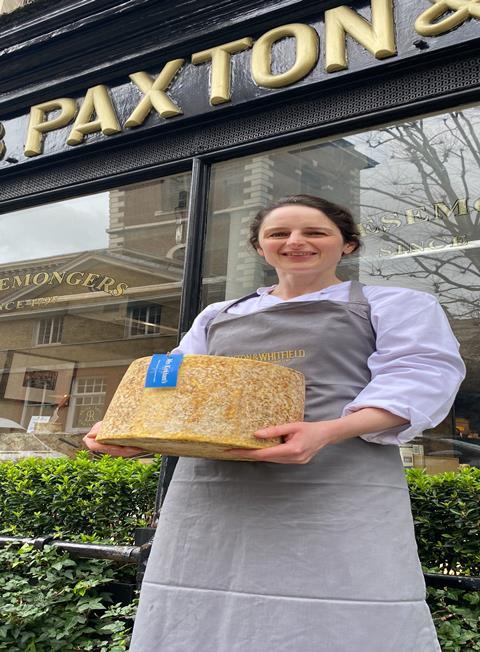
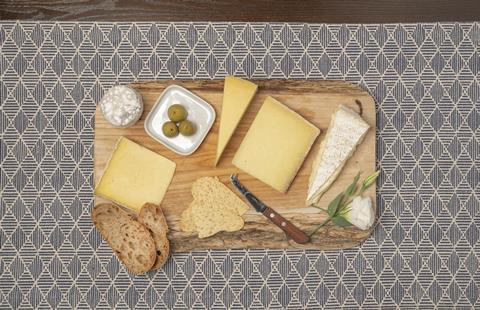
A lucky dip box is just one of the ways Paxton & Whitfield has brought artisanal cheese to life. In the surprise package, available throughout August, customers received crackers and three artisan cheeses, “hand-selected by our expert cheesemongers”.
The retailer – which has four stores – also offers monthly artisanal cheese boxes, cheese wedding cakes and virtual tastings.
Established in 1797, Paxton & Whitfield has built up relationships with the suppliers of its cheeses – 70% of which are British – for decades.
“We’ve been working with our producers for generations, and we were often one of the first people to sell their cheeses,” says Dan Bliss, e-commerce & marketing manager at Paxton & Whitfield (pictured). She points to Caerphilly Gorwydd – a handmade cheese with a citrus-flavoured centre – as an example. “We had one of the first batches in the early 1990s,” Bliss says.
The Caerphilly sits alongside a host of quality British cheeses – from the unpasteurised and organic Pitchfork Somerset Cheddar to Mrs Kirkham’s Lancashire, made using a traditional two-day curd method. The selection is the result of Paxton & Whitfield “really investing” in its producers and building a strong relationship, which has even resulted in collaborative cheeses.
“Because we have state-of-the-art cheese maturing rooms, we can buy cheeses younger and finish the maturing ourselves,” Bliss says. Collaborations have even resulted in lines such as Kaldi, a fusion of coffee and goats cheese.
“I’ve been a cheese-monger for 20-odd years and I’ve been at Paxton & Whitfield for 12,” says Bliss. “I think the interest in cheese has only got deeper.”
For Bex Cleave, owner of Country Cheeses – which makes and sells produce in Devon – this attribute lies at the heart of what independent cheesemongers offer. “It’s these close relationships and sharing the individual cheesemakers’ stories far and wide that we believe helps keep the artisan cheese world flowing,” she sums up.
On a pure business level, too, independent cheesemongers play a vital role. Many of their artisanal suppliers don’t have the scale to go into the supermarkets – and would avoid that avenue even if it were available.
“A lot of artisan cheesemakers have been burned by the supermarkets,” says Spinazza at Curd & Cure. “When you get past a critical mass, the supermarket is over 30% to 40% of the business.”
For him, that’s akin to putting all your eggs in an unstable basket. He’s seen supermarkets delist suppliers at short notice, leaving them with sizeable overheads and excess produce.
By contrast, all independent cheesemongers put an emphasis on their collaborative approach to working with suppliers. That ranges from working together through financial hurdles – allowing payment plans, for example – to creating exclusive cheeses together.
“It’s one of our top priorities to keep our relationships with the cheesemakers close and current, so we can share any variations in flavour to our customers and keep them up to date,” says Cleave at Country Cheeses. “Keeping it personal all the way through the life of a cheese is important to us.”
It’s undoubtedly a positive story. At the same time, there are clear challenges facing the artisanal UK cheese scene. While suppliers are battling the pressures of a changing climate, retailers are burdened with business rates. Plus, both are facing the impact of rising employment costs, combined with an increasingly cautious consumer.
Whole Foods Market
📍 12 UK stores, all in London
The Whole Foods Market cheese counter is home to a wide range of UK delicacies. On one end sits the Tunworth – “arguably one of the UK’s finest camembert-style cheeses” – with a gooey, mushroom-scented interior. On the other is Stinking Bishop from Gloucestershire, with a “stronger aroma and an oozy, savoury centre”.
And there’s plenty in between. Baron Bigod brie from Suffolk, Wigmore ewes milk cheese from Berkshire and Rosary Goat Cheese from Wiltshire have all earned a place on the counter.
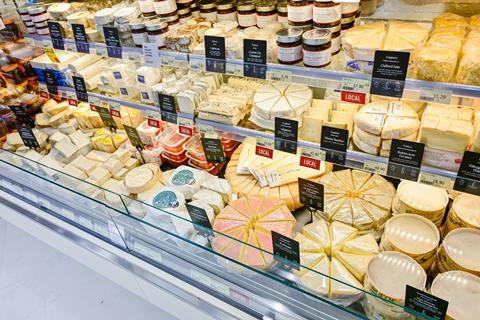
For Jade Hoai, executive leader of purchasing at Whole Foods Market UK, it’s an illustration of the variety on offer across the country. “The UK has an incredible range of artisan cheeses,” she says. “Customers looking for the styles and flavours they associate with continental cheese can find brilliant options made here in the UK.”
When deciding which options to stock, flavour is “always the starting point”, says Hoai. Whole Foods will assess what tastes good, and what will appeal to its customer base. That allows room for an increasingly broad spectrum of cheeses. Shoppers are interested in creamy, soft cheeses, but are becoming “more confident about stronger flavours”, Hoai reports.
“Provenance matters, too,” she adds. “People like discovering who made a product and where it comes from. Our job as retailers is to make that discovery easy and enjoyable.”
Hoai believes that role is vital to the future of the home-grown artisanal cheese scene. “The more opportunities customers have to taste and discover British artisan cheese, the more familiar these names will become,” she says. “I’m excited to see what the next generation of British cheesemakers brings.”
Tracey Colley, founding director of the Academy of Cheese, says the price of artisanal cheese is rising under the pressure. So cheesemongers are really feeling “the competition from supermarkets, who have buying power”.
Summer at Mouse & Grape admits her proposition won’t appeal to everyone. Its cheeses are often more affordable than people think, but “if you go into the supermarkets, you can buy a block of cheese for £2”, she points out. So, if shoppers are primarily buying on price, the supermarkets will win every time.
“You need to work out who your people are, and then when you get those people, they fall in love with the brand and they fall in love with the product,” Summer says. “They are your regular customers who will come back time and time again.”
Encouragingly, there are signs of that foodie mindset becoming more mainstream. Fleming is heartened, rather than threatened, by the growing range of cheeses in supermarkets such as M&S. He believes increased variety is leading to greater consumer understanding of the different cheeses on offer.
Fleming thinks back to 13 years ago, when he first opened George & Joseph. “We had a few customers who said, ‘What do we need a cheesemonger for?’ But now more people are interested in provenance and sustainability,” he says. “And that’s continuing into a younger generation.”
Social media is proving a powerful tool in attracting that younger crowd. When Fleming posts, he sees a direct effect on sales. “There are times when we’ve taken a delivery, put photos on social media, and within minutes we’ve had people coming in wanting to buy it,” he explains.
Summer, who used social media to start her business, can also testify to its effect. “For a lot of our customers, social media is how they’ll discover us,” she says. “Local customers will all be following us on Instagram. And even if people aren’t necessarily liking or commenting, they are always watching.”
For a small north-west London store, Mouse & Grape certainly gains plenty of engagement. On Instagram, a post showing off one of its cheeseboards – cheekily captioned “if you’re having a bad day, just remember you could be allergic to cheese” – has nearly 3,000 views, over 100 likes and 39 shares.
If that interest is anything to go by, the artisanal UK cheese scene has plenty of potential ahead. Small cheesemongers won’t ever compete with the supermarkets on price or convenience. But when it comes to offering a memorable experience and rich stories – attributes increasingly valued by foodie customers – they are miles ahead.


No comments yet