


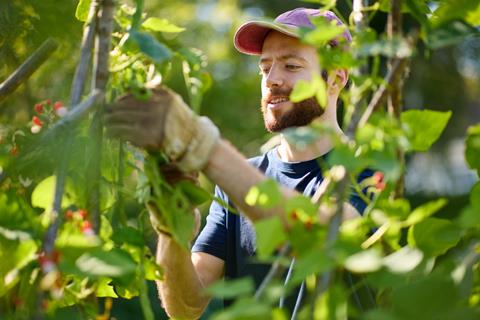
Over 80% of the UK’s population lives in urban areas. This creates not only a geographical separation from food production but also a cultural one. I have friends who refer to the urban population as ‘townies’ and friends who consider young farmers to be a ‘bit odd’. This divide means people rarely meet in the middle to have honest and productive conversations.
I was privileged to grow up on a farm from birth, so I have always known exactly where the food on my table comes from. During my childhood we hosted school trips and projects with the local primary schools. It became clear to me that even at rural primary schools, not everyone knew where their food had come from.
Since this realisation, I have not stopped shouting about it. I have told the radio, the news and farmers that we need to talk to children.
Bridging the gaps in the food chain starts with education. This should be a key element to both primary and secondary schooling. Even just the basics are key to being connected to what is on the plate.
Accessible stories
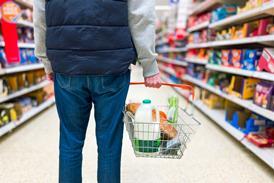
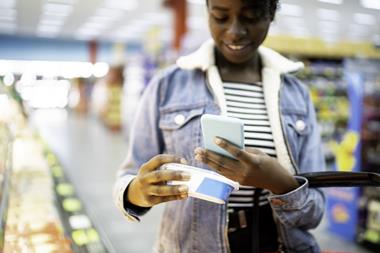
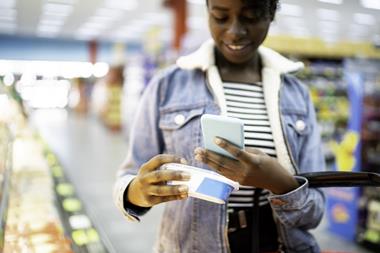
Education comes in many forms and, for some, visiting farms would be a near impossibility. Therefore, information should be accessible in shops, highlighting the stories behind products so people can understand food production. We are always campaigning for people to buy British, buy organic, buy local – but do people truly understand what this means?
We need to make knowledge easily available and consumable.
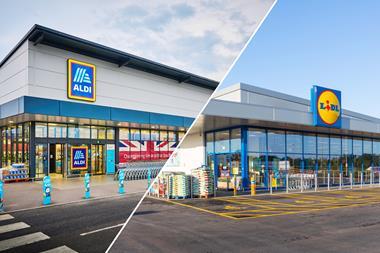
I have seen some big-name supermarkets doing excellent consumer outreach at the Royal Highland Show. Every young person in attendance ends up sporting a bright blue cowboy hat after touring the Aldi stand, eating British food, learning about producers and seeing different showcases of local produce.
I have been directly inspired and supported by so many people – many of them women – and particularly my mother. Andrea Walker is a first-generation farmer and has won numerous industry awards. If I can aspire to be like anyone, it is her.
The BBC’s This Farming Life is a show which allows the public to get a peek into what the farming lifestyle is like, complete with the realities of crops failing and animals dying, as well as the highlight reel of lambing and harvest.
A changing industry
Over half the land in the UK is used for some type of agriculture, making farmers and producers stewards of most of our environment. I hope that as people and the climate both change, farming takes the opportunity to change with it.
Whether it is organic, regenerative, nature-friendly practices or all the above, producers in the UK are looking to the future and making change for the better.
Our industry is changing. As a new generation steps up to the blocks, I hope my peers and I will be adaptable and focused on the big picture. Agriculture is becoming a more diverse industry, and I have met so many inspirational women, at conferences, university and meetings. I have so much hope we will continue to create a supportive and inclusive community.
Jessica Walker is estate management assistant at Scone Estates

No comments yet