






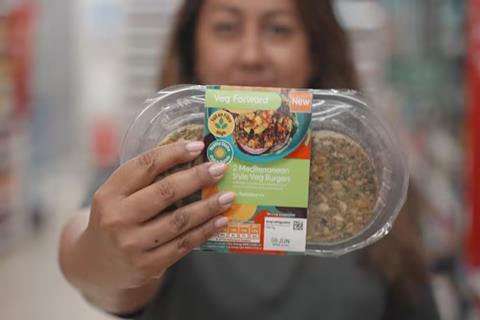
There is near universal acceptance that persuading people to eat more fibre is a good thing. Barely 4% of the UK population currently eat the recommended 30g per day, with teenagers and elderly people falling particularly short.
It’s a hard job motivating people to eat more bran, but one thing that can help is making a health claim. Gut health has never been more en vogue, so it is hardly surprising that many brands are looking to include ‘good for your gut’ on the front of pack. And that means lots of companies poring over the super-fun read that is the GB Nutrition and Health Claims Register.
There are a couple of problems. First, for most of the claims related to fibre, the wording, which must be included in full on pack, is along the lines of ‘increases faecal bulk’ or ‘contributes to an acceleration of intestinal transit’. All good things for health, but perhaps not the most desirable description when placed next to ‘pierce film lid several times’.
Second, the amount of a single fibre ingredient required to make a claim is often prohibitively high. To make the allowable claim for barley grain fibre, wheat bran, rye fibre or oat fibre you need over 6g per 100g of product. A claim can only be made by adding 6g of one of these ingredients, which is a considerable amount of a highly insoluble component that will dominate taste and texture. As an example, a serving of porridge does not contain enough oat fibre to make a gut health claim, despite only consisting of oats and milk.
It is generally thought that consuming a variety of different fibres is the best advice for health and it is certainly better if you want to make a delicious, desirable product. But the health claims legislation does not incentivise this. It pushes developers to focus on the addition of only one type of fibre, as that is what will get you an allowable claim.
There is another option, one that is taken by many less scrupulous brands and manufacturers, and that is to add calcium. Calcium has a claim related to digestive enzyme function, which is sometimes questionably interpreted as a gut health benefit. Calcium is cheap, hardly impacts quality and only a small amount is required, making it incredible easy to include in a variety of product types.
But in reality, its claim is hard to justify. Very few consumers are likely to have a calcium deficiency, so the addition is doing nothing to make their guts healthier. Many dubious calcium-fortified products, including drinks, probiotic shots, cereal bars and seed sprinkles, can make legal gut health claims, while a mixed wholegrain bread cannot. And bizarrely, when it comes to porridge, it is easier to get a gut health claim from the milk than the oats.
Of course, you don’t need to make a specific health claim. You can talk about being high in fibre or a source of fibre just by having enough in total. But in the absence of a specific claim, you cannot talk about health anywhere on pack, however nutritious and fibre-rich the product. This is a shame, because consumers could do with that signposting to help them make better choices.
Changes to legislation, allowing more general on-pack discussion of gut health based on blends of fibre ingredients, is perhaps too nuanced a position. But the way things are, the incentive seems to be encouraging companies to do the wrong thing and consumer health is almost certainly suffering as a result.
Anthony Warner is a development chef at New Food Innovation










No comments yet