


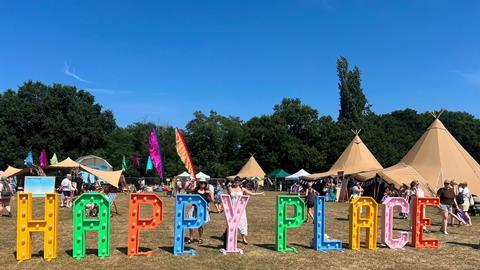
A pick & mix for your wellbeing. That was the elevator pitch for the Happy Place festival, held at London’s Old Deer Park at the weekend.
The brainchild of Fearne Cotton, host of the Happy Place podcast, the annual event explores the concept of wellbeing with a curated selection of high-profile celeb guests. So far, so bougie. But it’s a concept that resonates outside the London bubble too, with a second event due to be held in Tatton Park, Cheshire in September.
This isn’t a festival as you know it. For a start, no alcohol is sold at or allowed into the event, which instead favours coconut matcha lattes as the drink of choice. Instead of bands, the headliners are authors of books on wellbeing – such as Matt Haig, Poorna Bell and Ruby Wax. Centre stage is less moshpit, more qi gong and yoga classes.
Exhibitors are picked solely based on their ability to support the festival’s mission to promote “health and happiness”. This is an event squarely aimed at the wellness crowd.
A quick look at the Happy Place brand partners shows how much a role fmcg plays in this space. Stalls at the festival showcased everything from raw cacao to longevity-boosting vitamins and sustainable skincare. So what trends were on show, and what do they tell about growth opportunities in the wellness market?
Unprocessed eating
If Happy Place exhibitors are anything to go by, the ultra-processed foods narrative has clearly landed with the wellness crowd. Brands at the show were keen to showcase a definition of health that was at odds with calorie-counting or restrictive eating. Instead, they were highlighting their natural ingredients.
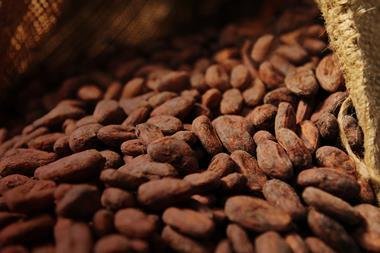
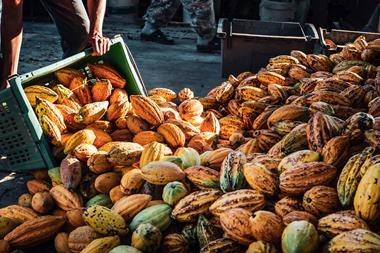
Take Nibbed, which was hammering home cacao’s health credentials. The brand was offering samples of its signature blend, made with pure cacao nibs, sugar-free coconut milk and a pinch of sea salt. According to Nibbed, a shot of the stuff can promote focus and energy without the associated jitters.
Falling under this broader definition of health didn’t mean wellness brands had to sacrifice indulgence. Subscription pasta brand Nonna Tonda was offering tasters of its ravioli with parmesan, with health communicated through its freshness and lack of additives – the pasta is made fresh every day and shipped to customers, who can prepare the recipes in as little as five minutes. HelloFresh, meanwhile, was focusing on its scratch cooking proposition.
And finally, there was some good news for the plant-based market. Despite a downturn in sales – which has been linked to the aforementioned anti-UPF narrative – many stalls were offering vegan options. That was especially true for dairy alternatives: Moma was a key sponsor of the festival, serving up oat milk lattes and matchas for just £1.
High-end vitamins
One of the longest queues at the festival was for free samples of Glowwa’s Hair Food supplement. Packaged in a stylish pastel pink box, the Instagrammable line couldn’t be further away from the functional packaging that once characterised the vitamins aisle.
Similarly, many of the supplement brands on show at Happy Place showcased on-trend blends and aspirational branding.
Charava, for example, was selling creatine – an increasingly popular compound in both the sports nutrition world and the broader health conversation – alongside magnesium complexes and NMN. The latter is designed to boost longevity by aiding the production of cellular NAD+ in the body, which naturally declines with age.
Clearly the Next Big Thing, NAD+ supplements were spotted in several places at the show. Sponsor Viridian sold its own blend, alongside an electrolyte complex, which proved another hot area. Fellow sponsor Phizz has made electrolytes a key component of its entire soluble vitamins range.
Sustainable personal care
Personal care brands were largely keen to show sustainability doesn’t have to mean compromise.
“Before you ask, yes, it works!” was the key message from The Natural Deodorant Co, which was showing off its aluminium-free, plant-based balms. With fragrances such as Orange & Bergamot and Citrus & Black Pepper, it was keen to offer an aspirational, rather than purely functional, experience.
A similar focus on scent was evident at Method, which was offering free samples of its shampoo, conditioner and body wash. Its pop-up invited guests to walk through photo-ready areas showcasing its fragrances, such as a Daily Zen blend with cucumber, seaweed, and green tea.
Several brands combined their sustainable credentials with a luxury feel. Brighton-based vegan skincare brand My Skin Feel used that ethos to win £50k in investment on Dragons’ Den in February. Its stall at Happy Place set out clearly its ethical point of difference – using rescued food to make its products – alongside clear promises on efficacy and antioxidant content.
And Fill’s refill range proved sustainability can be stylish. Its boldly packaged lineup of haircare, bodycare, cleaning and laundry products is designed to “work great, look cool and cut waste”.
Ultimately, fmcg will need to deliver on more than ethics to appeal to the wellness crowd. Happy Place attendees were clearly driven by aesthetics and experience, as well as values. It’s not always easy. But if brands manage to successfully combine the two, they stand to gain a loyal and vocal fanbase.


No comments yet