




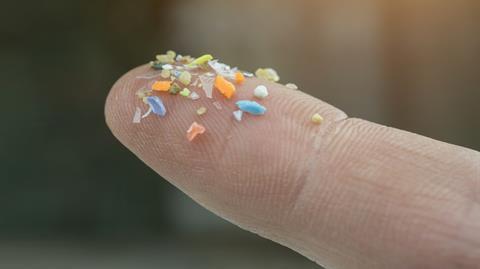
Is this the watershed moment for microplastics? The arrival of The Plastic Detox documentary on Netflix has been hailed as a potential game-changer.
The 92-minute film follows Dr Shanna H Swan, an environmental and reproductive epidemiologist, as she visits five couples struggling to conceive. Together, they begin a painstaking process of eliminating microplastics from their households – cutting out any foods wrapped in plastic and even ditching clothing that contains polyester.
The result? After 12 weeks, three of the five couples end up conceiving.
Scientists have cautioned against drawing any definitive conclusions. More research is needed before microplastics can be directly linked to infertility. But the findings will no doubt make viewers sit up and take notice. If that is the potential impact on fertility, what are microplastics doing to our bodies more broadly? And could it become a USP that food and drink brands start to use over the next few years?
The public response
The social media reaction – viewers posted on Instagram and TikTok about their shock and “disgust” after the documentary aired last month – suggests the findings have struck a chord with many. The Guardian described the experiment as “so terrifying you will want to change your life immediately”.
Plastic-free brands like Milliways chewing gum have long been anticipating a ‘Blue Planet moment’ for microplastics. This could be the watershed they’ve been waiting for. At the same time, several studies have pointed to the potentially damaging effects of microplastics, with one Guardian article in January casting doubt over the issue altogether. None has prompted a seismic shift in consumer behaviour.
The near-impossibility of eliminating plastics from our lives – unless you have a specialist on hand and a Netflix budget – is likely part of the reason. When the task feels insurmountable, the public understandably gives up. Particularly when they’re also being asked to cut back on ultra-processed foods, sugar and alcohol. Adding plastic to the equation can feel like one overwhelming step too many.
Nevertheless, it would be short-sighted to ignore the growing conversation around microplastics. At the very least, retailers and brands should be thinking carefully about their plastic content and preparing a clear response for consumers who start asking questions. Can they say they have considered the impact? What will their story be if microplastics are found to be as harmful as the Netflix documentary suggests? Do they need to offer plastic-free options?
For plastic-free brands, even if the Blue Planet moment fails to materialise, the debate reinforces their proposition. For now, it may not be something they can rely on entirely. Plastic-free products still need to deliver on their central promise. People will not, for instance, buy food that misses the mark on taste simply because it comes wrapped in cardboard. But the absence of plastic will increasingly become a point in their favour as The Plastic Detox stays fresh in the public’s mind.
Even if the Netflix documentary does not prove to be an overnight game-changer, microplastics will no doubt continue to infiltrate conversations. Ignore that debate at your peril.
Harvey Choat is MD at Nexus PR

No comments yet