




Down the ages, the cost and availability of food has frequently been the determinant of the fortunes of those in power. As a history student many years ago, I learned that the price of bread and its differential from public expectations was an excellent predictor of the likelihood of political discontent.
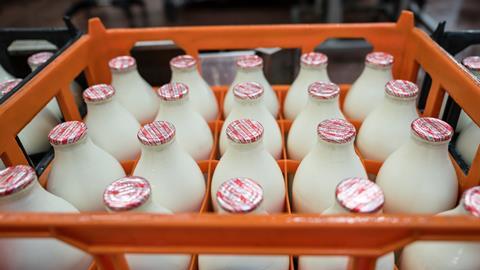
Yet it always amazes me that politicians of all parties pay so little heed to food prices. Indeed, most of them seem genuinely surprised to learn that prices are surging and are unable to quote the specific price of a pint of milk or a loaf of bread.
Which is why our leaders are so slow and clueless in their response to the current cost of living crisis. I confess I chuckled when Baroness Jenny Chapman told reporters that the latest Downing Street Cabinet meeting had been spent discussing not Sir Keir Starmer’s future, but food prices. I rather doubt that discussion added very much to the sum of human knowledge.
That makes abundantly clear the problem for whoever ends up as prime minister. Starmer has offered no solutions in his 15 minutes of fame, and there is no reason to assume that any or all of Ed Miliband, Angela Rayner, Wes Streeting or Andy Burnham – even supposing he can find a way into the contest – will do any better.
Mitigating food inflation
Control of UK food prices has been beyond ministers for some time. Yet those same ministers appear to have spent relatively little time considering the consequences of global events on food prices, or how to mitigate them.
Assuming he goes, whoever takes over from Starmer should make that mitigation a priority. Recent work by The Andersons Centre found UK agricultural input inflation – the costs that will flow through into food prices in the coming months – is running at 8.4% annually. That’s twice UK inflation, with fertiliser and energy costs the major drivers.
That this will go still higher – probably into double digits – seems certain. The last round of soaring food prices in 2022-23 is not encouraging. Agriculture-driven food price inflation, compounded by rising energy costs, is far stickier, lasts longer and is more difficult to shift than economists expect.
It’s a grim inheritance for whoever emerges as the prime minister. But action now might improve that legacy. The outgoing administration could be in place for another three months. Options include bringing down energy costs by stripping out discretionary commodity costs, fast-tracking discussions with the EU on removing barriers to cross-channel trade, or taking action appropriate to the crisis and looking at selective and time-bound VAT cuts.
This would deliver real relief for the ”hard-pressed working families” this government constantly references. It would also give confidence to battered manufacturers, retailers and hospitality businesses that ministers are listening to their concerns. But most of all, it would make a real practical difference for shoppers and diners in an increasingly turbulent world.
Don’t hold your breath.
Ian Wright is a partner at Acuti Associates



No comments yet