




It doesn’t take a geopolitical expert to realise the world is rapidly becoming a more dangerous and unpredictable place.
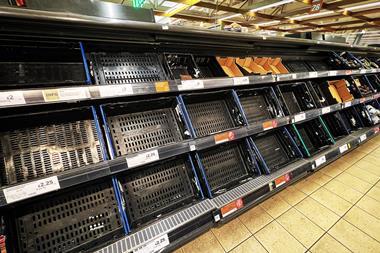
War, climate shocks, cyber threats, energy crises and trade disruption have become recurring features of the global landscape rather than once-in-a-generation events. And as these challenges escalate, the question of whether the food system can react to them and keep supermarket shelves stocked is becoming increasingly difficult to ignore.
As the National Audit Office’s Resilience of the Food Supply Chain to Disruptions paper outlined last week, the UK managed to keep its food supply chains running through recent challenges such as the war in Ukraine, the Covid pandemic and last year’s cyberattacks that hit Co-op and M&S. But if the next big shock hit tomorrow, just how prepared are we?
The UK’s resilience to date had been driven largely by the private sector, the NAO said, warning that government efforts to prepare for future crises, and its engagement with industry, have failed to keep pace with a “more volatile and rapidly evolving risk environment”.
An uncomfortable truth
It’s worth noting the NAO report recognised recent government efforts to address these risks, by expanding its food supply chain resilience team and increasing its focus on planning for catastrophic events.
However, the often scathing report also outlined a litany of areas across supply chain resilience and food security where it must do better, warning of “risks that could affect food supply becoming complex and more likely”.
The watchdog pointed to the government’s own admission in last year’s Resilience Action Plan, where Defra admitted it was “less confident” that businesses could withstand major shocks without government intervention over the next five to 10 years.
That concern was echoed by Defra secretary Angela Eagle on Friday in a carefully worded interview with The Guardian, in which she discussed the rapidly escalating El Niño climate pattern.
While Eagle was clearly keen to downplay fears over the impact of wider supply chain shocks on food supply, her suggestions that households should build up “a store of a bit of food that can keep you going for a while before the emergency services can get to you” made understandably big headlines over the weekend.
This kind of preparation would boost resilience, she added. And while ministers are yet to fully sound the alarm when it comes to stockpiling, Eagle’s comments come amid a broader shift in government thinking.
Last month, reports emerged that the Cabinet Office was preparing a new resilience campaign encouraging households to keep basic supplies such as tinned food and bottled water at home.
But the NAO found preparedness was still “mixed” among key stakeholders in the food sector.
It said the government’s so-called ‘playbook’ for food supply disruptions was heavily “focused on government structures and processes”, while lacking sufficient input and operational detail from the food sector.
It also noted that no national exercise on the topic had been undertaken since 2023, despite the government recognising there were limitations to its approach even then. And even if the government did decide “to direct businesses to take actions during an emergency situation”, Defra currently lacks the legal power to compel them to act.
Food industry working together
All of this, of course, is something that industry has been warning about for years.
The Grocer has published many reports in recent months, with supply chain experts such as Marco Forgione of the Chartered Institute of Export and International Trade repeatedly highlighting a lack of joined-up thinking and meaningful engagement between government and industry on food resilience planning.
Ultimately, “the government has a duty – highlighted last year in Professor Tim Lang’s comprehensive report on preparedness – to do all it can to make us ready for the huge challenges which may come”, argues former FDF CEO Ian Wright. “And so far, there are few signs that it’s on the case.”
And as Cold Chain Federation CEO Phil Pluck puts it: “Now is the time for food supply experts and government to work together to ensure robust food supplies reach the public no matter what crisis hits the UK.”
Those comments are echoed by Food and Drink Wholesale UK CEO James Bielby, who also supports the creation of a “permanent, dominant industry food resilience forum. That should be constituted and come together regularly as opposed to on an ad hoc basis.”
Such a mechanism could help address the “lack of co-ordination” between government and industry, suggests Lang, who also questions the language used by Eagle last week.
“It’s not engaging [people on the issue]. People on low incomes can’t store food. They haven’t got the money,” he adds, while pointing to the significance of the NAO as a key public body, effectively telling Defra “you’ve got to get your act together on this”.
For its part, Defra insisted to The Grocer on Friday that it was “working with farmers and the food and drink industry to strengthen the UK’s food security and resilience”.
How detailed and collaborative that work proves to be may ultimately determine whether the UK is ready for the next major shock, or once again forced to rely on the ingenuity of an increasingly pressured industry to keep food flowing.









No comments yet