


The numbers should make for cheerful reading. One in three pubgoers now moderate their drinking, and the low & no alcohol category grew by seven percent last year. Low & no alcohol beer is growing faster than almost any other category in UK retail.
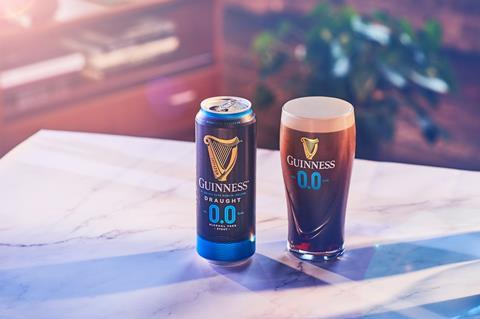
And yet, walk into any supermarket and look at the alcohol-free shelf. What do you see? Heineken 0.0, Corona Cero, Peroni Libera, Guinness 0.0 – and maybe one IPA option if it’s a big shop. Every major brand has followed the same playbook – take the drink you already make, remove the alcohol and put it in a slightly different can, often in muted colours that nod to the original but show it’s not quite the ‘real thing’. It’s not a strong look, is it?
It is, of course, the most logical response to a structural shift in consumer behaviour. And it has clearly worked – the category is now established, but it is also missing a significant trick.
I have spent the better part of 20 years working with drinks brands and I keep coming back to the same question: why is the industry simply removing alcohol from its existing products, when it could be asking what a brilliant adult drink looks like if you design it from scratch?
Tesla did not electrify a Ford Fiesta. It started with a blank page and asked what a great car looks like if petrol is not part of the equation – the result was a different category entirely.
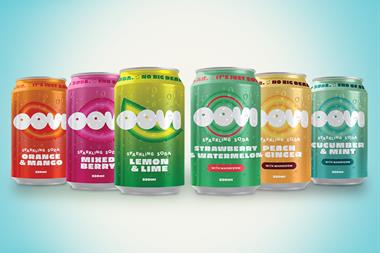
The drinks brands quietly winning the low & no space are doing the same thing. Liquid Death turned water into a cultural statement. Athletic Brewing built a craft beer brand from the ground up that was alcohol-free from day one, and is now the number one non-alcoholic craft beer in the US. Seedlip, before Diageo bought it, created a category that didn’t even exist.
None of these products started with an existing recipe and a subtraction sign. They started with consumer insight and a blank page.
The subtraction approach
The subtraction approach has commercial logic. Brand recognition is already built and the hard part – the distribution channels – is already in place. The margin on an alcohol-free variant can be strong, so I understand why it is the default. But it has a ceiling, and we are approaching it.
Congrats folks, we have decent low & no versions of beers, wines, ciders, G&T and all the other formerly boozy drinks. But I don’t think this is the next wave of retail success.
The sober-curious consumer is not simply a drinker who has given up alcohol. They are, in many cases, a consumer who has opted out of the category whether for a drink, a night, or longer. When you put a Guinness 0.0 in front of them, you are still selling them Guinness. You are still pointing at the category. For a meaningful proportion of people, that’s not an attractive offer.
What that consumer actually wants is a drink that gives them what alcohol used to give them: the ritual, the reward, the social signal and the sense of occasion. They are not looking for a lesser version of something they used to drink. They are looking for something new – and for a deliberate choice, not a perceived compromise.
A brand getting it right for me is Tom Holland’s Bero. Speaking to ABC News, he described it as a product that “reflect[s] my lifestyle and values” after two years of sobriety and is for people who appreciate “living life to the fullest”, delivering the taste and experience of beer “without asking you to settle for less”.
The brands that solve that problem will not just win the category, they will own the social occasion itself – a considerably bigger prize.
The next wave of growth
For retailers, this is worth paying attention to. The low & no shelf is currently organised around brand extensions from existing players. The next wave of growth will come from brands built specifically for this consumer rather than adapted for them. The question for buyers is whether they are creating space for those brands now, or waiting until they have already broken through somewhere else.
The drinks industry is brilliant at many things – brand building over decades, category creation, and understanding the role of occasion in purchase behaviour. Those are exactly the skills this moment requires. The brands that bring them to a genuinely new product challenge, rather than a reformulation exercise, are the ones I expect to be talking about in 10 years’ time.
The others will have very good alcohol-free versions of drinks that fewer and fewer people want.
Chris Friend is managing partner Amsterdam at Superson
The Grocer Health Summit 2026 is helping the industry turn healthy eating insight into action. Covering everything from regulation to reformulation and science to strategy, the one-day conference will be taking place on Tuesday 15 September 2026 at the QEII Centre in London.
Visit thegrocerhealthsummit.co.uk to book your tickets and find out more.

No comments yet