






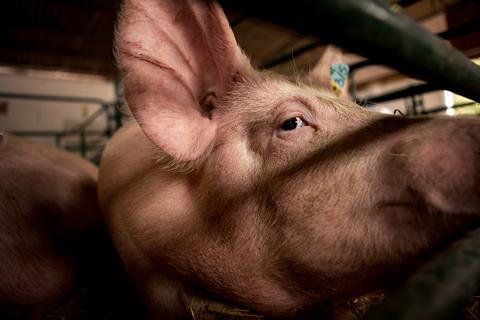
For over 30 years, I’ve campaigned tirelessly for animals, founding Viva in 1994 to reveal the horrors of factory farming to the public and try to end it for good. I’ve visited dozens of factory farms and witnessed horrific suffering – images that will haunt me forever. Yet what my team and I have exposed on several of Cranswick’s farms, including Hogwood – the focus of our award-winning 2020 documentary – as well as Manor Farm and Southwold Farm (all Red Tractor-approved at the time) ranks among the worst cruelty I’ve ever seen.
From the rotting corpses of piglets lying beside their mothers in farrowing pens to the shocking cannibalism of live, helpless pigs, it’s almost impossible for consumers to grasp what really goes on behind the locked gates of factory farms unless they see it with their own eyes.
Thanks to a series of Cranswick investigations that began with Hogwood – resulting in intense media scrutiny – many people have now seen the reality for themselves. As negative press mounted this year, it seemed consumers were finally waking up to the horrors of industrial pig farming. Yet rather than face a reckoning, Cranswick is being applauded simply for acknowledging that pigs deserve better than the hernias, prolapses, necrotic ears and crate sores we documented; that they deserve more than a filthy wooden block on a chain for enrichment or something other than cold, slatted concrete floors to sleep on.
It shouldn’t have taken a specialist in animal welfare to point out these basics. But the review Cranswick based its new six-point welfare plan on was never about meaningful transformation. It’s simply a carefully engineered PR strategy designed to salvage a shredded reputation – damage control disguised as moral concern.
The reality of factory farming
The rot runs deeper than Cranswick. Factory farming thrives because consumers demand cheap, mass-produced meat. How did a supposedly animal loving-nation become so comfortable supporting industries that abuse sentient beings?
Pigs are remarkably intelligent; they solve complex problems, understand symbolic language, use mirrors to locate hidden objects and demonstrate self-awareness. They form long-term social bonds and can remember solutions to tasks for years, showcasing cognitive abilities on a par with dogs and even young children. Yet we pay for them to be confined, mutilated and brutalised in industrial production systems. We’ve created a truly dystopian world for animals, and pigs are among the most abused. In the UK, the vast majority are reared in systems just like Cranswick’s. It’s the norm, not an exception.
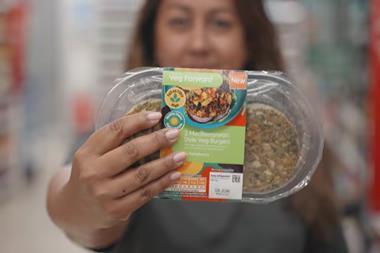
UK consumers can choose products that don’t depend on animal suffering. We have easy access to affordable, environmentally-friendly and healthy plant-based foods, from tofu, tempeh and seitan to new innovations such as the Super Block from This, recognised in The Grocer’s New Product & Packaging Awards 2025. Consumers should be empowered to make those choices rather than fooled into financing a company that profits from killing 35,000 pigs every single week.
Cranswick’s £40m investment in minor improvements will never erase the horrors these pigs have endured on its farms – or what they will continue to endure, even in its new ‘enhanced welfare’ systems: confinement, enforced separation of mothers and piglets and invasive procedures such as tail docking.
And the cruelty does not end on the farm. Pigs will still face CO2 gas stunning at just five or six months old, a method Defra’s own Animal Welfare Committee acknowledges causes immense suffering and that its predecessor said should be phased out back in 2003 – some 22 years ago. The gas reacts with moisture in pigs’ eyes, nostrils, mouths, throats and lungs to form an acid, making them feel as though they are burning from the inside out.
I’ve seen how pigs thrash and squeal, gasping for air and desperate to escape. It’s almost impossible to describe how terrible it is.
We’ve known for decades that gas stunning is profoundly inhumane, yet it’s used on 90% of the 10 million pigs slaughtered annually in the UK. Producers resist phasing it out for one sickening reason: profit.
Pigs are among the planet’s most intelligent animals, yet companies like Cranswick spend £40m to make farming only marginally less cruel, while outdated slaughter methods persist decades after experts condemned them, and are unlikely to be banned anytime soon due to industry pressure and political inertia. The system is clearly broken.
Industries built on suffering cannot be reformed into something humane. If we believe animals deserve more than pain, confinement and fear, then the answer is not to ‘tweak’ the machinery of factory farming – it’s to reject it entirely by taking the simple yet powerful step of going vegan.
Juliet Gellatley is founder & director of Viva






No comments yet