






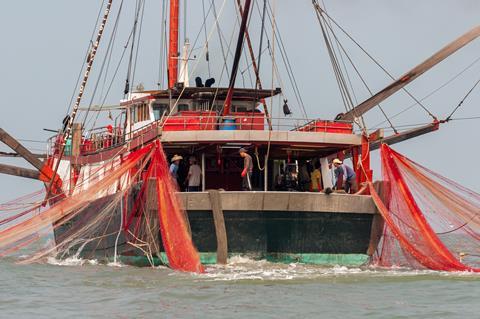
Parliamentarians have demanded the government enact tighter import controls after a new report warned the country was at risk of importing “slave-caught” and “illegal” seafood.
Nearly 50 peers and MPs sent a letter to environment secretary Emma Reynolds and fisheries minister Angela Eagle, urging the government to strengthen the import control system to prevent the UK from “unwittingly purchasing seafood tainted by environmental harm and exploitation”.
The letter followed the release of the Coalition for Fisheries Transparency (CFT) report ‘Criminal catches: how to stop the supply of illegal seafood to the UK’ and urged for its recommendations to be implemented.
The report found seafood linked to illegal, unreported and unregulated (IUU) fishing, and severe human rights abuses, has entered the UK due to weak enforcement and consistent failure to check the origin of imported seafood.
“The UK has clear potential to ensure seafood entering the UK market is legal and traceable,” said CFT UK co-ordinator Vivien Deloge. “The EU-UK reset presents a key opportunity to achieve this: by adopting cost-efficient and easy-to-implement traceability measures that have proven effective, the UK could close any loopholes related to the imports of seafood tainted by illegality and abuse across Europe.”
Read more: Visa system broken for fishing workers, FLEX report finds
As noted in the report, more than a quarter of the country’s seafood imports are from countries such as China, Ecuador, Ghana and South Korea, which are “among the world’s most notorious offenders for illegal fishing”.
The letter said: “The UK receives around 1,000 catch certificates annually from China – covering roughly 58,000 tonnes of seafood – but only four consignments have been refused since 2012.”
The report and letter both argued Brexit led to a decline in safeguards and monitoring has largely ceased.
The recommendations highlighted by the letter include implementing the Global Charter for Fisheries Transparency, an EU-style carding system, increased verification checks, and a risk-based approach to identify consignments for further scrutiny at the border.
“It is the wilful lack of knowledge that’s so appalling,” said Hugo Tagholm, director of Oceana UK, who reiterated the calls for greater monitoring.
An Oceana report in 2025 found Chinese fishing vessels conducted 44% of all global fishing activity between 1 January 2022 and 31 December 2024.
“How can the UK government turn a blind eye to seafood imports that may come at the price of gross violations of human rights and destruction of ocean life?” Tagholm asked. “Who doesn’t want to know if the fish on their plate was caught by a slave?”
Read more: Sustainable seafood sales boomed in 2025, MSC report finds
He added that the government should “urgently crack down on tainted imports” and then can “refocus on restoring and rebuilding sustainable fisheries within the UK’s own rich waters”.
Birds Eye owner Nomad Foods, which has committed to source 100% of its fish and seafood from the Marine Stewardship Council or Aquaculture Stewardship Council certified sources, said it has a “zero-tolerance policy for IUU fishing”.
A spokesperson said: “We recognise the inherent environment and social risks within global fish and seafood supply chains outlined in the letter, and also the important role that fish and seafood plays in providing an affordable, accessible, and nutritious form of protein.”
“We take illegal fishing and exploitation fishing industry extremely serious, and we have a robust regulatory system in place to combat it,” said a government spokesperson. “Marine authorities work very closely with ports to ensure documents are appropriately checked and verified to catch unregulated fishing imports from all countries.
“Modern slavery is a heinous crime that has no place in our society or our supply chains.”








No comments yet