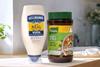
It’s maybe the worst-kept secret in fmcg. And possibly the longest running. Unilever wants out of food.

And the direction of travel towards homecare, beauty and personal care (HPC) has only accelerated since former CFO Fernando Fernandez took the reins in early 2025.

This week, Bloomberg reported Unilever is exploring a potential carve-out of its entire food division. And while talk from successive Unilever bosses of divesting non-core food assets has been conducted in the open for many years, a full exit would be a huge move. Markets have been expecting Marmite, Bovril and Colman’s to follow Graze and The Vegetarian Butcher out the door at some point this year, but power brands Knorr, Hellmann’s and Horlicks (along with Pot Noodle) were assumed to be ringfenced, at least in the short term.

Unilever is keeping shtum on its plans, declining to comment on the latest story.

But a second story, which emerged from The Financial Times last night, revealed Unilever is more than up for hiving off the food division if the right opportunity comes along. According to The FT, Unilever recently held talks with Kraft Heinz for a megamerger of its food business with the latter’s condiments division.

However, the discussions – which took place ahead of Kraft Heinz’s decision to call off a planned break-up into two distinct companies in February – have come to nothing, for now.

“Reports suggest talks are no longer live, but the idea of a combination has now been planted and that might prompt shareholders on both sides to push for more information on how a merger could work, and if it’s worth pursuing,” says Dan Coatsworth, head of markets at AJ Bell.

’The envy of the food industry’

Food currently makes up about 25% of Unilever’s €50.5bn in annual revenues now the group has demerged its €8bn ice cream division in a protracted IPO process, which finally completed in December 2025.

Growth in food has been hard to come by in the past five years, with 2025 sales of €12.9bn just €400m higher than in 2020 and volumes over the period flat.

Even if the division is less loved than the HPC side of the group, the scale of Knorr and Hellmann’s alone are hard to ignore. The former is the second biggest Unilever brand (sales of about €5bn) while Hellmann’s is at number five (€3bn), with the pair and Horlicks making up about 70% of the food unit and sitting alongside the €1.7bn-turnover foodservice business.

While growth has been less than stellar, the bottom-line performance is much more impressive, with underlying operating profits moving from €2.4bn in 2020 (EBIT margin of 18.9%) to €2.9bn last year (22.6%).

It’s no surprise Fernandez has referred to the portfolio as “the envy of the food industry” and Hellmann’s as a machine – although Knorr is struggling at the moment, especially in Europe.

Barclays analyst Warren Ackerman thinks the latest food separation story is strange timing, coming so soon after the complicated 18-month slog to spin off Magnum.

“The exit of Magnum overshadowed almost everything else and was a big distraction,” he says. “That said, at some point, Unilever will need to rip off the band-aid and one could argue there is never a good time, but we don’t think the timing is now given everything else going on.

“Fernandez has always talked about doing transactions from a position of strength, but right now that isn’t where its foods business is at, with the notable exception of Hellmann’s.”

Ackerman adds the priority should be to continue with the wider clean-up of the division and wait for its value to increase.

“Once done, Unilever will have three scale brands and be amongst the most profitable food companies in the world with EBITDA margins of more than 25%.”

Either way, Barclays estimates the food division is worth somewhere in the region of €28bn to €31bn.

Testing the waters

Renewed volatility unleashed by the conflict in the Middle East only makes it harder to push through deals, and won’t do industry valuations any favours. Neither will ongoing worries for the whole food industry on the impact of weight-loss drugs.

Unilever investors appear to concur about the potential to maximise shareholder value at present, sending shares in the group down 3.4% on Wednesday and a further 2.8% today.

Regardless, Bloomberg reported there would be no movement on a food sale before 2027, so any deal would be a long way off.

It’s not out of the realms of possibility Unilever itself was behind the leak of the latest story, or the Reuters story in November flagging a likely sale of Marmite, Bovril and Colman’s. It could be a way of testing the waters, flushing out any interested parties and weighing up market appetite for pricing and valuations.

Unilever has plenty of experience in jettisoning unwanted assets following exits in tea, spreads and now ice cream, but a separation of the entire food division will still be extremely tricky.

Unlike in ice cream, where margins diluted Unilever’s earnings, food contributes a robust bump to profits. It also generates mountains of cash and the loss of scale from offloading it would be keenly felt, particularly in emerging markets.

Jefferies analyst David Hayes reckons dusting off former boss Alan Jope’s ill-fated 2022 plan to buy Haleon could provide a solution. Jope proposed flogging the food division as part of his £50bn tilt at GSK’s consumer health business (which afterwards became London-listed Haleon) to ease the leverage burden of such a massive deal.

The failure of that deal sealed Jope’s fate, but talk of a food exit continued under successor Hein Schumacher, who outlined non-core assets with sales of €1bn to be sold.

Fernandez promised to speed up the process.

However, it remains early days. What’s certain is Unilever will continue to reduce its exposure to food over the coming few years, but how it plays out is still very far from clear.