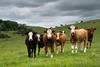
beef cattle in field - Getty

Those of us lucky enough regularly sit down to a meal will know the part we often jump to first: the meat.

Similarly, meat is often what gets attention first in the headlines – and not always in a good way. In recent years it has been drawn into health debates, with claims like “red meat is probably carcinogenic” doing the rounds and the plant-based movement has positioned products built on globally traded commodities such as quinoa and avocados as the default replacement. Veganuary arrives each year at precisely the point when local British produce is at its most limited, yet it is framed as the environmentally conscious choice.

What is consistently missed is context – both nutritional and environmental.

The nutrition debate

On nutrition, that carcinogenic classification does not mean red meat carries the same level of risk as something like smoking. It reflects limited evidence in humans, grouping red meat alongside a wide range of everyday exposures – including very hot drinks and night shift work. The research is complex, and the way it has been communicated has arguably caused more confusion than clarity.

Meanwhile, meat remains one of the most efficient ways to deliver essential nutrients – complete and highly bioavailable protein, vitamin B12, haem iron, zinc and selenium, and fat-soluble vitamins such as A and D, alongside creatine, carnosine and taurine that support muscle function, cognitive performance and overall health.

On environment, the conversation too often ignores where British meat actually comes from. Large areas of UK land, particularly in Scotland, northern England and Wales, land are not suited to cropping. They are rough grazing, upland ground, permanent pasture and heather moor.

On Arran off the west coast of Scotland, where my parents farm, parts of the land are formed from an extinct volcano – steep and unforgiving, covered in rough grass and heather that turns the hill purple at the right time of year. This is not land that could be turned over to grow crops for direct human consumption. It works because of grazing livestock.

Cattle and sheep take what we cannot eat and turn it into nutrient-dense food, driven largely by what grows naturally. Rainfall does the work – there is no synthetic transfer of water in these systems, unlike many globally traded crops and some hyper-intensively produced food systems.

The conversation around British grazing

Grass, clover and forage crops grown on farm, often conserved as silage, form the backbone of their diet. Concentrates are used sparingly and strategically. Many of the UK’s grazing livestock systems, particularly sheep and cattle, are rooted in local, circular use of land. Grass grows, livestock graze, manure returns nutrients to the soil and the cycle continues. Well-managed grazing can build soil organic matter, improve structure and support carbon storage. Grass leys within rotations act as a reset, breaking pest and disease cycles and restoring fertility.

These same landscapes also support wild species such as deer, producing venison – one of the leanest and highest-protein meats available. Again, this is food coming from land that has few alternative uses.

Livestock also make use of products that would otherwise go to waste. Vegetables that do not meet retail specifications, surplus forage and byproducts from processing can all be fed, keeping nutrients within the system. Remove livestock, and those flows become far less efficient.

Animal welfare is central. Well-managed grazing systems depend on healthy animals, able to express natural behaviours, and good welfare underpins both productivity and public trust.

None of this means all meat production is equal or beyond scrutiny. There are systems that need to improve, and welfare must remain central. But reducing meat to a single environmental or health metric risks overlooking the diversity of how it is produced – and risks flattening a conversation that deserves far more nuance.

For those sourcing, selling and shaping what ends up on shelves, the question is not simply whether meat belongs there – but what kind of meat. There is a strong case to start with what is produced well at home. Systems that work with the landscape, deliver nutrient-dense food and keep value within local supply chains.

Next time you’re shopping, consider buying from the country you’re in. For us, that means the British Isles.


Wallace Currie is a member of UK Youth Food and Farming Forum