




It’s astonishing that burgers, crisps and other foods high in fat, salt or sugar can still pass the government’s test for advertising and supermarket promotions, despite being widely recognised as unhealthy. It raises serious questions about whether the rules are fit for purpose.
At the heart of the problem is the government’s Nutrient Profiling Model (NPM), which determines which foods are classified as ‘less healthy’ for the purposes of marketing restrictions. Developed more than 20 years ago, the model is increasingly out of step with modern nutrition science. As a result, products that should face tighter restrictions can still benefit from valuable advertising and prominent supermarket promotions.
New analysis published last week by the Obesity Health Alliance shows just how significant this problem has become. Of the seven products advertised during the Britain’s Got Talent final that passed the current NPM, six could be classified as ‘less healthy’ under the updated 2018 model, despite being products many consumers would already consider unhealthy.
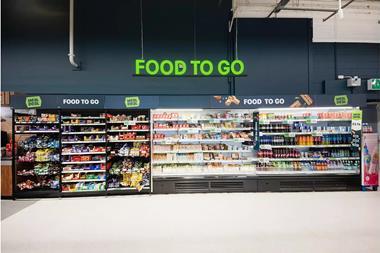
It’s a similar story on supermarket shelves. Of 68 products in relevant categories promoted at the end of aisles that passed the current model, 45 would fail the updated test.
These are not minor discrepancies. They expose a fundamental weakness in regulations designed to protect consumers, particularly children, by allowing less healthy products to continue benefiting from valuable advertising and prominent supermarket promotions.
There is a striking disconnect between how these products are classified and how consumers view them. Our polling found that 77% consider a KFC Zinger Burger unhealthy, 71% say the same about a McDonald’s Spicy McCrispy and 62% about Walkers Prawn Cocktail crisps.
The government has already introduced restrictions on where certain foods can be promoted in supermarkets, alongside tighter television and online advertising. These are significant measures, but their effectiveness depends on accurately identifying the products they are intended to cover. That is why we welcomed in last July’s NHS 10 Year Plan for England to apply the updated NPM to the advertising and promotions restrictions.
Furthermore, the government’s proposed Healthy Food Standard, which would require large food businesses to report on the healthiness of their sales and meet improvement targets, would improve the overall healthiness of the entire retail offering, not just the most unhealthy foods within a limited set of categories. Together, these measures could help encourage healthier products and shift competition way from the promotion of less healthy options.
The need for consistent standards
For retailers and manufacturers, this is not about banning products or dictating what people should eat. It is about applying consistent, evidence-based standards that reflect current dietary recommendations, particularly around sugar.
Many manufacturers have rightly invested heavily in reformulation and developing healthier alternatives. In doing so, they deserve a level playing field where competitors cannot secure promotional advantages because outdated rules classify their products more favourably.
The updated model has been under consideration for years, giving industry considerable time to anticipate change. Yet further delays prolong uncertainty and weaken incentives to improve products.
Labour promised in its manifesto to restrict junk food advertising to children and the government has taken important steps towards delivering that commitment. But the job is far from finished.
Our polling found more than two-thirds of adults believe children regularly see unhealthy food advertising, while 57% want the government to do more. Meanwhile, childhood obesity continues to disproportionately affect families in deprived communities.
Ministers must now publish their response to the NPM consultation and commit to implementing the updated model without further unnecessary delay, alongside immediately publishing the consultation on the Healthy Food Standard.
The food industry needs clear, credible rules. Parents need confidence that protections work. And children deserve better than a system that still judges today’s food against yesterday’s science.
Katharine Jenner is executive director at Obesity Health Alliance





No comments yet