







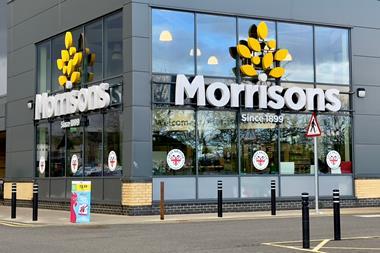



Morrisons is the latest supermarket to find itself in the eye of a media storm. When a supermarket sacks a store manager, it rarely attracts national attention. But Morrisons’ decision to dismiss Sean Egan has triggered protests, political backing and a £17,000-plus GoFundMe – turning an internal disciplinary process into a public moral reckoning.
The decision to let go of long‑serving store manager Sean Egan after his altercation with a serial shoplifter has clearly struck a nerve. Egan, who had worked for the retailer for nearly three decades, was sacked following an incident at his West Midlands store in early December. Morrisons maintains proper procedures were followed.
But the scale and intensity of the reaction suggests that argument is failing to land, because, for many, this is no longer about process, policy or employment law. It is about whether retailers are doing enough to back frontline staff as shoplifting and violence continue to rise.
Public support for Egan has been significant, and listeners can hear his account, alongside both sides of the debate, on the debut episode of What the FMCG?! (available here, or wherever you get your podcasts). He’s also been supported by MPs, the chief of the Met Police and more. So, for the hundreds of protesters that reportedly showed up to support him this weekend, the case really isn’t a HR issue, it’s a moral one.
There is such a thing as bad PR
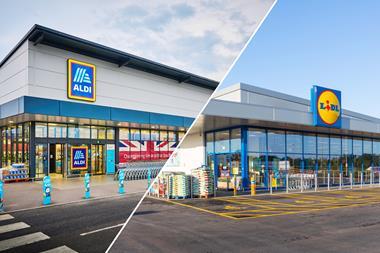
The ugly sentiment is already translating into reputational risk. “I’d be happy for Morrisons to close down and have a Lidl or Aldi there,” one of the protestors told local news outlet the Express & Star. “They’ve got no empathy for people or their employees.”
More promised not to shop at Morrisons until Egan was reinstated and of course, feelings were even stronger in the comments section on social media and on Egan’s own LinkedIn.
From Morrisons’ perspective, the position is not irrational. Retailers operate in an environment where violence and abuse are rising, and liability risks are high. As we have previously written, the loss of groceries is simply not worth the price of a shopworker getting injured (or worse).
So how can retailers enforce safety-first policies such as ’deter-not-detain’ in stores, when those policies seem to fly in the face of human instinct?
The aim is to prevent escalation and, in doing so, protect both employees and customers. If staff are encouraged – either implicitly or explicitly – to intervene, the consequences could be far more serious than a lost basket of goods. Explaining that while on the front foot, rather than in the defence of an unpopular sacking, could have given Morrisons a head start.
But Egan told The Grocer that in his almost 30 years in retail, he’d never encountered an incident as aggressive as the one that led to his sacking. The shoplifter was reaching into a bag that was later discovered to hold a home-made blade. What then?
A worst-case situation
Andrew Macaulay-Ferguson, an employment solicitor at Hethertons in North Yorkshire, believes the waters were potentially muddied at this stage. “If staff are regularly trained on what to do in these situations, if they are given practical scenarios and clear steps to follow, then an employer is naturally in a stronger position when seeking to enforce it.
“The wider question is what staff are actually expected to do in a worst-case situation. If someone becomes aggressive, reaches into a bag and staff believe there may be a weapon involved, what is the alternative response they are trained to take?
“The purpose of these policies is usually to stop staff putting themselves in harm’s way. Even if someone is acting with good intentions, stepping outside that can still be treated as misconduct.”
As it is, Morrisons has repeatedly declined to give its side of the Sean Egan story in full, simply saying the reporting “does not reflect the full facts of the situation”.
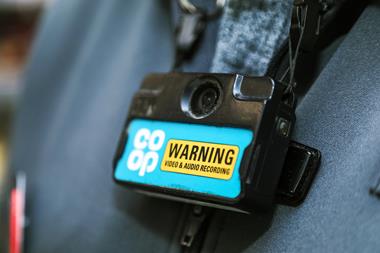
Among Egan’s recollections of the day is the fact that there was no security guard on duty. We’ve approached Morrisons to verify this, and to clarify its policy on exactly when security guards should be present. But more security guards are just one among an arsenal of deterrents that don’t rely on store staff, alongside tech such as in-aisle cameras and screens, body-worn cameras and on-shelf obstacles to theft.
“The challenge is what staff are expected to do when simply standing back does not feel like a realistic or safe option,” says Macaulay-Ferguson.
“There needs to be clear guidance and proper training around what steps employees can take in those moments, because telling people not to take risks only goes so far if they are faced with what they believe is an immediate threat.”
Morrisons isn’t the first retailer to be caught in this position and it’s unlikely to be the last.
But communication with staff is critical. Employees who feel they’ve been treated unfairly or haven’t had their voices heard will continue to go to the media, as Egan has done. It’s worked for him. There’s now talk of a meeting with Morrisons CEO Rami Baitiéh. But did it really need to get this far?










No comments yet