






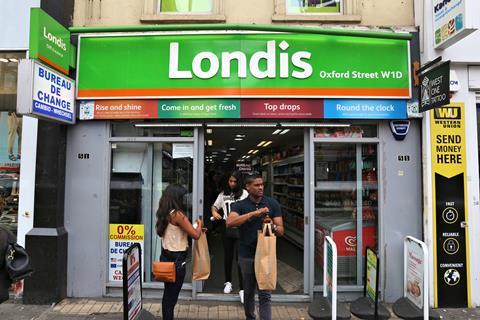
The ACS has welcomed several proposed laws announced in the King’s Speech today that would support convenience stores with issues including crime, energy contracts and late payments.
During the State Opening of Parliament, which sets out the government’s legislative agenda for the year ahead, 37 bills were published, including five that would affect convenience stores.
These included the Police Reform Bill, which will scrap police and crime commissioners and aims to put more police on the streets and set up a new National Police Service for serious crime. Meanwhile, the Digital Access to Services Bill would introduce a digital ID that would “modernise how citizens interact with public services”, the King said in his speech.
The Energy Independence Bill has also been proposed, which aims to improve energy security and reduce costs, and will give Ofgem new powers to regulate energy brokers (TPIs) to stop unfair practices. The Competition Reform Bill, meanwhile, would improve the work of the CMA so market reviews can be conducted more quickly and in a more focused way.
Another new bill, called Small Business Protections (Late Payments), aims to tackle late payments between businesses and improve the flow of cash through supply chains to facilitate a more productive economy. It would impose maximum payment terms of 60 days and mandatory interest for late payments at 8% above the Bank of England base rate.
“Retail crime, the illicit trade and the cost of trading are three of the biggest issues facing local shops, so we welcome proposals set out in the King’s Speech today to make further progress on putting more police on the streets, protecting retailers from unfair energy contracts, and ensuring that payments are made to them on time,” said ACS CEO Ed Woodall.
“The convenience sector has a long track record of leading on age-restricted sales policies, most recently through our Decline09 campaign to simplify the generational tobacco ban, and we will continue to work closely with the government on the implementation of digital ID acceptance in stores.”
The BRC has welcomed the Police Reform Bill in hopes it will “strengthen national co-ordination between the different police forces to tackle the scourge of organised crime”.
On the Energy Independence Bill, BRC CEO Helen Dickinson said additional reforms were needed to improve how renewable and systems costs are recovered.
“Higher energy costs for retailers ultimately mean higher prices for consumers, and while the government can’t control global energy prices, it can influence the prices paid by businesses,” she said.
”Disappointingly, this bill fails to provide any measures to reduce energy costs for retailers, or to lessen the impact of increasing non-commodity costs, which account for up to 65% of retailers’ energy bills. Government should support expanding local renewables, like solar, especially since retailers with large property portfolios can help facilitate this drive towards net zero.”
In response to the Small Business Protections Bill, she added: “Retailers rely on strong and trusted relationships with their suppliers and work hard to support this through fair payment terms and processes that can benefit all parties. While the devil will be in the detail, we welcome the focus on supporting small businesses, and the exemption for payment arrangements between large businesses. Government must continue to engage businesses to ensure the bill allows for the practical flexibilities businesses.”










No comments yet