


Annual food inflation slowed to its lowest rate since December 2024 in May, falling to just 2.2% from 3% in April.
Slower food price rises helped to counterbalance a further jump in transport costs in May, leaving headline CPI inflation steady at 2.8%. Economists had expected a rise to 3%.
Food prices fell 0.1% month-on-month, with alcohol and tobacco prices falling 0.3% between April and May, according to the ONS.
British Retail Consortium economist Harvir Dhillon said the drop in food inflation was “thanks to the fierce competition between grocers”.
He warned, however, inflation would likely pick up over the coming months as input costs rise following the conflict in the Middle East, though prices at the fuel pump “are likely to have peaked”.
FDF chief executive Karen Betts added it would take several months for the increased costs paid by farmers, processors and manufacturers to filter into higher prices at the tills, “not least” because of long-term contracts for energy and ingredients.
“But manufacturer input costs are rising, including for transport, packaging and energy, and we expect food inflation to pick up this year and into next,” she said.
This morning, the IGD issued new forecasts predicting food inflation would peak at 5.5% in the second half of 2026, significantly below its “severe” energy shock scenario of 8% inflation. While inflation is likely to be less severe than it might have been, the impact of the Iran war on food prices is expected to last into 2028.
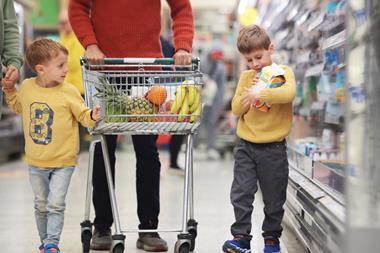
According to the IGD’s model, households with children will have to find an extra £200 a year to pay for groceries.

No comments yet