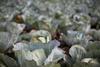
white cabbage field - getty

Source: Getty Images

Growers have told The Grocer that shortages of core lines are becoming more likely as parts of the country reach their seventh week without significant rain

Vegetable crop conditions are becoming “critical”, growers have warned as drought continues across the UK.

Growers have told The Grocer that shortages of core lines are becoming more likely as parts of the country reach their seventh week without significant rain.

Brassicas are one of the most impacted crops, with yields as low as 50% in some areas. Conditions are likely to worsen over a forecasted drier than normal August, according to John Walgate, CEO of the British Growers Association.

Mark Nundy, managing director at Windy Ridge Veg, said he aimed to get 30 tonnes per acre out of his white and red cabbage harvest, but was currently looking at 18-20 tonnes as heat stalls maturation.

“When it’s hot all day and hot all night, there’s just no room for any growing time,” he said.

He warned there would “definitely” be shortages due to both issues with current harvest and delays to the next season planting because the ground is so dry.

“We are caught between the devil and the blue sea of it, it is too dry to plant, but if we don’t plant, we’re not going to have a crop anyway,” he said.

Climate change induced higher temperatures in the years to come could see “a lot of brassica production for the summer being cut out”, he warns, as it is “just too risky”.

Peter Durose, chairman of the British Brassica Association, described the situation as a worsening “crisis” for growers.

There will be ‘gaps on shelves’

Sweetcorn is also down by at least 25%, according to Julian Marks, group CEO of Barfoots, with garden peas and green beans also finishing around three weeks earlier than normal.

Marks echoed concerns that there “will be gaps on shelves” and said the industry was already “scrabbling about trying to fill” them.

However, “the implications of all this dry weather haven’t really fully hit us yet” with bigger issues set to come in the autumn when later season crops are due to finish.

He added brassicas were looking “difficult”, root vegetables “pretty vulnerable” while broccoli, butternut squash and pumpkins are also likely to face challenges.

For Barfoots, it was racing to “clear up crop before any more water restrictions get put on”, especially as water storage on farm is running low. Marks said rain was needed in the next fortnight to stop tanks from running dry.

Riverford Organic Farmers has also seen “intermittent supply issues this summer” according to its director of supply and technical Luke King, who added that “water resources [are] becoming increasingly limited”.

“We’re having to prioritise where irrigation has the biggest impact,” said King. “Deeper-rooting crops like our pointed cabbage, for example, can access moisture lower down in the soil, so are at the bottom of the irrigation queue.

“If these dry conditions continue for much longer though and without any meaningful rainfall, it will become much more challenging,” King added.

In what has been described as an “emergency”, grower groups are calling on retailers to recognise the situation and support growers “to help ensure the sustainability of British-grown broccoli, cabbage and cauliflowers, not just this year, but for the future”.

Concerns that supermarkets are not doing enough to support growers were raised by another industry source who said that while some had been supportive many are still trying to drive down prices for the 2027/28 seasons.

Many retailers are threatening delistings or buying crop from elsewhere if suppliers refused to lower their prices. The source called retailers “deluded” if they expected an inflation-free environment next year. 

The industry expert also criticised retailers for calling crop purchasing “investment”, as has become commonplace, as “they don’t take any risk”. “It’s not investment, they’re not the ones investing in crop, they’re just paying for it if it appears,” they said.

This comes following warnings from the NFU last week that farmers are facing “growing difficulty” in obtaining cost price increases from certain retail buyers.

While some supermarket chains operated a “clear and predictable” process, others could leave suppliers “facing long periods of uncertainty”, said the farming union, “contributing to a significant increase in industry frustration”.

Beyond retailer support, farmers and growers are calling for more water infrastructure investment from government in both building more reservoirs but also enabling growers to build their own storage on site more easily. 

The NFU has been loudly calling for more support in this area including a “common sense approach to water use”.

“More flexible abstraction rules are also needed so farmers can access water for irrigation,” said NFU president Tom Bradshaw. “This would enable us to grow more of the food we can and should produce here ourselves, especially fruit & vegetables.”