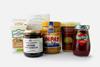
hain daniels products

Hain Daniels operates from nine manufacturing sites in the UK and accounts for the majority of the $671m in annual sales generated by the US group’s international arm

Hain Celestial is preparing to kick off an auction for its UK assets, including the likes of Ella’s Kitchen, Hartley’s and Linda McCartney’s, to help pay down its debt pile and progress a turnaround plan at the embattled US-headquartered group.

The move is part of a wider comprehensive review of strategic options at Hain led by bankers at Goldman Sachs, appointed by the company in May last year.

A potential sale of the international business, which includes the UK’s Hain Daniels Group, is currently in the early stages and is not expected to formally begin until the second quarter of 2026 at the earliest, The Grocer understands.

Dealmakers in the City expect Hain to explore the possibility of breaking up the UK assets for a sale to several buyers, including trade and private equity, if a deal for the entirety of the international business proves out of reach.

Hain Daniels operates from nine manufacturing sites in the UK and accounts for the majority of the $671m in annual sales generated by the US group’s international arm. It supplies brands and own label across ambient, chilled and frozen in several different categories, such as baby (Ella’s Kitchen), soup (New Covent Garden, Yorkshire Provender and Cully & Sully), spreads (Hartley’s, Robertson’s, Frank Cooper’s and Sun-Pat) and plant-based (Linda McCartney’s).

“As a matter of policy, we don’t comment on market speculation,” said Wolfgang Goldenitsch, head of Hain’s international division.

“Hain International operates as an independent business, with its own leadership teams and operations. It continues to perform strongly in its markets and remains fully focused on delivering for customers, colleagues and supplier partners.”

Hain Celestial launched its ‘Reimagined’ action plan to simplify its portfolio, trim SKUs, cut costs and pay down debt in September 2023. However, a turnaround failed to materialise as sales continued to decline and losses mounted.

It led to the departure of CEO Wendy Davidson in July 2025.

New boss Alison Lewis said last week that Hain had demonstrated “meaningful strategic and operational progress” in its second quarter and was advancing the turnaround strategy “with urgency”.

It followed the $115m sale of its North American snacks business, agreed earlier this month, to resharpen the portfolio and slash its leverage.

Total debt at the group stood at $705m at the end of the second quarter to 31 December and net debt totalled $637m, down from $650m at the start of the new financial year.

Shares in Hain Celestial have collapsed in value by 98% over the past five years to trade at just 88 cents, giving the Nasdaq group a market cap of $80m.

William Blair analyst Jon Andersen said: “While the strategic review (related to the evaluation of the exit or sale of businesses) remains ongoing, the sale of North America snacks represents an important first step. The strategic review could continue to result in a broad range of outcomes, from further portfolio and go-to-market capability refinement to the outright sale of businesses and/or brands.”

Founded in 1993, Hain Food Group became Hain Celestial thanks to a merger with Celestial Seasonings in 2000. The group has completed more than 20 acquisitions in its history, but has slowly unwound a number of those deals, including the sale of Tilda in 2019 and, more recently, the disposal of cookie brand Thinsters and ParmCrisps in 2024.