Legacy supermarket refrigeration equipment is more likely to break down as the UK heads into another heatwave, experts have warned.
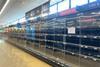
The spring heatwave saw numerous fridges and freezers fail in supermarkets across the country as UK temperatures soared to as high as 35.1°C on 26 May, the hottest ever recorded for the month according to the Met Office.
The day saw all the fridges and freezers fail in two Tesco stores, in Winchester and Plymouth. Other stores hit by problems included another Tesco, an Aldi in Didcot, at least two Sainsbury’s stores and some branches of M&S.
The Met Office is forecasting temperatures will again reach as high as 34°C on Monday and Tuesday next week, in a heatwave developing over the weekend. An Amber extreme heat warning has been issued for much of southern England and southeastern Wales.
Rupert Ashby, CEO of the British frozen Food Federation, said the supermarkets that had problems in the spring heatwave appeared to be “generally the older legacy stores, with probably a concrete floor and an older freezer system usually controlled by a remote compressor-style system outside the building”.
The compressor outside the building “would control the whole bank of units” in the store, he said. “If the outside system goes down, then the freezers and fridges on the same system don’t work.”
“Newer-built stores with more flexible layouts and flooring are generally moving towards having individual ‘plug in’ units that work on their own. While they can also break down, it is just the one unit, not the whole system. It can therefore be swapped out for another one, or just that one covered up.”
He said store refrigeration systems were “finely engineered” and those 20 years old or more “probably were not designed for regular periods of severe heat that are becoming more common”.
Older systems more likely to breakdown
Ashby added: “All retail freezers are under a lot of pressure when it is hot because we tend to buy more frozen – especially ice and ice creams, and BBQ-style food – so lots of customers are opening the doors, maybe looking at several packets while it’s open. Therefore it is warming up quickly and the system will be working overtime to keep it cool. The older the system, the more likely it could break down.”
Jon Carn, MD of Kenfield, which manufactures an energy-saving door system for warehouse cold stores, said refrigeration equipment relied on in retail was “historically tested to ambient conditions of 25°C and 60% relative humidity, and that’s more challenging as temperatures rise”.
“Some of these systems are 20 years old or more and not built for it,” he said.
Rory Kroon, head of UK business development for commercial refrigeration manufacturer Epta, said: “Heatwaves create a perfect storm for supermarket refrigeration ecosystems. Because they operate as an interconnected system, they must be considered as a whole rather than as individual components in isolation.
“Legacy systems, particularly those installed 10 to 15 years ago, were often engineered for lower and more stable ambient temperatures than those experienced today. In contrast, modern system design now incorporates higher ambient assumptions, reflecting the clear shift in climate and weather patterns, including in markets such as the UK.”


No comments yet