


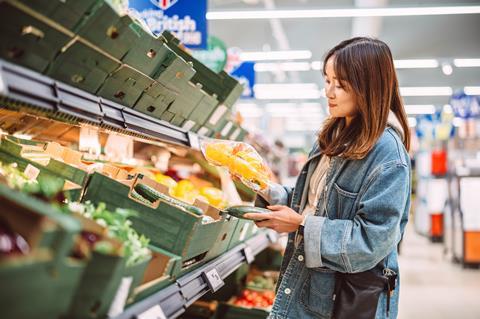
Four out of five full-range retailers have scaled back on the number of organic food SKUs for sale, while Tesco has bucked the trend and increased its organic listings by 15%.
The Grocer’s analysis of Assosia data of organic found the supermarkets sell 2,198 SKUs, a 4.5% reduction on the 2,302 available last year, and 5.4% of the total number of food items sold.
Morrisons has cut its organic range the most, with a 16.9% reduction year on year to 310 SKUs [y/e 28 September 2026].
The bulk of the removed listings came from a reduction in ambient and babyfood, but included some key fresh lines such as its organic baby spinach, potatoes, cucumber and single pint of skimmed milk. Morrisons said organic cucumbers and potatoes were still available in some stores, although they were not available to order from its website.
A spokeswoman said: “We understand the importance of having a variety of organic fruit & vegetables available to customers, and we are always reviewing our lines to ensure we provide the best-quality products we know our customers will love.”
In contrast, an increase in baby and fresh food listings pushed Tesco’s total up 14.6% to 454 organic listings.
A Tesco spokeswoman said the supermarket had seen particular growth for everyday staples including, eggs, fruit & vegetables, and had increased its range of organic products in stores where sales are highest.
She said: “We know that being able to find great-quality organic food is important to our customers. With our Tesco Organic range including everything from baked beans to Greek feta, it’s easier than ever before for customers to find delicious organic food both in our store and online.”
Waitrose sold the highest number of organic products after relaunching its Duchy Organic range a year ago.
However, its range has slimmed down too – from 679 to 635 products. Its whole organic leg of lamb has been delisted, although half lamb legs and lamb shanks remain. Its Duchy Organic Free Range British Pork Leg Joint has also disappeared from shelves.
A Waitrose spokesperson said: “We know how much our customers love and trust our organic products – they’ve been an integral part of our offer for years. Sales of our Duchy Organic range – the broadest own-label organic range of any UK supermarket – have gone from strength to strength after last year’s relaunch. Duchy frozen food alone has seen sales soar by 25%.”
The Soil Association said customer demand for organic food remained high with sales outpacing non-organic equivalents. Some 83% of British households buy organic food and drink, with babyfood, milk, eggs, broccoli and bananas among the highest volume SKUs.
Alison Muirhead, senior commercial manager, said organic sales for online shops – which can offer a larger range than physical stores – outpaced the market, with 23% of online orders containing an organic product compared with 11% of supermarket shops.
“The difference in range per location is a huge opportunity for retailers,” she said. “Given the number of people who include organic in their basket, it would make sense to extend ranges across more regions. If it’s not on the shelf people can’t buy it.”
Defra figures show a decline in organically farmed meat, with a 21% reduction in the number of pigs reared organically to account for just 0.3% of the total pig herd in the UK in 2025. The number of sheep reared organically decreased by 4.6% to account for 2% of the total flock.
Muirhead added: “We know that high welfare standards are a strong reason for choosing organic. For meat especially there’s an opportunity to remind consumers about all the characteristics and expand on its benefits.”

No comments yet