





Tesco has banned more than 100 additives from its own-label range as it starts a major clampdown on ultra-processed foods.
The supermarket giant said yesterday it wanted to work with consumers to tackle growing health fears over UPFs, which it admitted had become “much more than just a trend”.
Alice Ritchie, head of healthy and sustainable diets at Tesco, said over 80% of its customers had told the retailer they were trying to eat fewer processed foods but that they found it hard to navigate the issue.
She said Tesco wanted to increase transparency in the area and help shift diets to healthier options like fresh fruit & veg.
“Health needs are reshaping the way people shop,” said Ritchie. “A big one is concern around ultra-processed foods, which has moved very much beyond trend territory.
”Customers are talking about UPFs more than ever before, reading ingredients lists and asking for more transparency.
“As part of our work in this space we have either outright banned or restricted 114 food additives in our own brand products.”
She pledged that Tesco would keep innovating to remove UPFs from its products and provide alternatives.
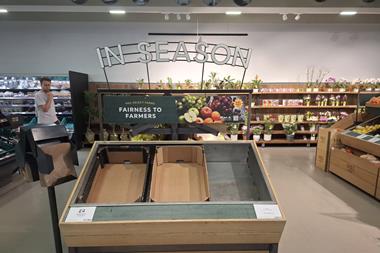
“We’re supporting customers to shift towards healthy whole foods like fruit & veg by making our fresh offer affordable and inspiring, and we continue to reformulate to reduce HFSS.”
The ultra-processed crackdown
Tesco is not the first supermarket to announce a crackdown on UPFs.
Last year M&S launched its Only… range, using minimal ingredients, which it says has had a strong reaction from customers looking to cut out UPFs.
Earlier this year, a major new survey by the FSA found that eating less processed food was a higher priority for consumers than reducing sugar consumption or eating more fruit & veg, after the food watchdog asked nearly 6,000 adults what health changes they had made to their diets in the previous 12 months.
Tesco’s moves come as a group of leading public health campaigners, led by Dolly van Tulleken, yesterday called on Andy Burnham to launch a crackdown on UPFs and hit out at what they claimed was intense industry lobbying.
They criticised the recent decision by the government’s scientific health advisers that there was not enough evidence to warrant a further crackdown on UPFs after Scientific Advisory Committee on Nutrition (SACN) said there were still “significant gaps” in the evidence base for UPF harm.
Last year, influential ‘nudge’ body Nesta urged ministers against expanding its obesity strategy to include specific targets against UPFs, arguing as many as 80% of UPF categories, including confectionery, cakes and crisps, were already covered by the government’s 2004 nutrient profiling model.
Leading academics, including Professor Alex Johnstone, co-author of the landmark report on the effectiveness of the government’s HFSS promotions ban, have also argued it would be almost impossible for ministers to target UPFs in a way consumers would understand.







1 Readers' comment