


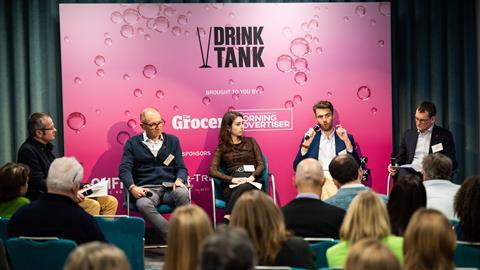
Moderation, innovation and DRS dominated the agenda at Drink Tank, as retailers, operators and suppliers debated what comes next for the UK drinks market.
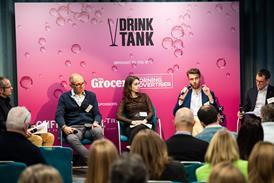
What does the future of drinks look like? That was the question on the lips of attendees and speakers at Drink Tank, a cross-channel industry conference organised by William Reed titles The Grocer and The Morning Advertiser in London this week.
As consumers rethink when, where and what they drink, leading retailers, operators and suppliers came together to discuss the innovations, legislative changes and trends that will drive growth across the on and off-trade in the years to come. Speakers argued the problem is no longer demand but how well the industry responds to it.
Earning participation
Yes, the alcohol market remains under significant pressure, as cost of living concerns, fewer drinking occasions and health trends all weigh on volumes.
The total trade had lost around 73 million litres in the past year, Rachel Weller, NIQ’s commercial leader for beverage alcohol, told attendees. Sales were “under pressure from multiple directions”, she said. Health and wellbeing were “becoming much more of a priority”, while newer threats including greater uptake of GLP-1 drugs were “already starting to reshape consumption habits”.
But it isn’t all doom and gloom. Only 7% of consumers have stopped drinking altogether, according to CGA survey data. Meanwhile, some 91% of consumers have visited an on-trade outlet in the past month, showing the appetite to socialise remains strong.
“This isn’t a story of consumers abandoning social occasions altogether,” said Weller. “It’s a story of greater selectivity. Consumers are becoming much more deliberate about which occasions deserve their time, their money and increasingly their calories.”

In light of this more selective mindset, the drinks industry should focus on creating experiences that are “simpler, smaller, more sensory and social”, according to Alex Pey, consulting manager at IWSR. Brands, operators and retailers could tap into these opportunities by pushing colourful spritz-style serves, bar-quality canned cocktails and more experience-led activations, she said.
Low & no opportunity
With some 59% of UK consumers now moderating their alcohol intake [CGA April-May 2026], brands and retailers ignore booming interest in low, no and mid-strength alcohol at their peril.
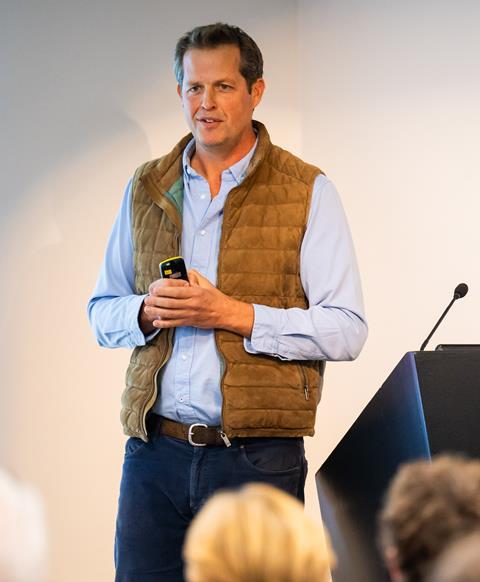
“Moderation is now structural; it’s not a blip,” said IWSR’s Pey. “In the UK, 27% of drinkers choose no alcohol, up from 19% in 2023. It’s not [just] people who have never drank or don’t drink for religious reasons. It’s people who are drinkers who are choosing to change the way they’re behaving.”
That shift in behaviour is informing decision-making at a brand, retailer and operator level. Tim Bird, owner and operator at Cheshire Cat Pubs & Bars, told attendees low & no sales had quadrupled at its venues after expanding its range. Meanwhile, keynote speaker and Fever-Tree CEO Tim Warrillow said moderation trends drove the development of the supplier’s expanded range of adult soft drinks and non-alcoholic cocktails.
The biggest issue holding back sales of low & no products, according to Laura Willoughby, founder of Club Soda, isn’t demand but availability. “Wholesalers are the biggest gatekeeper to what you can have,” she said. “They’re very conservative and not interested in the category.”
Meaningful innovation
Innovation was also highlighted as a key differentiator in an increasingly competitive landscape. However, brands, retailers and suppliers should be careful to ensure new products meet real consumer needs, lest they be perceived as gimmicks, according to Jourdan Gabbini, beer and cider buyer at Waitrose.
Did you know…
59%
of UK consumers say they are moderating their alcohol intake
Source: CGA April-May 2026
“If you look at something like craft beer it is very easy to innovate by sticking a parsnip in a stout or something,” he said. “The balancing act is getting the right innovation that customers understand, and appealing to the right consumer group for whatever your product is.”
Caroline Thompson-Hill, director of BWS at M&S, stressed the importance of viewing innovation through the lens of “missions and occasions”, rather than just target consumers. “You can’t innovate just for a consumer group,” she said. “You have to innovate for different occasions, different missions, and different groups. You might have someone who is very stuck in their ways but if they’re buying for a special occasion or something different, they’ll be much more open-minded to try something new.”
Rather than be daunted by the pressure of coming up with the next ‘big thing’, product developers were encouraged to focus on new serves, formats or packaging that could lead shoppers to reappraise familiar or retro products.
“Innovation doesn’t have to be hugely complex, but you have to be willing to take some risks,” said Thompson-Hill, pointing to M&S’s viral Trouble Cloudy Organic Rosé.
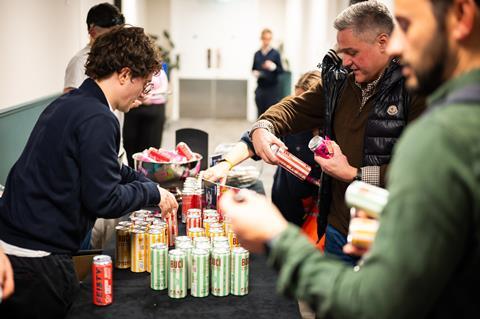
Waitrose’s Gabbini, meanwhile, cited its Rivals-themed Noshtalgia range, which included modern twists on 80s cocktails Peach Melba Spritz and Spicy Pineapple Daiquiri. “That would probably be more reinvention than proper innovation,” he said.
DRS concerns
Finally, many suppliers, retailers and operators remain wary of the impact of the UK’s deposit return scheme (DRS), set to launch next October, on their businesses. Asked how members of the British Beer & Pub Association were feeling ahead of launch, its chief strategy and delivery officer Andy Tighe responded that “coping is probably the right word”.
Did you know…
+7.1%
is the year-on-year value growth of super-premium spirits in supermarkets
Source: NIQ 52 w/e 5 September 2026
“For small producers and retailers there is still a lot that needs to be done to bring them up to speed,” he said. DRS would result in “a huge change to how operations and supply chains are going to work”, he warned.
Naomi Brandon-Bravo, head of supply chain and sustainability at the British Retail Consortium, flagged a lack of clarity about how certain elements of the scheme, including the exemption for glass in Wales, will work. “A lot of big retailers have already had to invest before some of the certainty that we were expecting,” she said. “There are undoubtedly challenges and we are still waiting for some big parts of the design that are not finalised yet.”
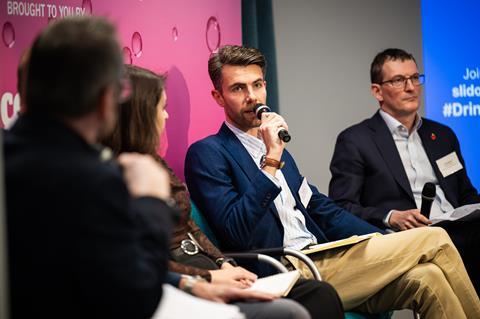
David Gell, head of external affairs at UK deposit management organisation Exchange for Change, admitted there was still “an awful lot to do”, but expressed confidence the UK-wide scheme would not suffer the same delays that blighted the launch of DRS in Scotland.
“A lot of our work [so far] has focused on getting key decisions around fees and our delivery partners in place,” he said. “We know there’s certain information that is still a work in progress, and we are fully committed to getting that ready and shared with businesses as soon as we can. But we are pleased with where we are, and we feel we are firmly on track.”
The common thread? Demand from consumers is still there, but it’s up to the industry to get availability and innovation right, while responding to incoming legislation.
Interested in attending Drink Tank next year? Register your interest to receive all the latest news and updates for 2027.







No comments yet