





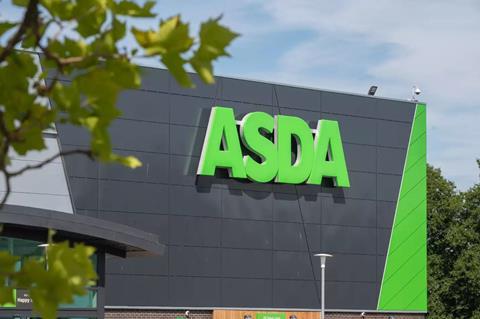
Asda’s return to growth has proved short-lived, with the supermarket’s sales once again falling year on year in the 12 weeks to 4 October 2026.
Its sales fell by 0.5% year on year, making it the only major supermarket in decline in latest data from Worldpanel by Numerator. Asda’s market share has fallen from 11.8% to 11.5% in a year.
It means Worldpanel’s previous rolling 12-week market update to September remains the only one in which Asda’s sales have grown in more than two years.
However, Worldpanel’s latest data also tells of subdued grocery sales elsewhere as consumers spend cautiously ahead of the autumn budget. In four weeks to 4 October, supermarket take-home sales rose by just 1% year on year, compared with grocery priceinflation of 2.5%, pointing to falling volume sales. Grocery inflation has climbed from 2.3% in Worldpanel’s September update.
Tesco and Sainsbury’s sales were up by just 1% and 1.3% respectively, with both losing 0.1% of a percentage point of market share over 12 months. Tesco’s stands at 27.8%, putting it further away from the target of 30% set by CEO Ken Murphy in January.
Last week it was reported that Tesco was plotting a surprise bid for Majestic, the specialist wine retail chain owned by private equity firm Fortress Investment Group, while Sainsbury’s had explored a possible merger with Morrisons earlier this year.
Read more: Sainsbury’s, Morrisons, Tesco & Majestic: inside grocery’s consolidation rush
M&S was once again the fastest-growing grocer across the 12 weeks, with its fmcg sales rising 14.9% year on year. Worldpanel does not define the retailer as a grocer thanks to its clothing & home businesses and does not allocate it a market share.
Next among bricks & mortar grocers was Lidl, with sales up 7.1%, pushing its market share up 0.4 percentage points to 8.6%.
Aldi, whose UK CEO has taken a public stance against loyalty discounts, grew sales by 0.4% in the period. Its share stands at 10.5%, down from 10.6%.
It means the market share gap between Aldi and Lidl has shrunk from 2.5% to 1.9% in 12 months.
Worldpanel said spending on promotions was up by more than a quarter of a billion pounds year on year, suggesting special offers were a key tool for shoppers looking to keep their grocery bills in check.
“With the autumn budget fast approaching, the cost of living continues to weigh heavily on the minds of shoppers,” said Fraser McKevitt, Worldpanel head of retail and consumer insight.
“The cost of filling up a car is only adding to the pressure on household budgets. More than half tell us they’re very or extremely worried about petrol prices, and almost one in three say it’s already taking a real toll on their finances.
“Until the Chancellor sets out his plans, we expect that caution to carry on showing up at the till, with shoppers leaning more heavily on promotions to keep their grocery spend under control.”
Asda said that including fuel, pharmacy, opticians, cafés, and Express stores, it remained in growth. It said its market share gap versus the average across major grocers had shrunk from 2.5% to 2.2% since Worldpanel’s previous update in September.
“Asda is more than just a supermarket,” said a spokesperson. “The business as a whole remains in growth and while the grocery market has slowed in recent weeks, we continue to narrow the gap to competitors. This reflects our ongoing investment to lower prices and improve the shopping experience for customers – actions that will build a stronger Asda for the long term.”





No comments yet