






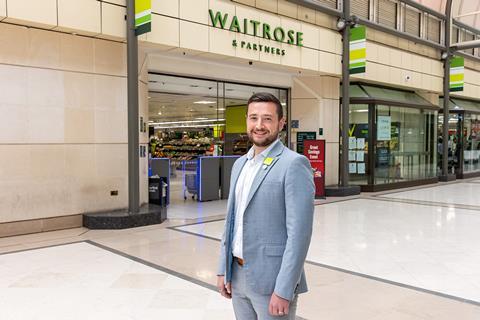
Luke Pryce has always been around food. The son of a fishmonger, he joined Waitrose straight out of college and has spent 16 years with the JLP.
In that time, the Gloucester Road store in London – the latest winner of The Grocer 33 store of the week – is by far the most unique he’s managed. It’s situated right next to Gloucester Road tube station, inside a busy shopping centre not far from the campus of Imperial College London. The diverse mix of trade, which includes a rotating mixture of tourists, local residents and hungry students, means it’s more akin to a “convenience store on steroids” than the full-line supermarket it is.
It was students who were the focus of this week’s mystery shop, which visited stores located close to university campuses. Pryce talked to The Grocer about the challenges of managing abnormal trade peaks, why even students are coming to Waitrose for Wagyu steak and its “massive” on-demand growth.
What’s unique about this store? It’s described as a convenience store on steroids, because we’re technically a full-line supermarket, but we have no car park, so it’s pretty much all basket or small-trolley shops - walk in, walk out.
We’re right next to Gloucester Road station, so that also makes it unique. As soon as there are tube strikes, or the Piccadilly line is testing trains, our footfall can go up or down. Because of the museums we have a lot of tourists, alongside our residential customers and of course students from Imperial College. Altogether that means our trade can be very unpredictable generally.
What trends are you noticing and how are you trying to cater to them? If I’m honest, our food-to-go range probably needs to be bigger given the return of people to London over the past few years.
Shoppers are also getting a lot more inquisitive with food at the moment, particularly with AI supporting all sorts of crazy recipes, or podcasts that get people in looking for that odd random product. So we try and keep thousands of SKUs to try and cater to as many people as possible, despite our small size.
Our approach is to have lots of single facings, rather than focusing on 10 facings within one line. We still want to be able to cater for food lovers and people that want to just be a bit different or create a slightly different recipe.
This was a student special basket. Do you make a special effort to capture that student trade? I wouldn’t say we actively do anything to try and capture them per se, but we try to make them feel welcome and supported. With students, especially at Imperial, they come from all over the world and speak lots of different languages. My team is now quite used to talking through an iPhone translator to help a person who’s trying to find something to make a recipe, but English is not their first language. Students tend to travel in packs, so if we can keep one or two students happy, we might actually get six or seven.
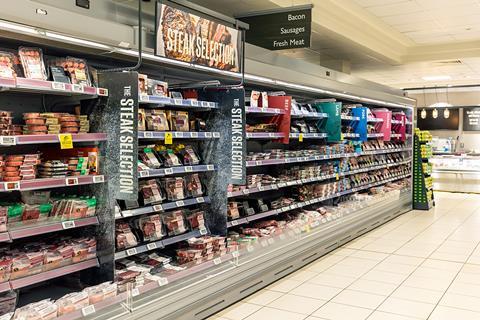
What type of stuff are they buying? I was talking to a student a couple of weeks ago about steak. He’s been in a couple of times now and just buys our Wagyu steak, which is probably not the traditional student mentality. To me that just shows what our sort of customer base can drive. Even in students, they still want really good quality food, and they can get that from us.
Having lots of students nearby must make it easier recruiting for the golden quarter? Our team is 130-plus, some of whom live out as far as Essex and travel in on the tube. Students are good generally, because they normally finish studying just as we need them to be working. We’re busier in the evening, so having students that are available after their studies is quite helpful for us.
That being said, we’re one of those unique shops that trades down at Christmas, as all the students go home, tourists aren’t in London and nearby residents leave town.
You’ve been massively growing on-demand, is that a way to capture students? Anyone who can competently use a smartphone is probably using on-demand. We don’t have a car park, and we don’t have delivery vans, so if you want something delivered you have to use ODG. When I started, we were doing about 250-300 orders a week on one platform. Now we do about five times that amount on three platforms, with much longer trading windows.
Has it been a challenge coping with that growth? We moved the collection window from inside the shop to outside, so riders now collect from the street, and shoppers don’t have to witness queues of them in the store. It makes up a decent amount of our sales now, whereas before it felt like a bit of an inconvenience. We now have our own dedicated on-demand manager, which shows how much it’s grown.





No comments yet